

“Storytelling Makes Us Feel Less Alone.”
That’s what Lily Yağmur Gosling of Edmonton Learners Collective told the room the night of August 28th, and it’s the line that has stayed with us since.
The 2026 Artivism Cohort closed the way it began, with people in a room, sharing their truths with one another. This was our final Lab of the season, and instead of ending with a single speaker or a formal send off, we built the night around a simple idea: mentorship only works when it moves in every direction. So we gathered mentors, panelists, and community members at Edmonton Public Library’s Stanley A. Milner branch for an evening that moved from a panel conversation into small group roundtables, a quiet writing exercise, and a closing circle where everyone got a turn to speak.
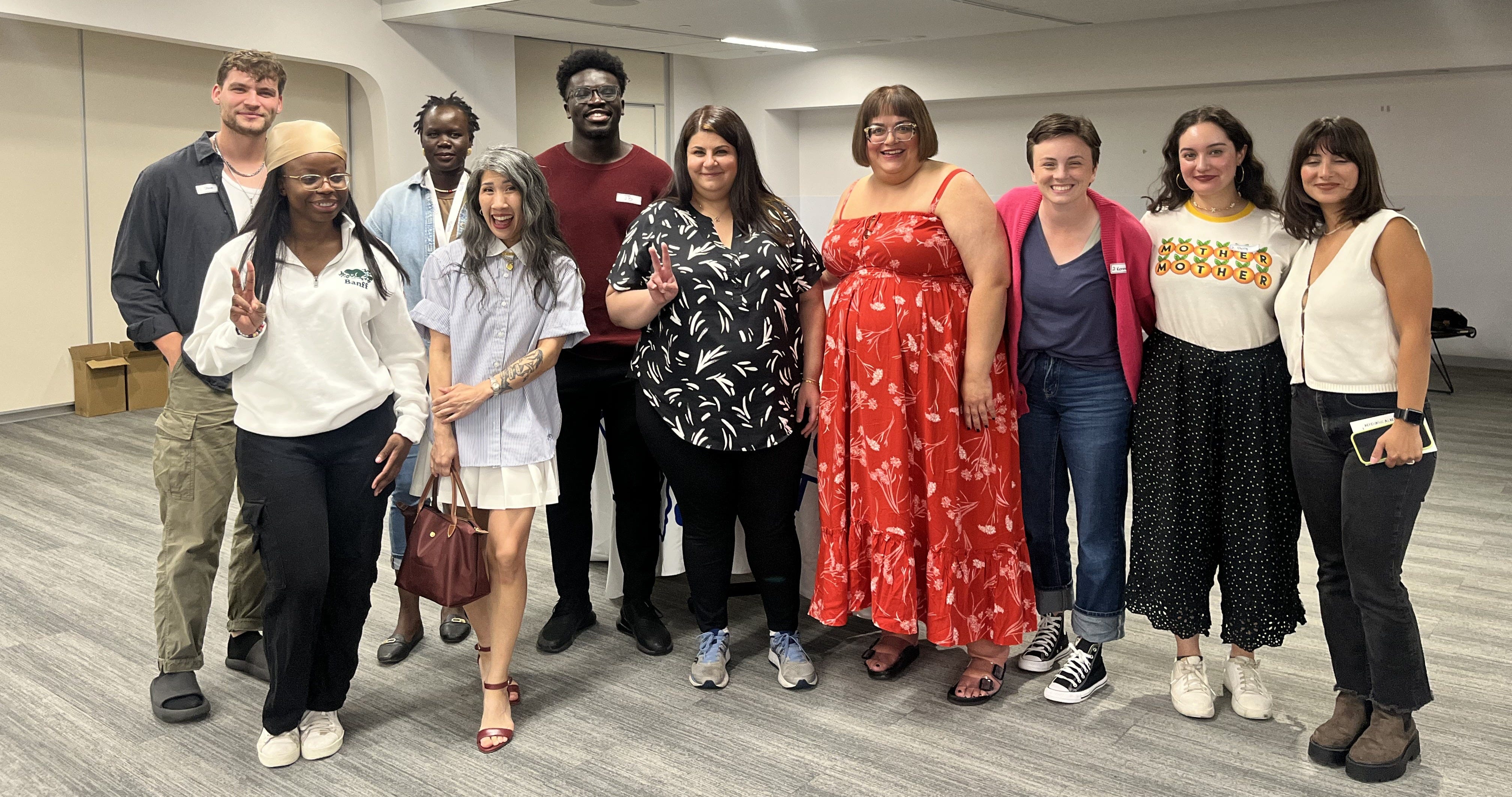
How the Room Walked In
As guests arrived, they found bingo cards waiting on the tables, an invitation to find someone who shared a similar comfort food, someone who had changed careers at least once, someone attending their first ever mentorship event, or someone who could name a song that instantly changes their mood.
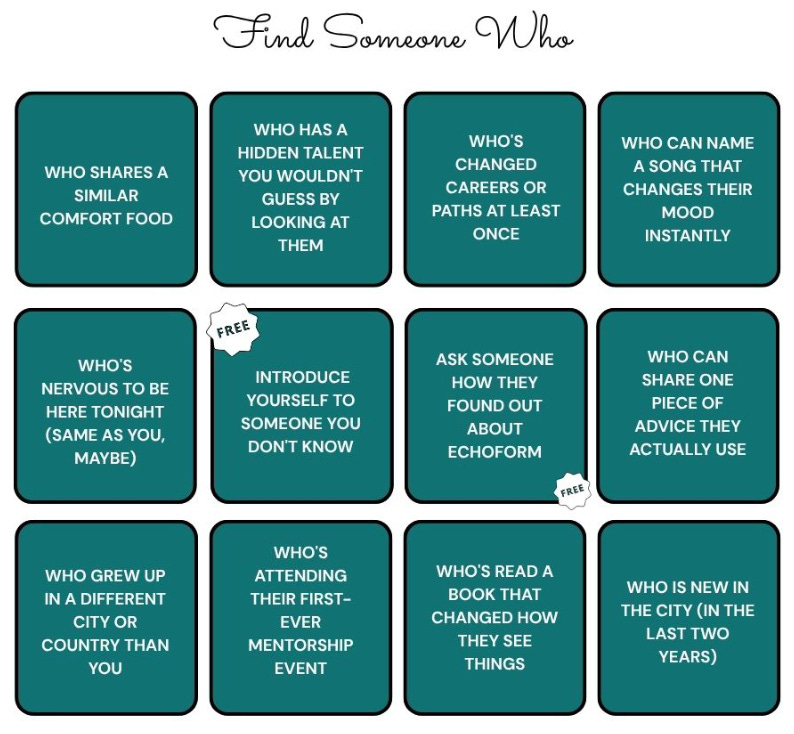
It gave people a reason to introduce themselves to a stranger before anything formal began, and by the time we opened officially, most of the room was already talking.
Once people settled in, we asked the room a simple question over Slido: how are you coming in tonight?
The answers were as honest as we hoped they would be.
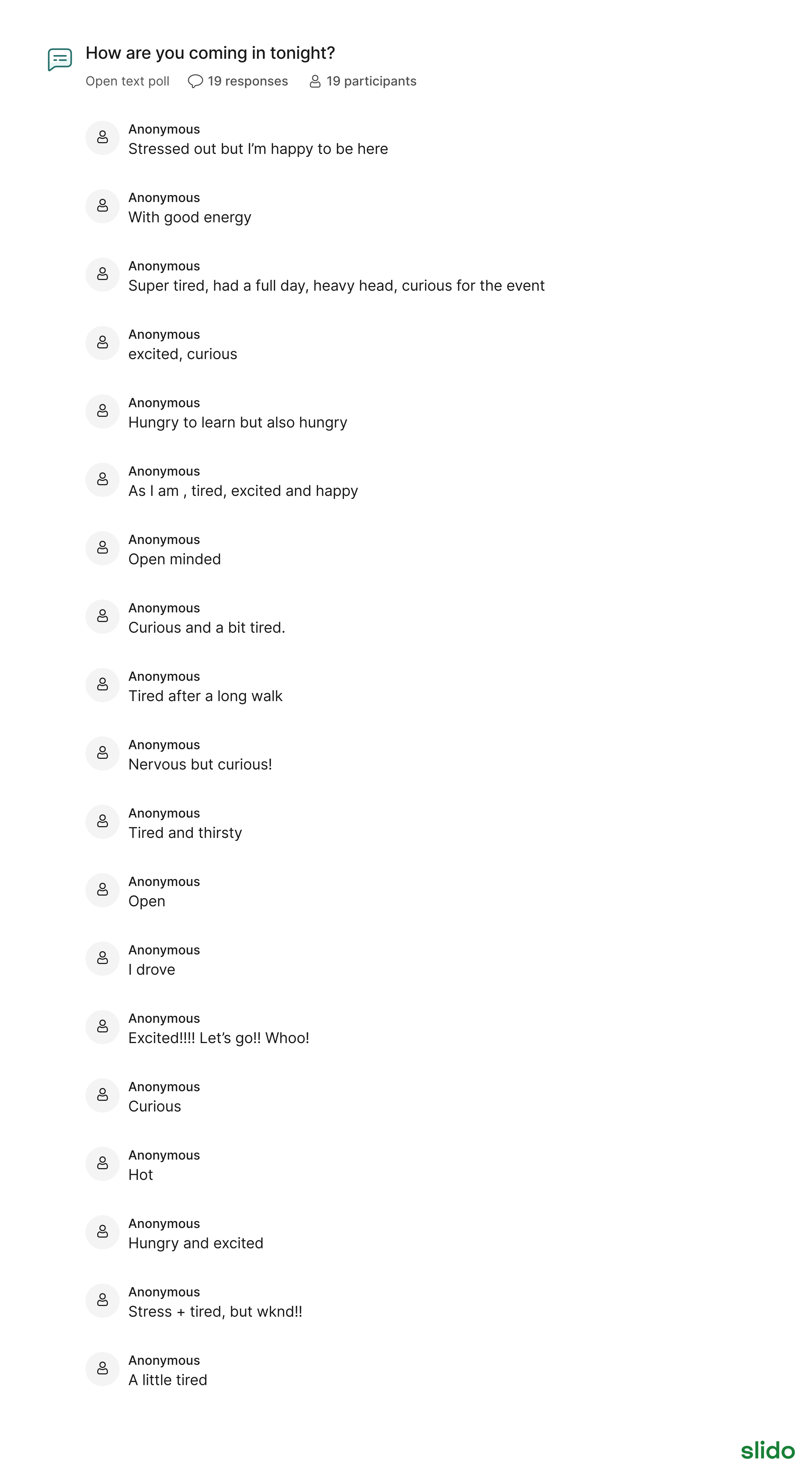
It felt like a good reminder that people show up to spaces like this carrying a little bit of everything, and that is exactly as it should be.
We grounded the evening the way we ground every ECHOFORM gathering, with a land acknowledgment and a community agreement read aloud before anyone spoke publicly. We asked the room to make space for different forms of participation, to listen to understand rather than to respond, to challenge ideas and systems rather than people’s worth, to take care of themselves and step away if needed, and to respect confidentiality and consent. It set the tone for everything that followed as the evening proceeded into a recap of the entire program:
For those who don’t know her yet, Rika is the founder of ECHOFORM. She started the organization because she kept meeting young people who had incredible stories and no space to actually tell them, or be taken seriously when they did. So she built one. ECHOFORM is a youth-led civic storytelling and artivism organization built on the belief that every young person carries a story worth telling, and that those stories are powerful tools for civic change. It creates spaces, its Labs, where young people from historically marginalized and equity-seeking communities can gather, reflect, create, and imagine new futures together.
This year alone, the Artivism Cohort has run through seven thematic Labs, covering everything from Climate Futures and Media Literacy to Health Equity and Global Citizenship:
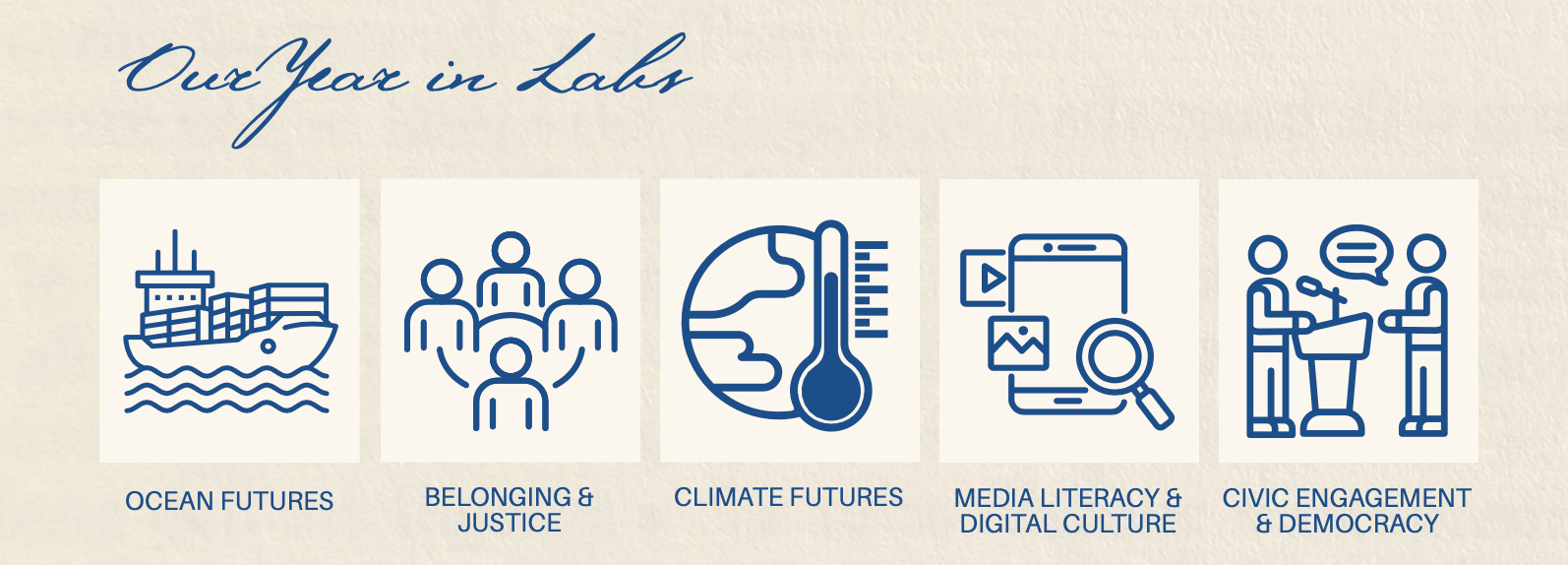
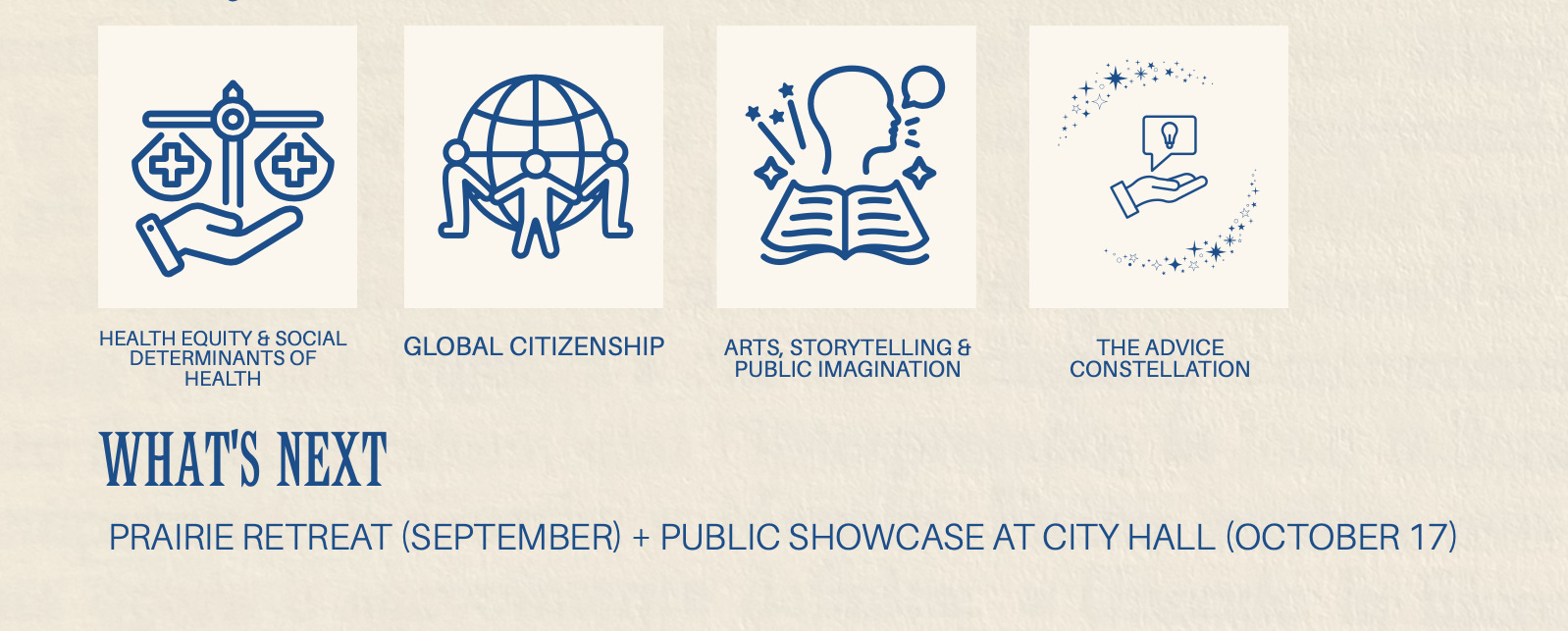
Each one blends story circles, workshops, and hands-on creative practice, from land-based learning along the North Saskatchewan River to neurographic drawing and community roundtables. Participants have moved from quiet observers to confident storytellers and organizers over the course of a single season. Looking ahead, ECHOFORM is heading into its Prairie Retreat this September, a chance for the cohort to slow down, connect, and deepen the relationships built over the summer. From there, the cohort builds toward its Public Showcase at Edmonton City Hall this October, where artivists will share spoken word, dance and live storytelling with the wider community, marking the culmination of a year of growth. The vision going forward is simple: to keep building third spaces where young people don’t just talk about change, they practice it. Spaces like this matter because they hold room for imperfection, for growth, and for the kind of honest storytelling that moves communities forward.
This event, The Advice Constellation, was the final piece of the summer.
None of it would have happened without the people and organizations behind it:
HOWL Experience and Righting Relations are ECHOFORM’s main funders this year, and this program simply would not exist without their belief in the work. We’re also grateful to Apathy is Boring for partially sponsoring our Civic Engagement and Democracy Lab, Ribbon Rouge for partially sponsoring our Arts, Storytelling and Public Imagination Lab, and Alberta Mentors for partially sponsoring the Advice Constellation. United Nations Association in Canada’s Eco Clubs Programme, Frontlines, 525 Arts, and many others also supported the cohort along the way, helping make this work possible.
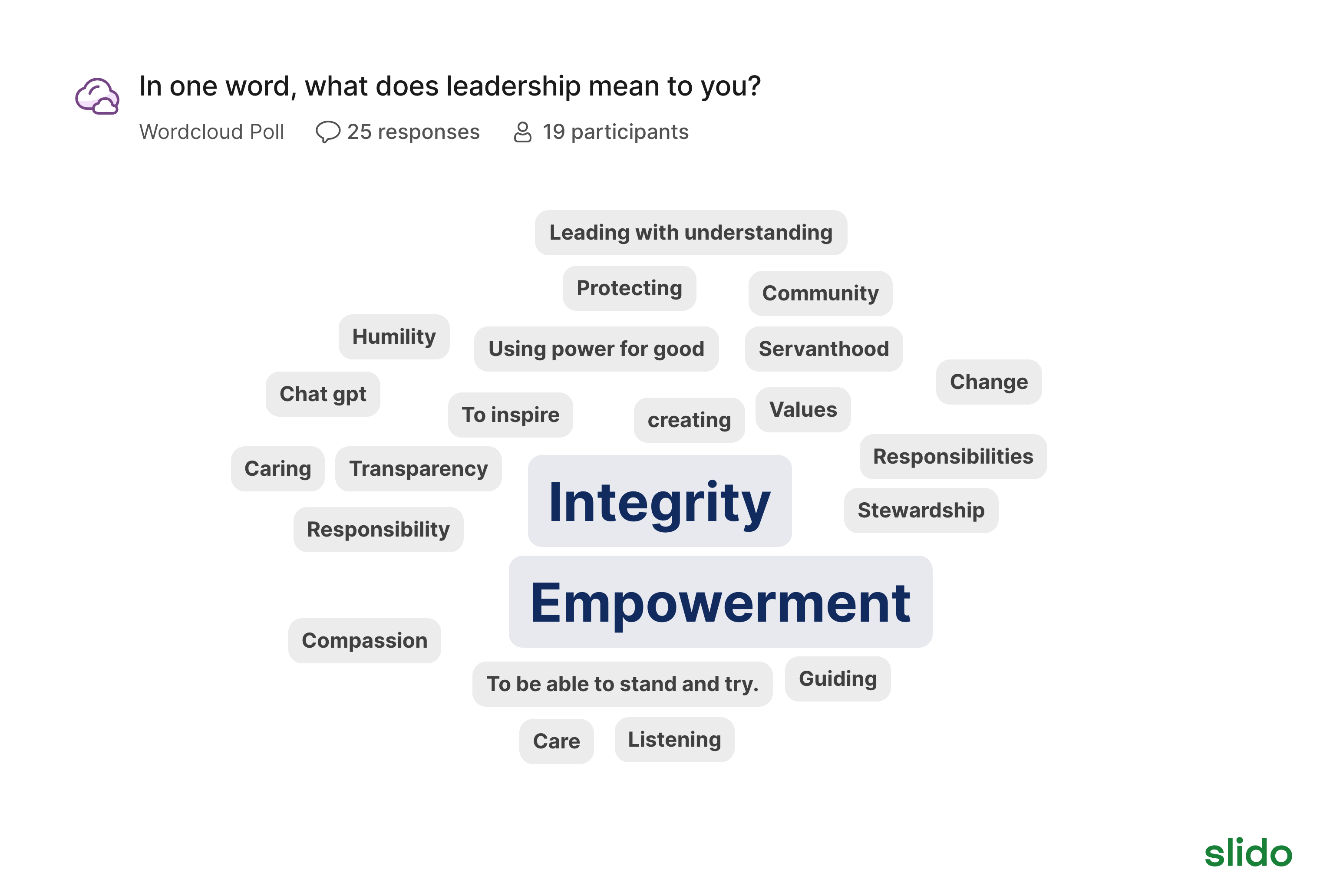
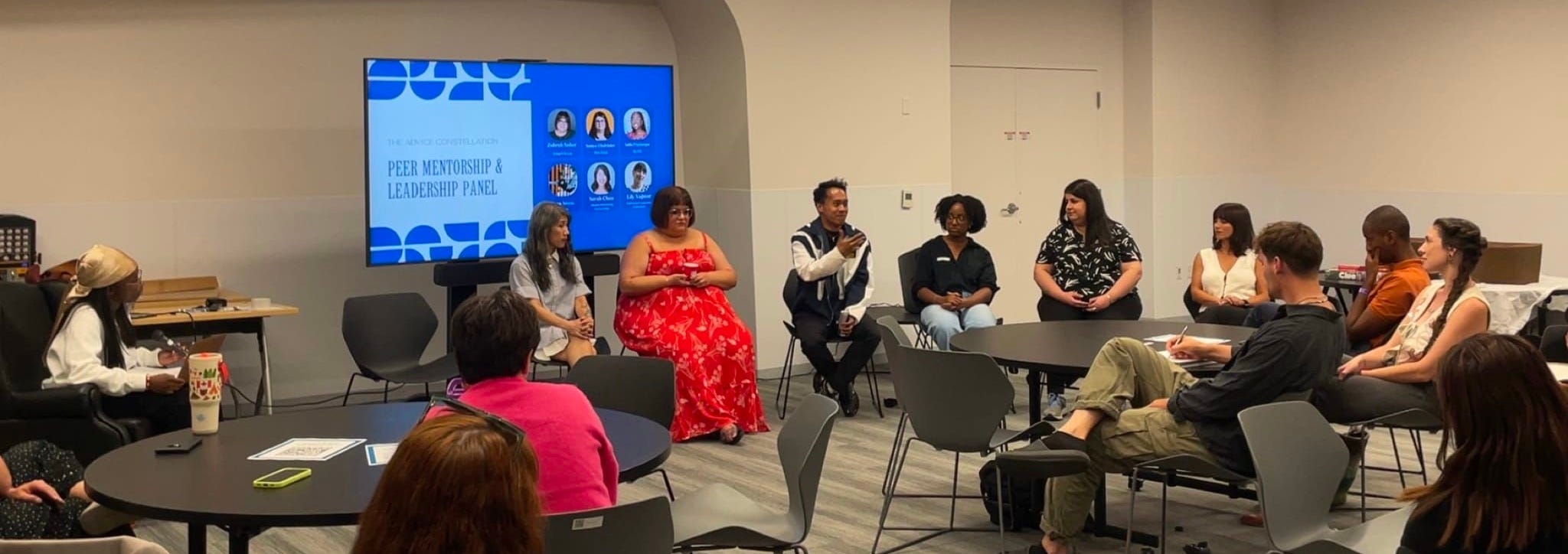
Our Mentorship Panel brought together six leaders whose work spans mentorship infrastructure, community storytelling, and youth advocacy. This simple question was the perfect way to open up the entire night before moving on to the panel segment.
Each panelist started off by introducing themselves:
Meet the Panelists
Zohreh Saher is a Senior Intergovernmental Officer with the Government of Alberta’s International Relations division, working on partnerships across the Indo Pacific and Middle East. Outside of that role, she serves as President and Co-Founder of interVivos, an Edmonton based, volunteer led, non partisan nonprofit that has matched emerging and established leaders since 2006 to build a more connected community.
Saniya Ghalehdar is a facilitator, community engagement professional, and one of the four volunteers behind She Said, a storytelling collective that amplifies women’s voices through interviews, advocacy, and community engagement. Her day job is at NorQuest College, where she works on equity based training with a current focus on anti hate education.
Adiki Puplampu is the Communications Coordinator for the ELITE Program for Black Youth, a STEM based experiential learning program for youth aged 15 to 22 that has trained and supported paid opportunities for more than 500 Black youth over the past six years. She holds a master’s degree in communication and media studies and brings a people first approach to every space she is in.
Sean Arceta, also known as B Boy Pharush, is the Director of Community Relations at iHuman Youth Society and a professional street dancer of over 25 years. iHuman supports inner city youth aged 12 to 24 through creative programming alongside wraparound support like medical care access, housing referrals, and social work outreach.
Sarah Chan is the Engagement and Operations Lead at Alberta Mentoring Partnership and the founder of Make Your Mark, United Way’s student leadership program. She has spent over a decade fundraising and organizing across Edmonton’s charitable sector.
Lily Yağmur Gosling is the founder of Edmonton Learners Collective and a career counsellor at Solomon College, where she helps newcomers prepare for interviews and build their resumes. She started the Collective because she believes community plays a real role in mental health, and that in a new city or a new country, people need other people.
What They Said
Our first question was about mentorship as a two way relationship, and what younger people had taught each panelist. Lily talked about how the young people she works with keep encouraging her to take risks, even when it feels scary, even when there is something real to lose. Saniya credited her She Said teammates, with teaching her to lead with hope instead of heaviness, especially when the topics they cover can feel like a bottomless pit. Adiki spoke about the ELITE interns she works alongside, and how their certainty about their dreams, paired with real openness to explore, has shaped how she thinks about her own path. Sean shared how the young people he supports through crisis intervention have taught him, again and again, to listen more and ask fewer questions, since so much of what they are trying to say comes through in nonverbal ways. Zohreh told a story about interVivos issuing a public apology after a difficult board decision, and how one of the organization’s youngest board members reminded her that everyone makes mistakes and you fix them, a piece of advice that reshaped how she holds herself accountable. Lastly, almost echoing Zohreh’s sentiment, Sarah closed off this portion by reminding our entire group that sometimes “it’s not that deep.”
Continuing the conversation, we asked how their work intersects with storytelling and creativity as tools for leadership and advocacy. Saniya described building She Said around long form interviews, because storytelling does not feel like being lectured to, and how the project grew from a modest hope of reaching ten people to nearly a thousand followers who write in to say they saw themselves reflected in someone else’s story. Sean shared a story about advocating for a young person under house arrest to be allowed supervised gymnastics time as part of their conditions, because that young person was a visual and aerial artist, and giving them that outlet mattered more than the paperwork suggested it would. Lily talked about why storytelling sits at the center of her work with newcomers, how she always starts by asking what brought someone here, and how hearing each other’s stories helps people realize they are not the only ones starting over.
An audience member then asked how panelists balance full time jobs with the community and nonprofit work they clearly love.
The answers were refreshingly honest:
Intentional scheduling. Asynchronous teams that respect people’s different rhythms and availability. Knowing your own cycles of busy and quiet. And more than one panelist pointed to something simpler than a system, which was choosing to spend time on things that genuinely energize you rather than trying to be everything to everyone. Sarah spoke about self care as a real part of that balance, not necessarily yoga or meditation, but quiet time, even five minutes, even journaling you sometimes skip. Zohreh’s advice was to pick one or two things and go deep, since that is where the real return comes from, rather than spreading yourself across everything at once.
To close the panel, we asked each panelist a lighter question: if your leadership journey were a piece of art, what would it look or sound like right now?
The answers were as diverse as we’d hoped: They ranged from fireworks everywhere to a half-painted canvas. There was also the image of an old red rotary phone, used as a kind of phone tree to organize people, and the way that image can become your own. Others spoke to the importance of consistency and showing up as yourself in everything you make.
Meet the Rest of Our Mentors
Alongside our panelists, a wider circle of mentors joined the networking portion of the evening, representing organizations working across printmaking, cultural memory, leadership development, education advocacy, climate justice, and youth entrepreneurship.
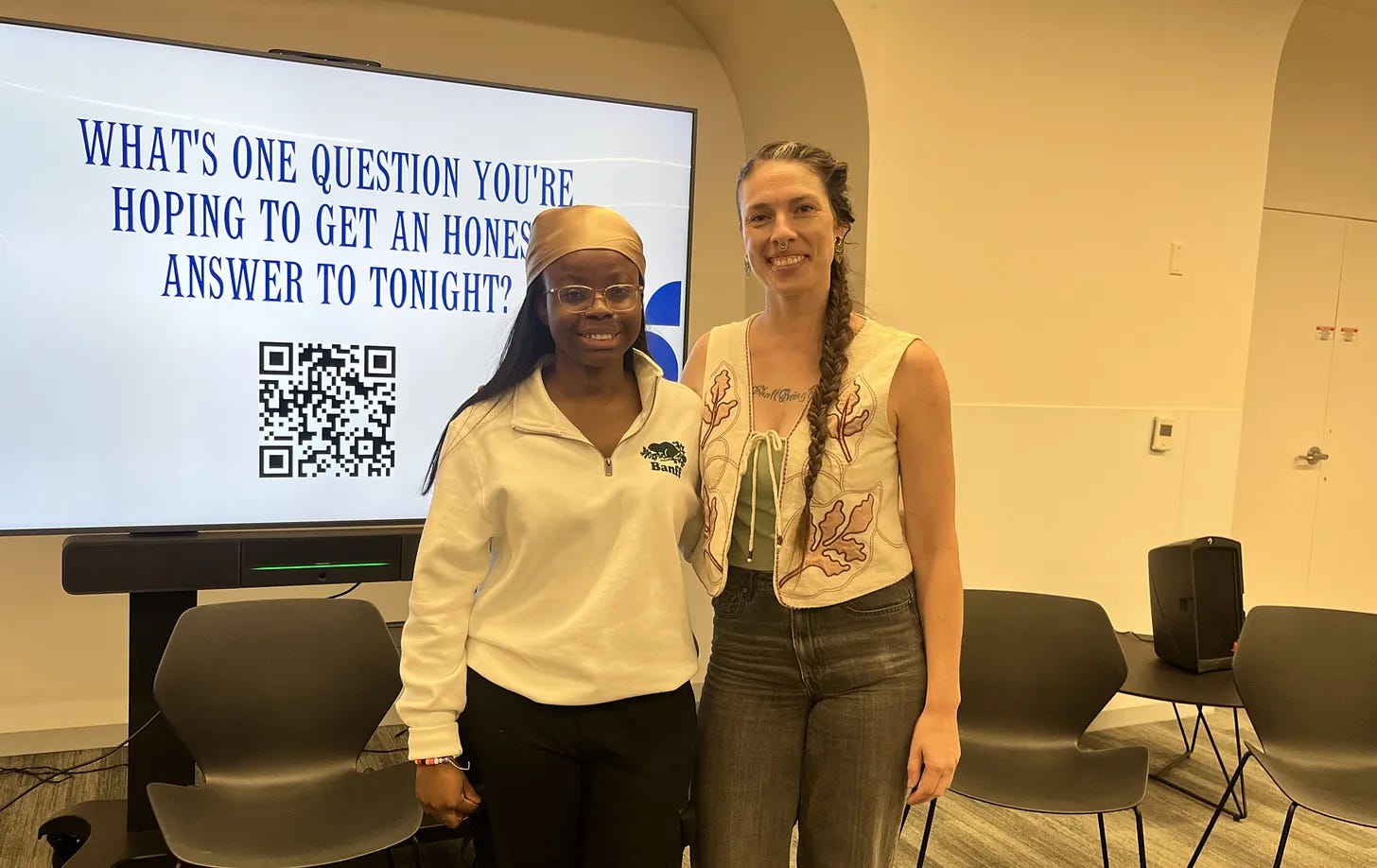
Caitlin Bodewitz is the Executive Director of SNAP, the Society of Northern Alberta Print Artists, a leading centre for printmaking in Canada. She is also an interdisciplinary artist and mother whose curatorial approach is rooted in elevating underrepresented voices.
Dave Konrad joined as a photographer and creative, bringing an artist’s eye to the room.
Dolly Cepeda Montufar volunteers with Climate Justice Edmonton, a collective committed to social, environmental, and climate justice. She works at Chandos Construction and is developing a documentary series on Edmonton’s energy history funded by Telus STORYHIVE, and previously sat on the City of Edmonton’s Energy Transition and Climate Resilience Committee.
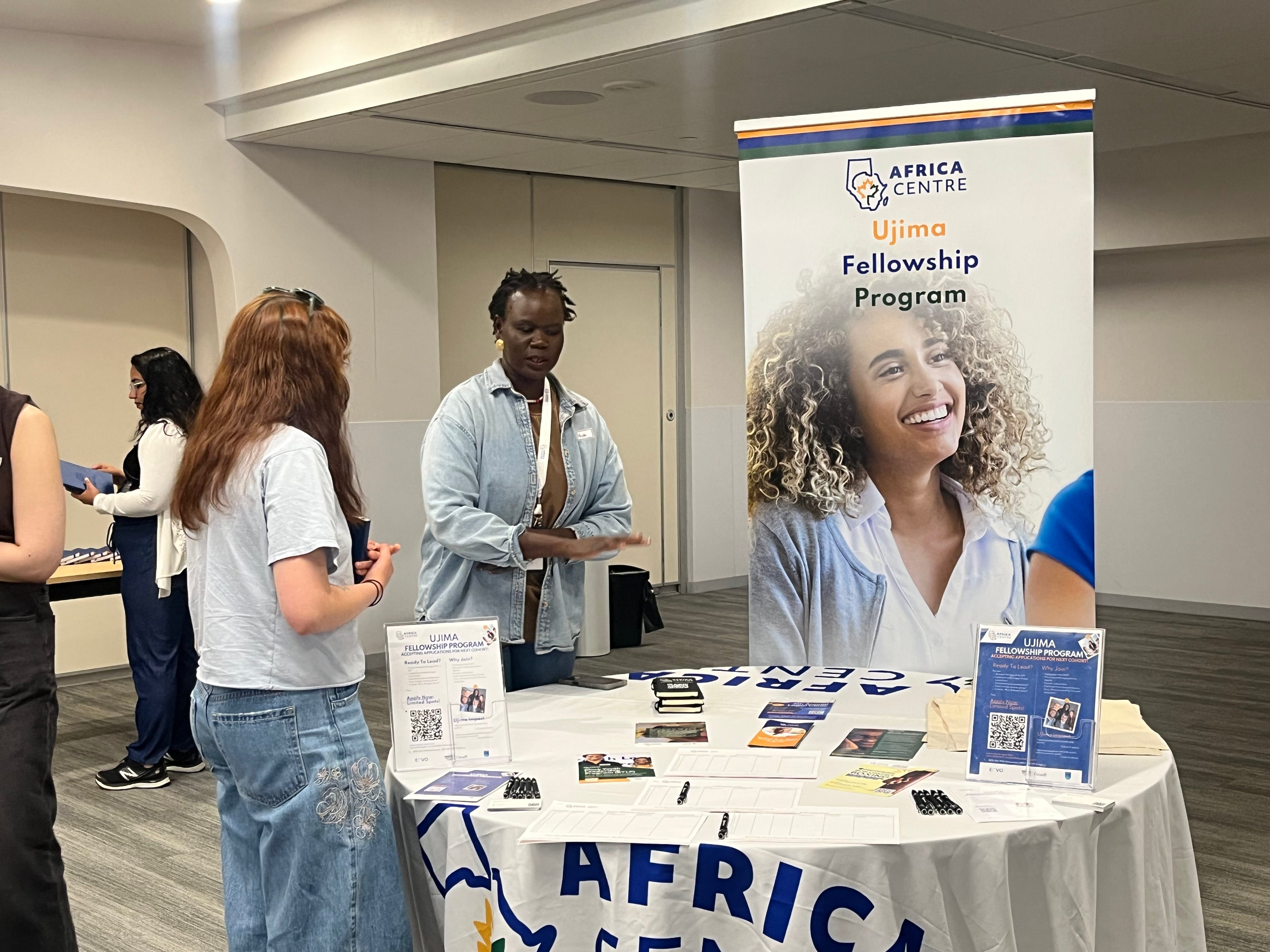
The Ujima Fellowship, represented by members of its cohort, is a leadership development program created by Africa Centre in collaboration with NAIT and the Edmonton Chamber of Voluntary Organizations, working to address structural racism and inequity through diverse representation in advisory and decision making spaces.
Jean Bruce Koua is the Co Founder and COO of Elev Homes, an Edmonton born student housing company that has supported more than 3,000 students. He was recently named one of Alberta’s Top 30 Under 30 and mentors early stage entrepreneurs through Edmonton Unlimited and NAIT.
Lee Oi Luc represented Aiya Collective, an artist led project creating space to remember the emotional and geographic loss of Edmonton’s Chinatown while imagining more caring ways of being together in the city.
Kennedy Daniels Peterson is the founder of APPPLE, Albertan Parents Protecting Public Learning and Education, a grassroots project using photography and storytelling to advocate for Alberta’s public education system.
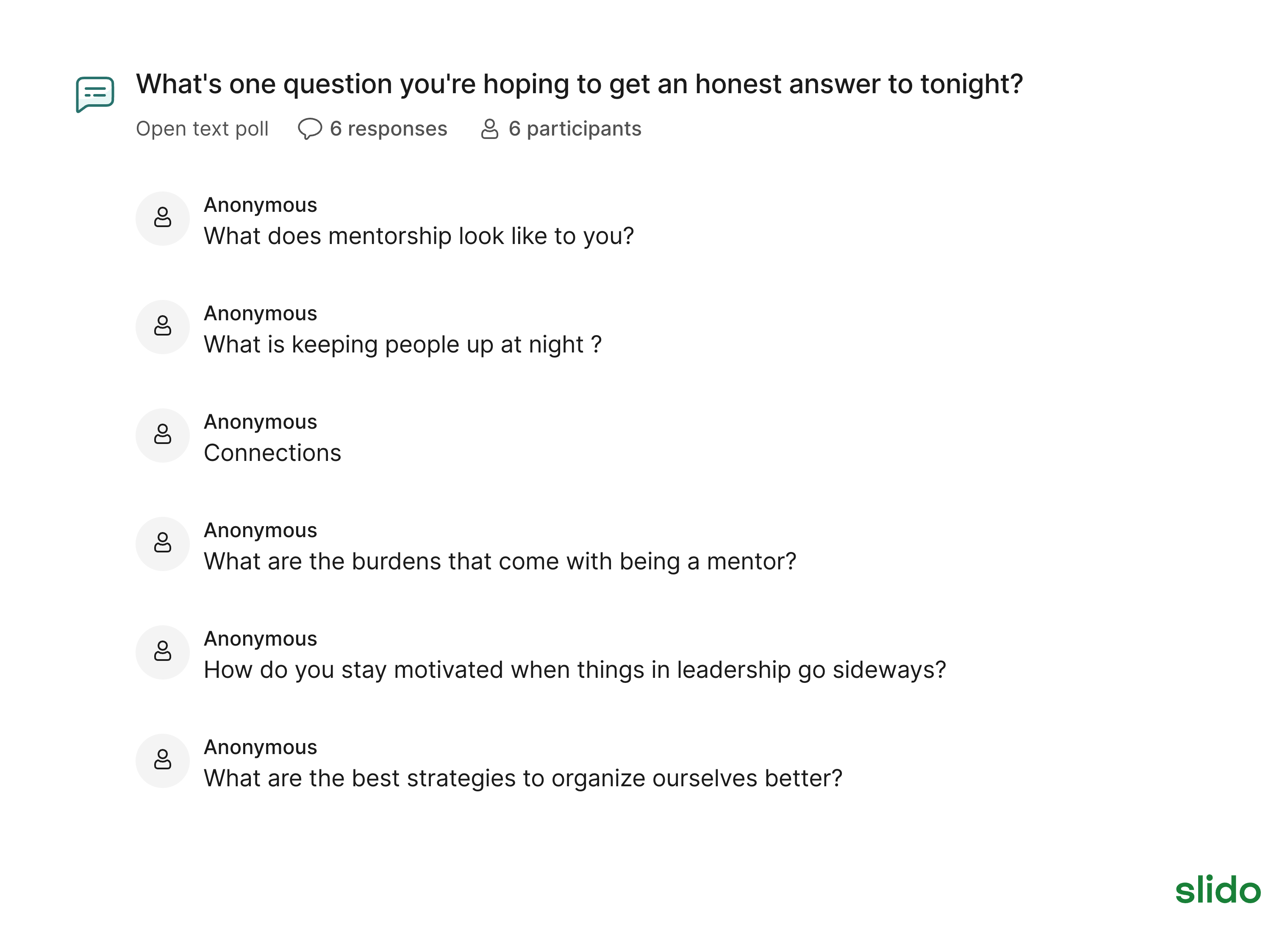
We grounded the room by asking, what’s one question you’re hoping to get an honest answer to tonight?
We grouped our roundtable tables intentionally:
Society of Northern Alberta Print Artists, Dave and iHuman sat together around creative practice as a form of leadership.
APPPLE, Edmonton Learners Collective, and Climate Justice Edmonton sat together around advocacy and lived experience.
Ujima Fellowship, ELITE and Elev sat together around leadership and opportunity.
Aiya Collective and She Said sat together around storytelling as a tool for memory and voice.
Lastly, Alberta Mentoring Partnership and interVivos sat together, two organizations built entirely around the practice of mentorship itself.
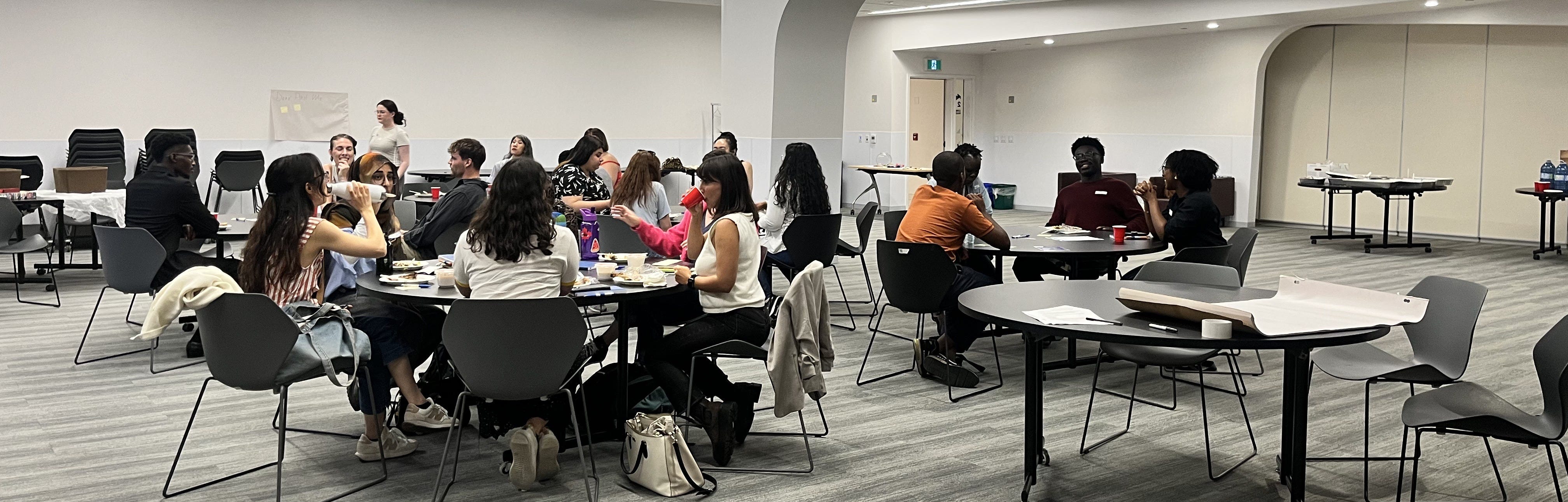
At each table, participants worked through prompts like what advice is currently orbiting you but hasn’t landed yet, who is in your constellation when a decision feels big, what risk changed your trajectory, and what you wish someone had told you at the age of the person across from you. Groups rotated every so often, so by the end of the roundtable, most participants had sat with several different mentors, and most mentors had heard from a wide cross section of the room.
Dear Past, Present, and Future Me
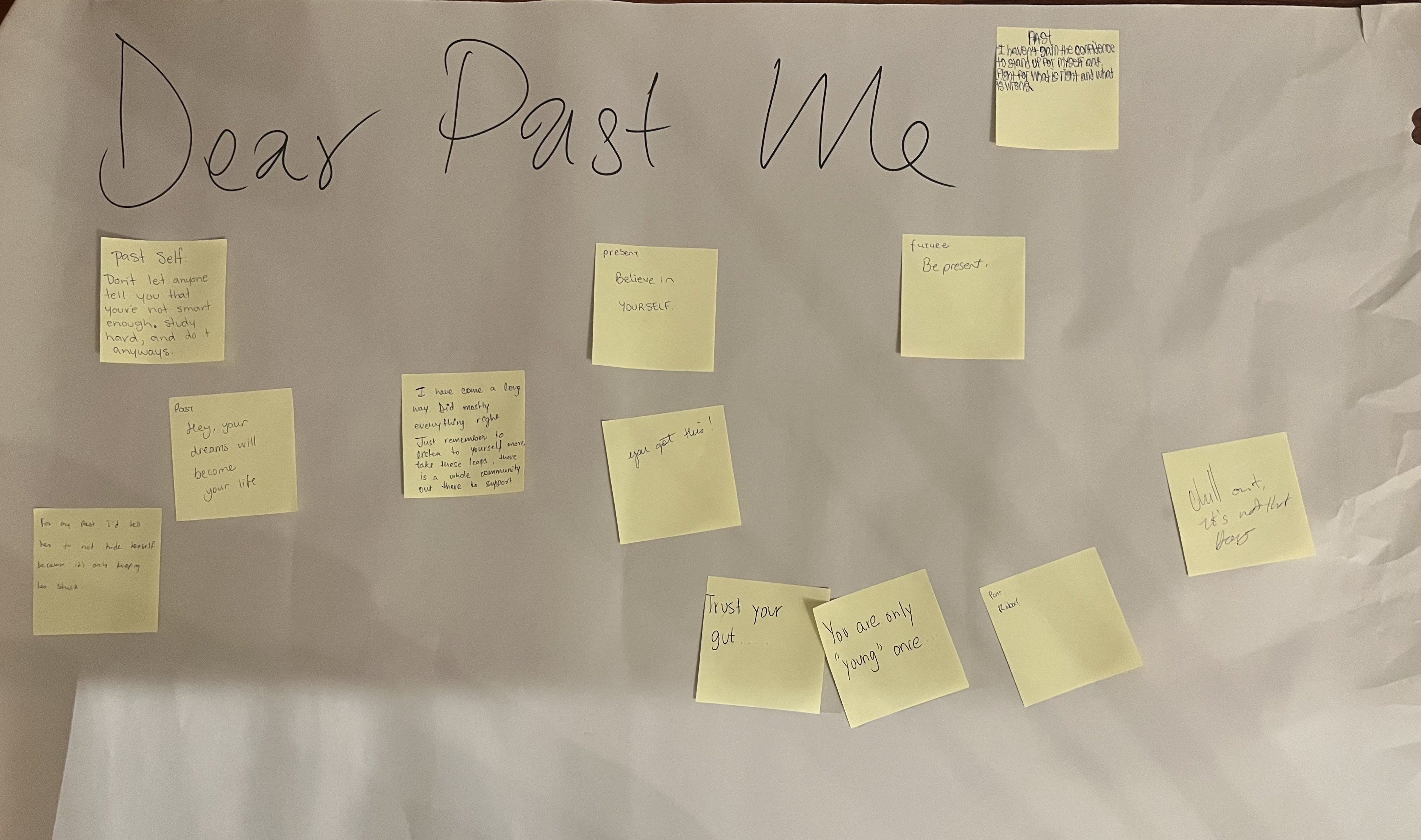
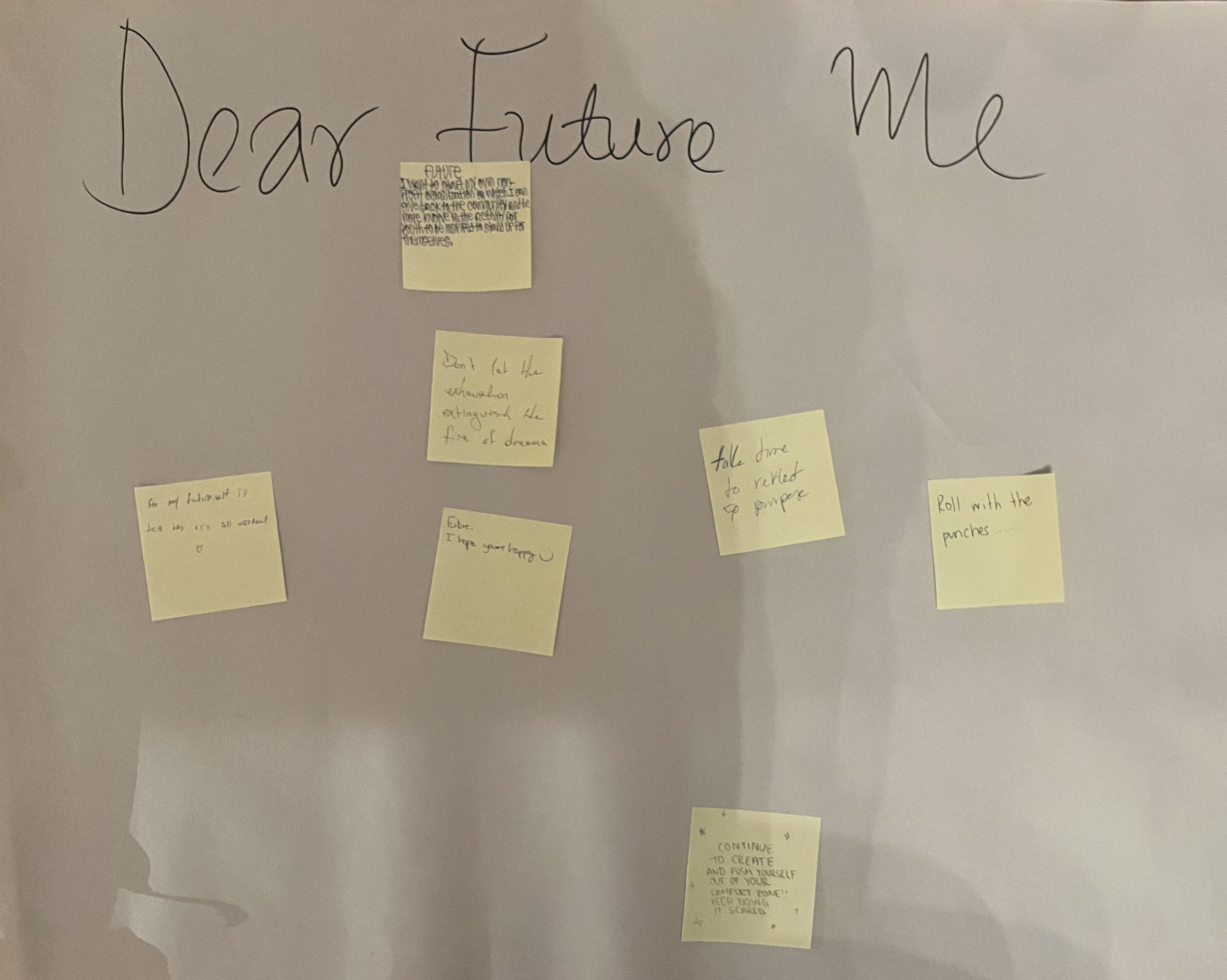
During our break between the panel and the roundtable, we set out sticky notes and invited people to write a message to their past self, their present self, or their future self.
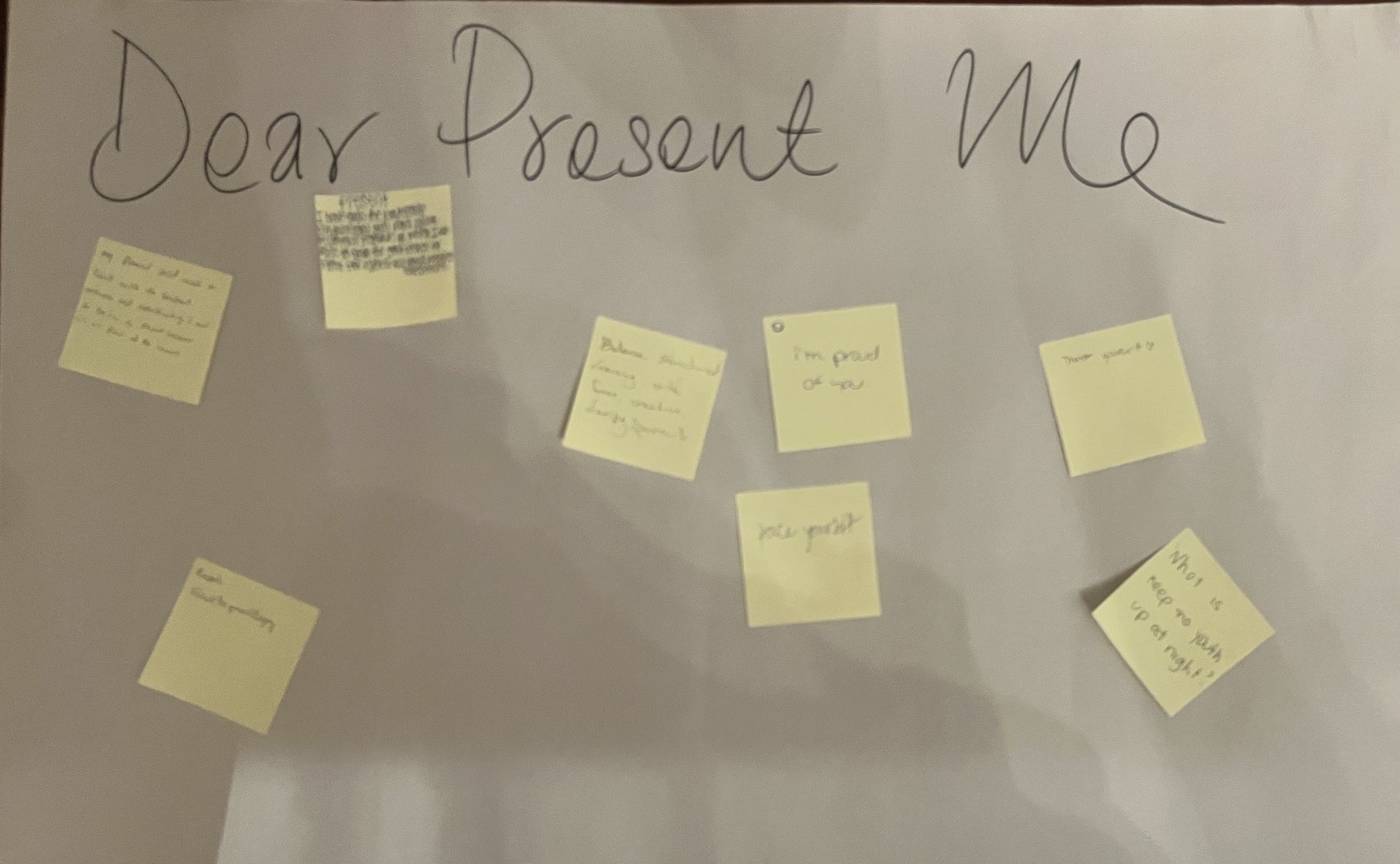
What started as a quiet break time exercise ended up carrying through the rest of the evening, with people returning to the notes throughout the roundtable rotations, adding new ones or sitting with what they had already written.
Closing Reflection
We ended the night the way we began it, by listening. Going around the room, three words kept surfacing: speak up, seize the moment, storytelling makes us feel less alone.
When we asked one final time what one thing people were taking away from the night, the answers said it best:
The power of our stories. The power of conversation with passionate people. Connections make us stronger. Perspective. Community. One response has stayed with us since: to not hide myself out of fear <3
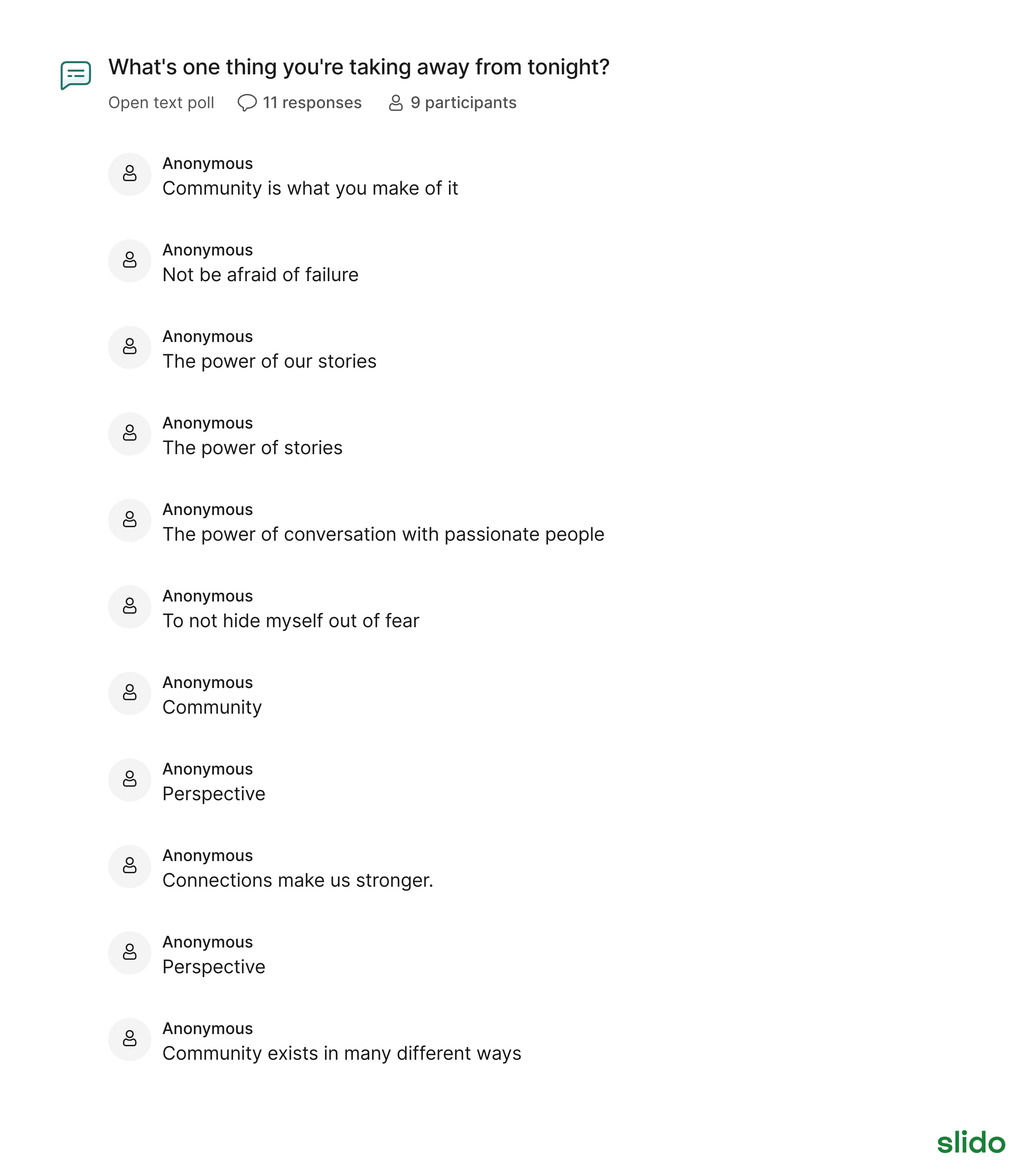
Community exists in many different ways. On August 28, it looked like a panel, a roundtable, a sticky note, a word cloud, and a room full of people willing to be honest about where they were coming from and what they hoped to leave with.
A special thank you to Alberta Mentors, whose mission, to enhance the capacity of Alberta’s mentorship community and network of partners to do high impact mentorship, quite literally shaped the spirit of this evening.
And to everyone who showed up and stayed present, thank you.
Resources

Coming Up: Stories that Echo - the Artivism Showcase at Edmonton City Hall, Oct 17.