

Some labs teach you something.
Others just let you feel it.
August 21st was somewhere in between, a night that started with eight incredible speakers at the front of the room and ended with a room full of people quietly drawing their own feelings onto canvases.
We gathered at EPL Stanley A. Milner for the seventh lab of this summer’s Artivism Cohort: Arts, Storytelling & Public Imagination. It was, in a lot of ways, the lab we’d been building toward all season. Eight panelists sat up front and spoke openly to the room in front of them about what pulls them toward this work. A roundtable of artivists showed up and to close the night, we picked up our Sharpies and let our feelings become lines on our canvases.
Of course, no ECHOFORM event would be complete without a little pre-show chaos, and true to form, the laptop and projector needed a few extra minutes to agree on how to talk to each other. If you were in the room, you witnessed it. But, we got there. We always do.
Once we sorted ourselves out, we opened with a simple grounding question on Slido: “What does imagination mean to you?”
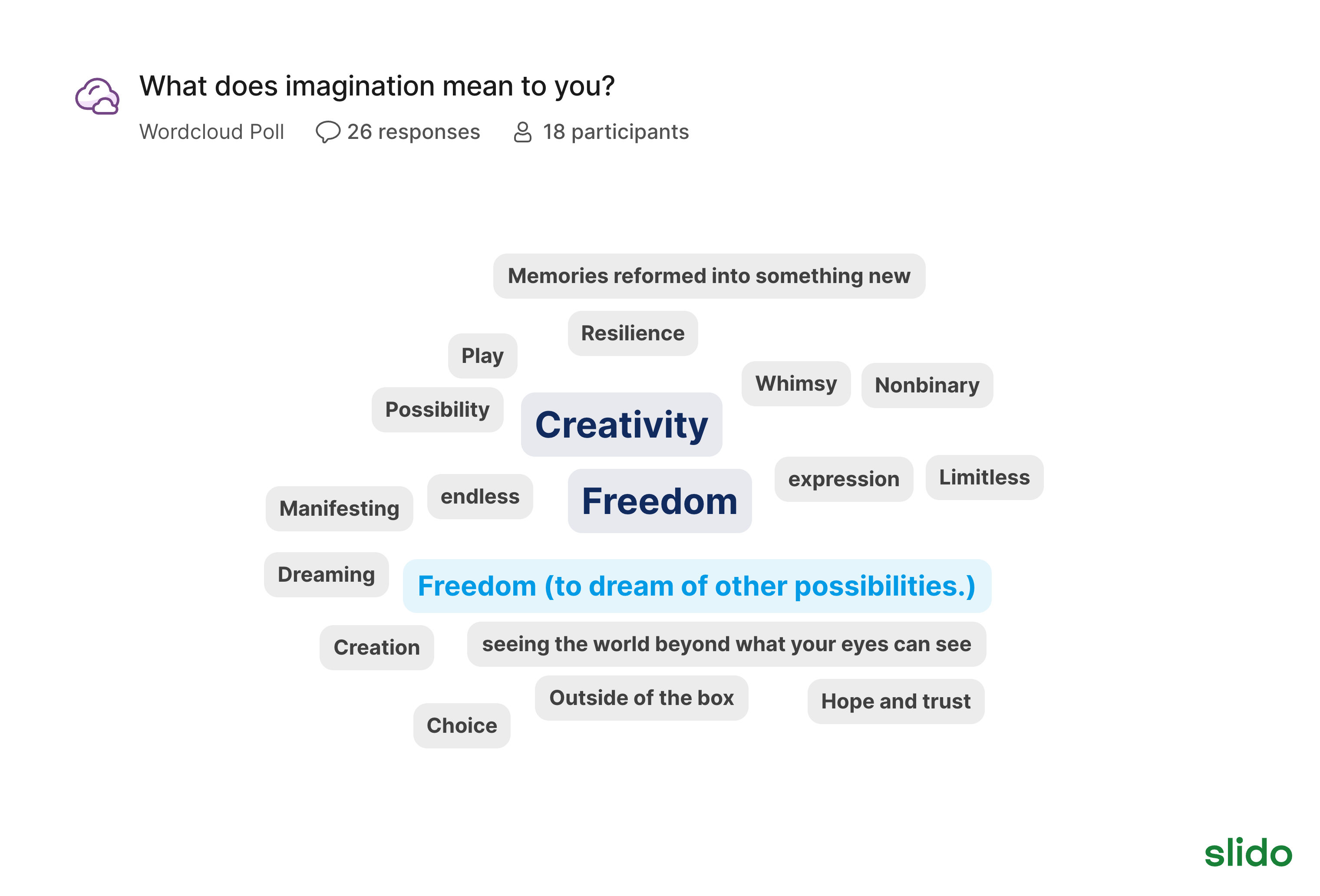
The answers came in waves: Creativity. Freedom. Resilience. Possibility.
One response stayed with a lot of us in the room: freedom, to dream of other possibilities. If you’ve ever needed a one-line definition of what this whole cohort is trying to do, that might be it <3
ECHOFORM acknowledges the Indigenous peoples whose lands and territories we live, gather, and work upon. We honour the enduring relationships First Peoples hold with these lands and commit to civic storytelling grounded in truth, accountability, and respect.
Before we go further, a small but important disclaimer, one we try to hold at every lab: nothing in this reflection, and nothing said on that panel, was meant to be the final word. These conversations are built to hold many perspectives at once, some of which sit in tension with each other, and that’s not a flaw in the format. That’s the format working exactly as it should. There’s no one-size-fits-all answer to what art is for, what imagination means, or where the line between art and advocacy sits. We’re not here to resolve that. We’re here to sit inside it together.
Meet the Panelists
Eight people, eight completely different relationships to art, storytelling, and civic life, all sharing the same stage. Here’s who joined us:
Kennedy Daniels Peterson is an Edmonton-based freelance photographer and artist with more than 10 years of experience, an amateur writer, and the founder of APPPLE, Albertan Parents Protecting Public Learning and Education. A passionate advocate for Alberta’s public education system, she uses storytelling, art, and photography to elevate community voices. Kennedy is a proud mother of two and the wife of a teacher, bringing both personal and professional insight to her work.
Hannah Gelderman (she/her) is a settler of Dutch descent living in Amiskwaciwâskahikan, also known as Edmonton. Hannah graduated with her Bachelor of Fine Arts from the University of Alberta in 2012, and in 2020 completed a Master of Education in Adult Education and Community Engagement from the University of Victoria. She’s worked in the arts sector for over a decade as a programmer, educator, and visual artist, and volunteers with Climate Justice Edmonton, where she brings together art and activism. As a strong believer in the transformative power of art, Hannah is energized by how arts-based and creative practices can bring about positive change at both individual and collective levels. In her own practice, she works primarily in 2D mixed media, collage, drawing, printmaking, and painting, exploring human connection to the environment and artistic responses to the climate crisis.
Renée Williams is the Chief Executive Officer of the Edmonton Arts Council. Passionate about Edmonton and all that it has to offer, Renée has built her career on reminding locals of the magic of her home city and telling the world about this unique and authentic destination. An artist in her own right, her musical journey began at a young age, and her appreciation for and participation in a myriad of art forms continues to this day. Her professional work, education, and volunteer experience have given her over 20 years of strategic communications proficiency, spanning corporate strategy, media relations, brand management, and project management. Renée has served on numerous boards and committees, including InterVivos’ BIPOC Cohort Mentor program, Destinations International’s Advisory Committee on Diversity and Inclusion, the Alberta Culinary Tourism Alliance, and Co-Chair of the Edmonton JUNOS 2023 Host Committee, and represented Fort Edmonton Park as a recipient of the 2022 THEA Award for Best Heritage and Cultural Experience for the Indigenous Peoples’ Experience. The Edmonton Arts Council (EAC) supports, promotes, and inspires the arts across the city. Through ever-growing investment in artists, organizations, festivals, and the greater arts community, the EAC raises the profile of Edmonton arts and culture and brings the arts into everyday life. With funding from the City of Edmonton and other partners, the EAC welcomes contributions from artists across every community, background, and tradition, serving as a springboard for both emerging and established artists alike.
Suvi Sharma is the designer and founder of Silver’s Wind, a brand rooted in artistry and designed for women everywhere. Starting as a jewelry brand, Silver’s Wind scaled to multiple six figures within its first year of operation before Suvi pivoted the brand fully into fashion, launching its debut clothing collection to a waitlist of over 10,000 people, built entirely through organic content. A published photographer signed with Mode Models International, Suvi is currently developing Silver’s Wind’s debut embroidered Fall/Winter collection, translating original Indian mythological illustration into embroidery on contemporary silhouettes. Silver’s Wind began as a jewelry brand before pivoting into fashion. Beyond the collections, the brand hosts free event series for women, having built a following of deeply engaged women with waitlists exceeding 500 per event. Their gatherings create space for connection and creativity, reflecting the brand’s belief that fashion is not just what you wear, but how you move through the world with other women beside you.
Shiza Wasi believes civic engagement begins with belonging. A rising leader in Edmonton’s civic landscape, Shiza has focused her early career on helping underrepresented communities see themselves reflected in public life. Through her work with YEG Muslim Vote, she helped grow a grassroots initiative encouraging Muslim residents to engage with civic issues and elections. Today, in her role with Public Interest Alberta, she works to make complex policy issues accessible to communities across the province. Alongside this, she works with the Civic Youth Fellowship, in partnership with IslamicFamily, the City of Edmonton, and a coalition of partners, to connect equity-deserving youth with municipal leaders, creating lasting pathways into civic life for the next generation.
Nikki Hulowski (Nikki Rae Hallow) is an actress, comedian, voiceover actor, writer, director, producer, and revered acting coach based in Canada. A force to be reckoned with, Nikki’s dynamic and versatile performances have led her to international acclaim with multiple award wins onstage, onscreen, and behind the microphone. Honing her clown and improv-informed acting style, she strives to encourage connected, heartfelt performances that let audiences share in the experience. She performs live onstage as a co-founder of the internationally acclaimed sketch comedy troupe Marv N’ Berry, the femme-sketch group Sketchy Broads, calls House of Hush Burlesque her home-away-from-home, and improvises with Dienasty and Rapid Fire Theatre. She’s the main instructor and one of the founders of the YEG-based Actors Toolbox film program, head of acting for Nuova Vocal Arts, an instructor for ACTRA, and teaches her celebrated technique, On-Camera Connection, around the world. Her directorial debut, The Table Between Us, premiered at the 38th Edmonton International Film Festival and has since won multiple awards across North America. Nikki is co-owner of the film production company Giggling Shadows Productions.
Mayowa Ajibodu is a youth advocate, creative visionary, and community builder dedicated to raising a generation of purpose-driven young leaders. Through platforms in arts, leadership, and faith, he empowers young people to discover their voice, share their stories, and become catalysts for positive change in their communities. He’s the founder of The Live Initiative and the Young Canadian Change-Makers Association. The Live Initiative is a registered charity committed to strengthening communities through mentorship, education, and empowerment. They are passionate about discovering, nurturing, and providing platforms for young people with artistic talents to develop their skills, express their creativity, and reach their full potential, believing in the power of collaboration, compassion, and collective action to inspire positive change and build a brighter, more inclusive future for all.
Danni Okemaw is Anishinaabe and Swampy Cree from Berens River First Nation and God’s River First Nation in Manitoba. Born and raised in Winnipeg, she now lives in Edmonton, amiskwaciwâskahikan. Danni is the Community Engagement and Alumni Relations Coordinator at the Faculty of Native Studies, University of Alberta, where she organizes and supports Indigenous events across campus. She’s currently completing her Master of Arts in Native Studies, focusing on Indigenous dance, movement, cultural resurgence, language revitalization, and intergenerational healing. Danni is also one of the co-founders of Nimihitotan, which translates to “let’s dance” in the Cree language.
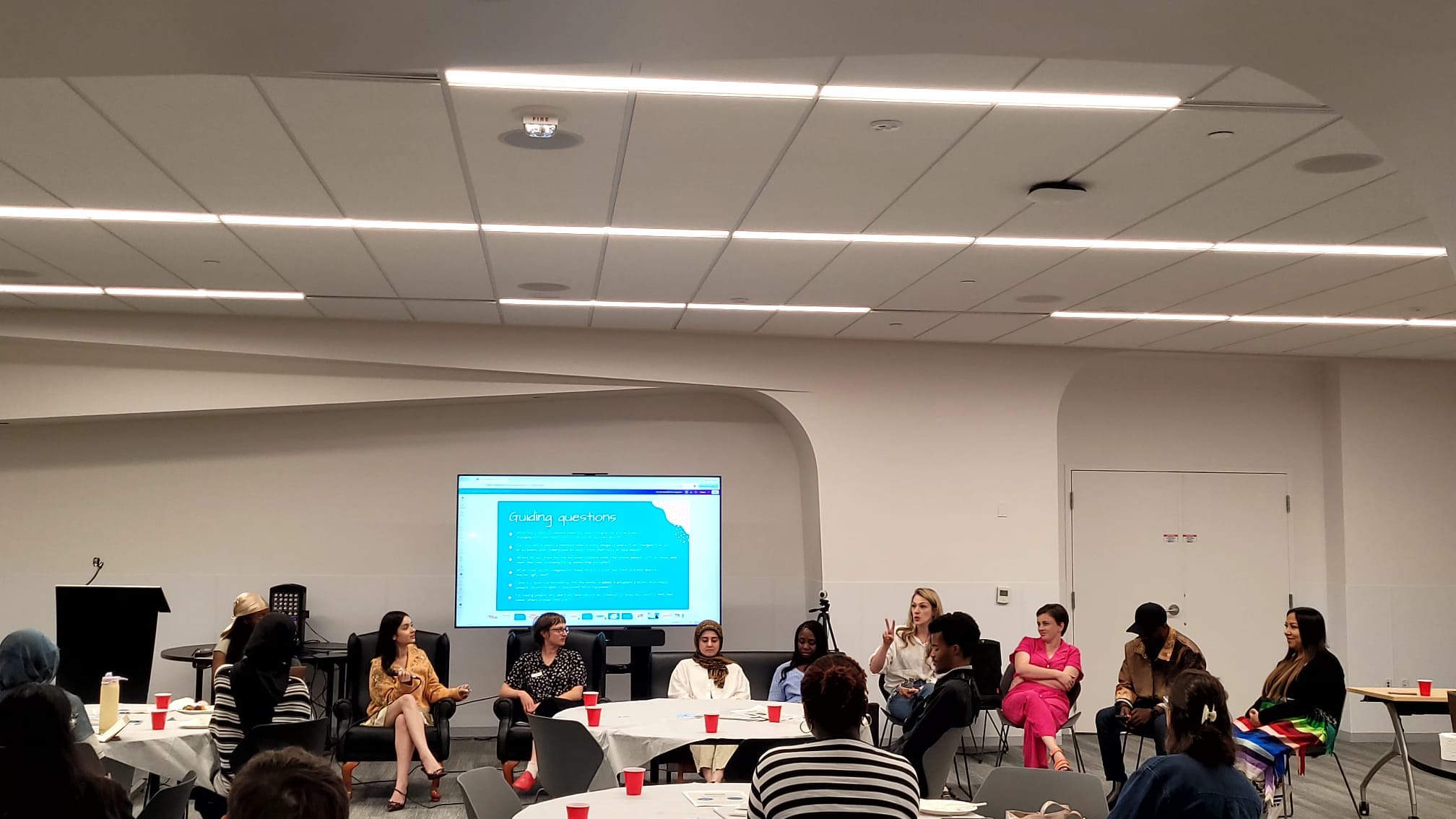
Eight very different lives, eight very different lenses, and somehow, once the screen finally cooperated, one continuous conversation.
What Pulled Them Toward This Work
We started the panel with the most human question we could ask: what first pulled you toward creativity, storytelling, or the arts as a way of engaging with your community?
The answers moved across the whole panel, and across the whole spectrum of what “arts engagement” can even mean. Renée answered from the funder’s chair, describing how the Arts Council exists precisely to give artists the resources and mobilization support they need before the art can even happen, the invisible infrastructure a lot of us never think about when we’re admiring the finished piece. Shiza answered from the civic education side, walking us through Public Interest Alberta’s work offering people an unbiased, trustworthy source of information, especially heading into something as consequential as Alberta’s referendum.
Others answered from somewhere more personal. One panelist reflected on how art is universal, a language that somehow manages to bridge generational gaps in a way almost nothing else can, whether that’s a grandmother and grandchild finding common ground over a song, or two strangers from completely different backgrounds recognizing the same feeling in a piece of visual art. Another offered a reframe that quietly reshaped how a lot of us were thinking about the whole night: art isn’t really about the artist. It’s about the audience, and what the audience walks away understanding. (This feels like an essential principle for civic engagement more broadly too. Co-create solutions with the people who are actually affected, rather than assuming you already know what they need without ever asking them.)
Danni spoke about combining her love of dance with culture, and how that combination became her whole way into this work, dance not as performance but as a living, breathing act of cultural continuity. Someone else asked the room a bigger, harder question: how do we actually center real stories, not just the aesthetics of storytelling, inside our art? One answer offered in response was simple and has been sitting with me since: art is about making humans feel human again. It’s about shifting how people imagine what’s even possible.
There was also one of the quieter moments of the night, when a panelist walked us through the Anishinaabe jingle dress, rooted in stories of healing. It connected Indigenous peoples’ experiences at Fort Edmonton to the thread running through the whole evening: culture carried forward, generation to generation, through movement and story, long before any of us in that room were ever born, and long after we’re gone.
What “Public Imagination” Means, In Their Own Fields
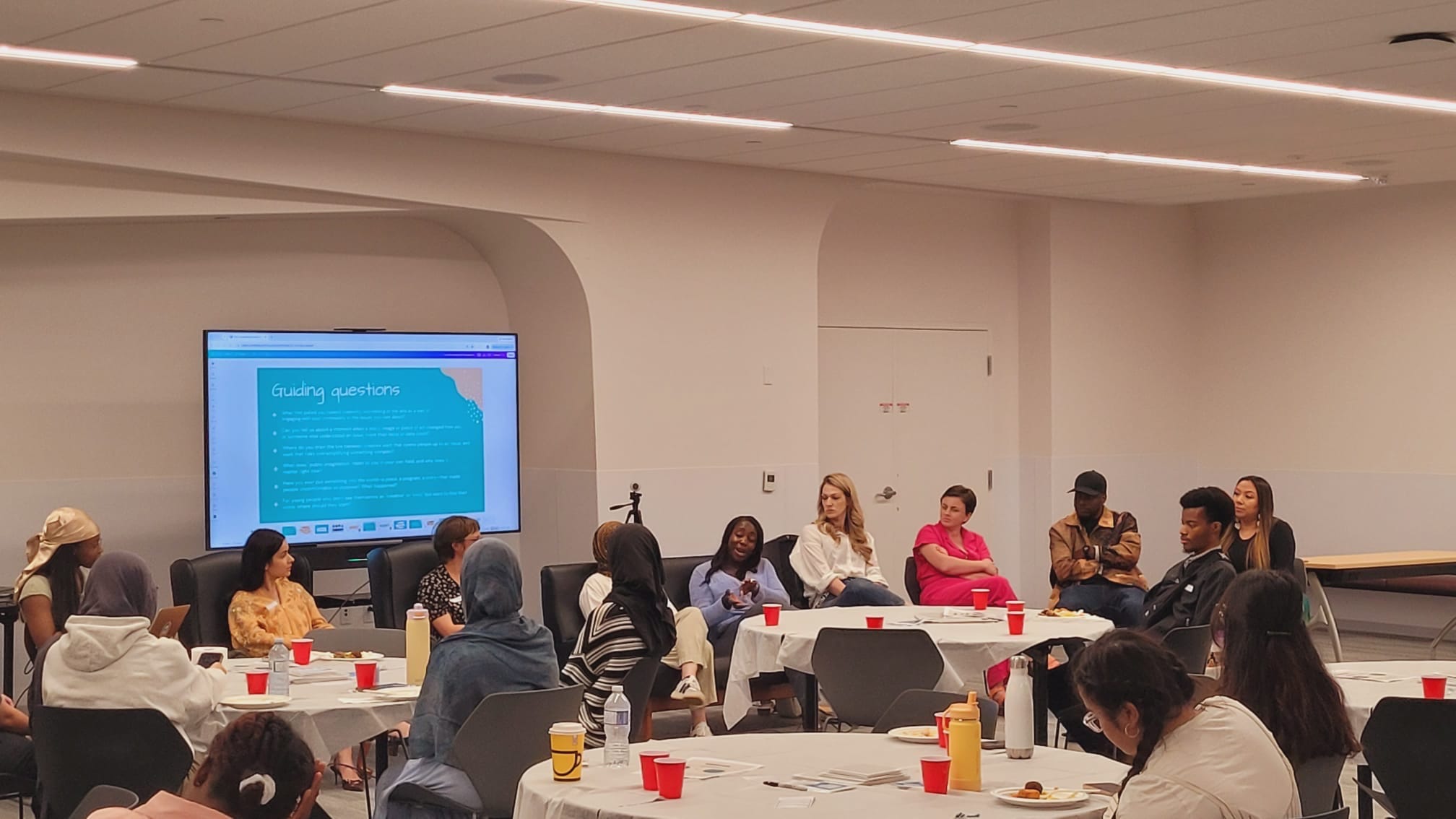
When we got to the anchor question of the night, what does public imagination mean to you, and why does it matter right now, the panel opened up in a dozen directions at once, and honestly, that’s exactly what we were hoping for.
One thread came up again and again: the people who are often left out of a conversation, including people who can’t even vote, are frequently the people most affected by its outcome. Before anything else can happen, you have to convince someone that an issue actually matters to them. That’s step one, and it’s the step so many of us skip in our rush to get to solutions. Public imagination, one panelist offered, is simply the ability to see past your own blinders. To broaden what you believe is even possible, past the walls we don’t even realize we’ve built around our own thinking.
Another thread traced the relationship between story and data, and landed firmly on one side: story and art will always land harder, and stay longer, than data alone. You can hand someone a spreadsheet full of statistics and watch their eyes glaze over, but hand them a story, and something shifts. One panelist described the relationship between dance, clothes, and audience, how each one carries meaning the others can’t hold by themselves, how a garment can tell a story a dancer’s body reinforces, which the audience then completes simply by watching. Someone else described a small, ordinary moment, watching a man play guitar on the street, and seeing something in it that felt like real, undeniable life. Art is life, they said. It was one of those lines that made the whole room go quiet for a second.
Where Art Opens Us Up, and Where It Risks Flattening
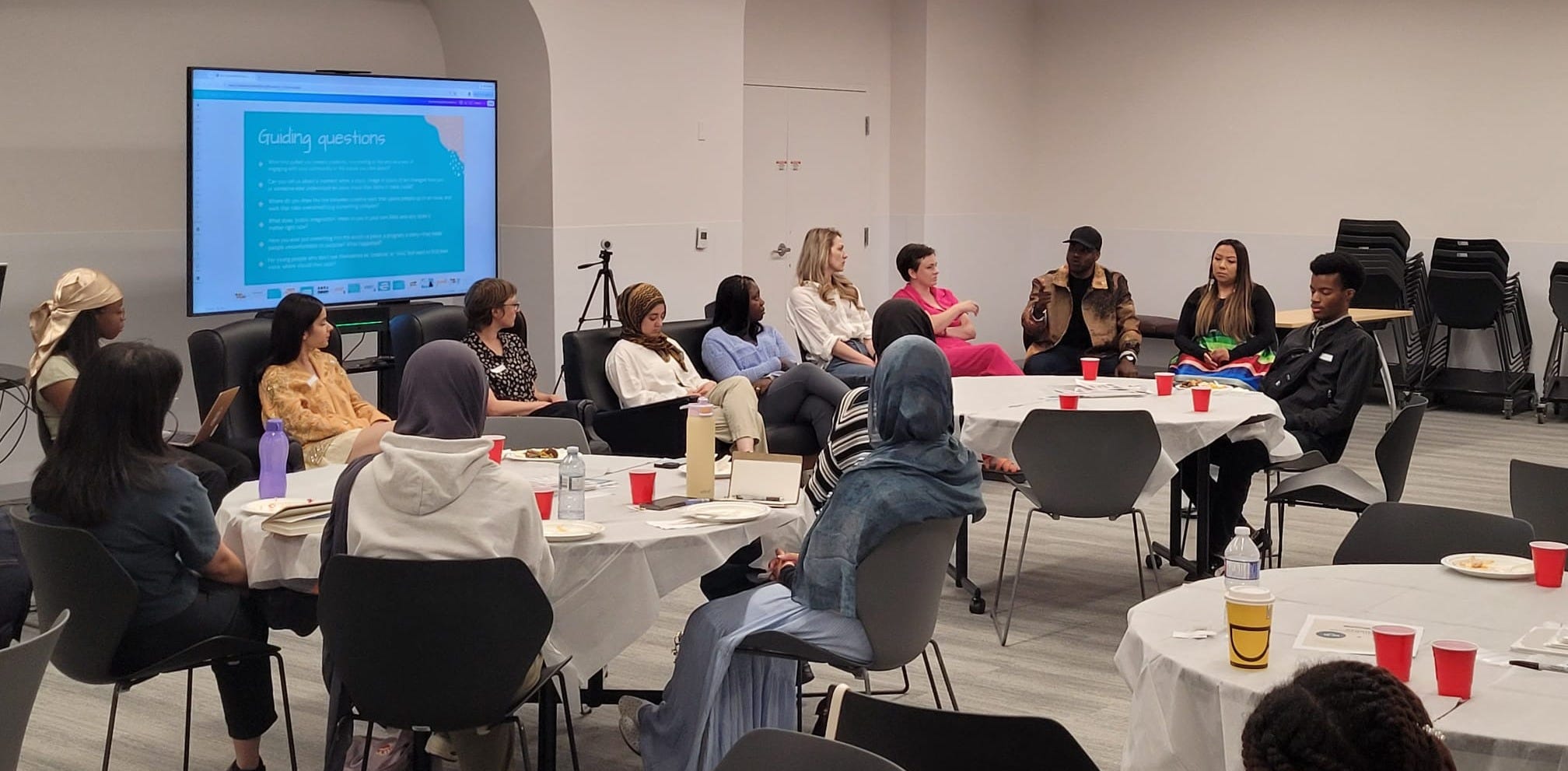
We asked the panel a harder question: where do you draw the line between creative work that opens people up to an issue, and work that risks oversimplifying something complex?
Some panelists spoke about the difference between drawing on a pattern and claiming ownership over it, a distinction that mattered more for the panelists working at the intersection of art and advocacy through design, who spoke directly and candidly about people lifting designs from cultures that aren’t their own, without acknowledgment or credit, treating a sacred or ancestral pattern as though it were simply decoration. Others brought the conversation back to climate and social justice, describing where oversimplification becomes genuinely harmful, flattening a crisis into a slogan, versus where it can become a useful entry point for someone just beginning to engage with an issue.
A few panelists also questioned whether there needs to be a clear line at all, suggesting that the relationship between creative work, complexity and advocacy can vary depending on the context and the issue being addressed.
Advice for Anyone Who Doesn’t See Themselves as “Creative” or “Civic”
We closed the panel with a question aimed squarely at our participants, many of whom came into this cohort not thinking of themselves as artists at all: for young people who don’t see themselves as creative or civic, but want to find their voice, where should they start?
The room genuinely lit up. One panelist turned the question back on everyone in the audience: what problems keep you up at night? Go toward that. Look around. Go where the fear is. Who cares if you’re bad at it starting out? If you like it, go for it, even if you’re scared. If other people are already trying to put limitations on you, why would you add to that yourself? We’re all figuring it out, every single one of us. Be scared, and do it anyway.
Another panelist called art a universal, digestible language, something meant to give everyone an experience with no hierarchy attached to who gets to make it or enjoy it. No gatekeeping, no permission required. Others pointed participants toward the community programs already sitting right here, available to them, right now, in this city, often underused simply because people don’t know they exist.
One panelist traced their own path back to the pandemic, describing how the isolation of that stretch of time pushed them toward art as a way back into community, a way of understanding a city’s personality through the culture it produces, a reminder that even our loneliest chapters can point us somewhere. Another spoke about tatreez, Palestinian embroidery, as a way of remembering who you are, one piece of a much larger tapestry, literally and figuratively, each stitch a small act of memory.
The advice kept circling back to the same center, no matter who was speaking: do everything, see what sticks. Bravery is everything. Everything is connected. The city is speaking right now, so explore beyond your own circle. What interests you? What problem moves you? The solution is already around you, and more often than not, the solution is you. Get out of your own way. If you’re not having fun, what are you even doing? And practically, tangibly: reach out to your city councillors. Volunteer. Show up, again and again, even when it’s unglamorous.
Creativity, one panelist reflected near the end, is so many things at once. It’s who you are, who you’re becoming, what you feel and think. It’s already inside you, linked to who you already are. You just have to follow it.
By the time the panel wrapped, it was hard not to feel it, how generous every single one of our panelists had been with us. They didn’t just answer questions, they handed over pieces of themselves, their doubts, their convictions and their hard-won lessons.
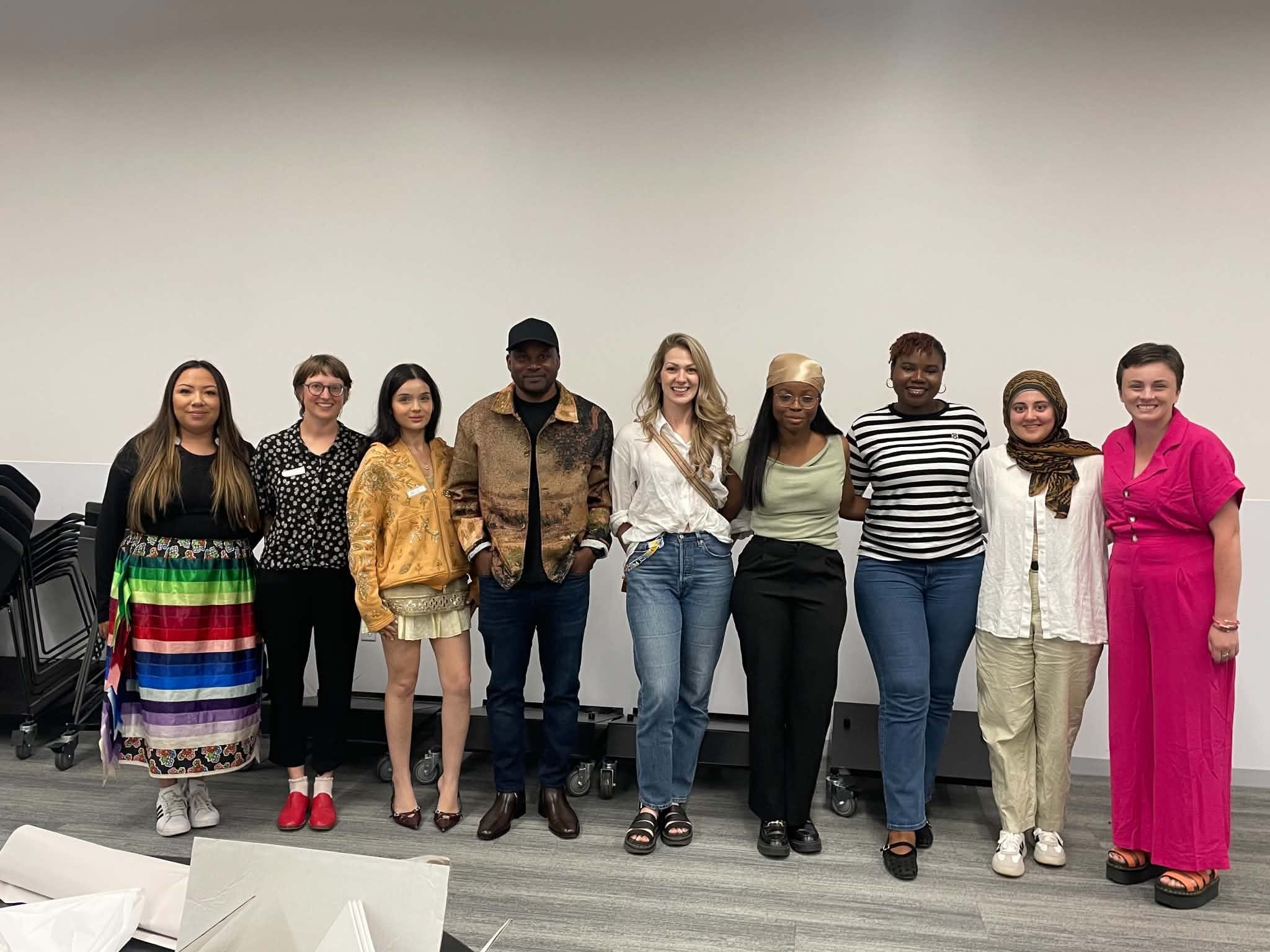
To Hannah, Renée, Suvi, Shiza, Nikki, Mayowa, Danni and Kennedy: thank you for your honesty, your vulnerability, and the depth of insight you brought into that room.
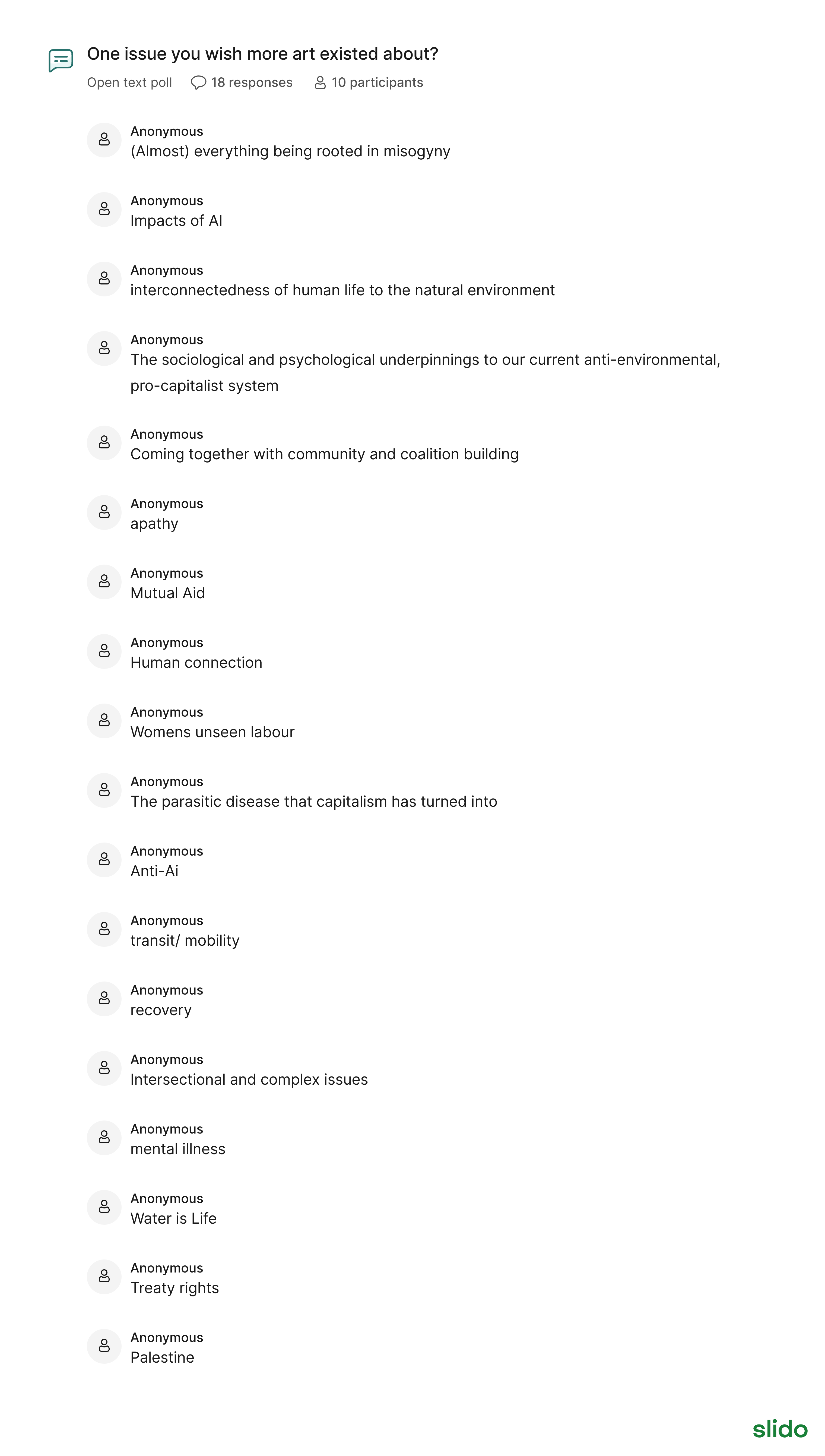
Before we moved into the roundtable, we asked participants what issue they wished more art existed about, and the responses were a small window into what’s actually on people’s minds right now. We are incredibly grateful to everyone who participated!
Artivists Roundtable
After the panel wrapped, we evening moved into an open, show-and-tell style roundtable. No keynote, no formal presentation, just artivists talking through their process and their pieces, in their own words, with a room that was genuinely listening.
Our founder, Rika, opened the evening by sharing a piece she developed at a Truth-Telling Circle with the John Humphrey Centre on technology-facilitated gender-based violence. It felt right for her to go first, to model the kind of vulnerability she was asking everyone else to bring into the room, and, honestly, to prove to herself that she could do it too.
From there, the floor opened up, and it stayed open.
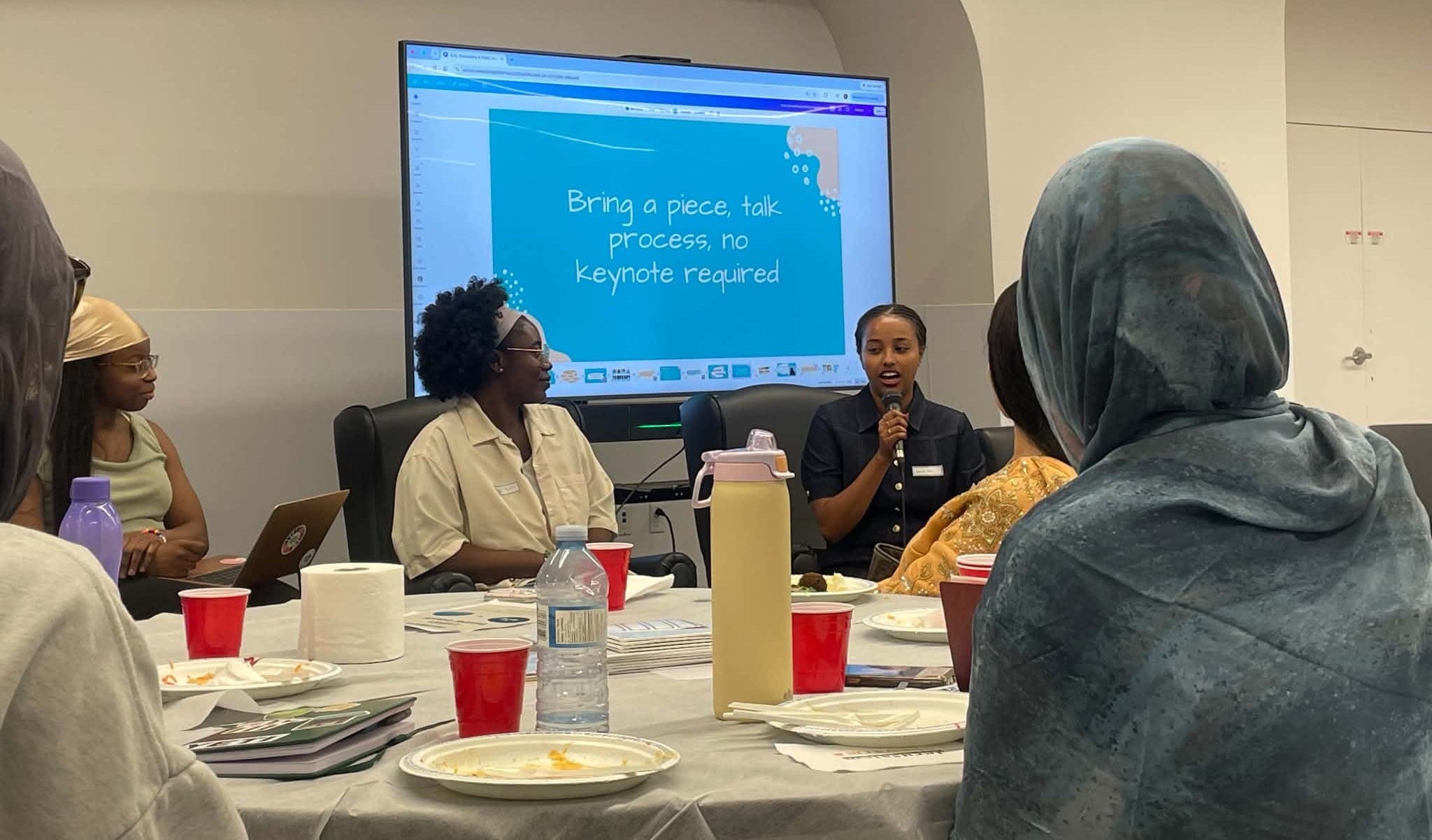
We were joined by Latifat and Mariam, who each shared their own work and process with such generosity, and we’re incredibly grateful for their participation and vulnerability.
There’s something genuinely moving about watching someone hand over a piece of themselves in a room full of near-strangers, and watching that room hold it with care. That’s what this roundtable was, unpolished, generous, and full of the kind of listening that’s hard to find outside of a room built specifically for it.
Facilitator Spotlight: Shaihiem Small
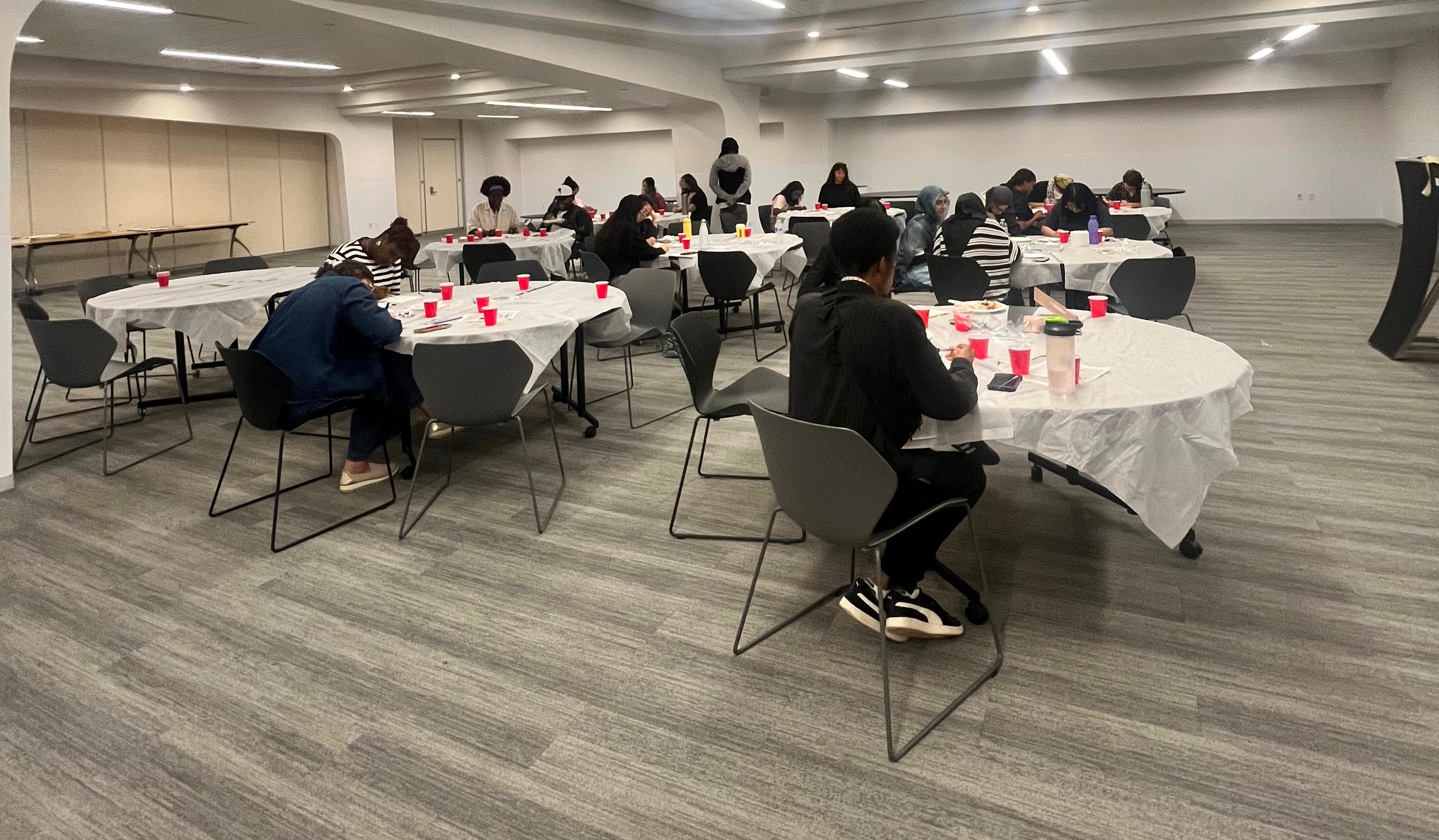
Closing out the evening was our neurographic drawing workshop, facilitated by Shaihiem Small, an artist currently based in Edmonton, Alberta, who primarily works in the mediums of acrylic paint, graphite on paper, and tattooing. Shaihiem is a graduate of MacEwan’s Fine Art program as of 2019, and has participated in various pop-up art shows across Edmonton, as well as the 5 Artist 1 Love show at the Art Gallery of Alberta. He’s currently interested in the interconnectedness of the varying cultures and diasporas that have shaped his artistic and personal growth, and is creating work exploring this underlying theme, an interest that came through beautifully in the gentle, grounded way he led the room.
Shaihiem walked us through neurographic drawing step by step, no art background required. Just a willingness to put pen to canvas, sit with whatever came up, and see what it turned into. It was the perfect way to close a night that had been so full of talking, listening, and holding space for each other, a chance to turn all of it inward for a few final minutes before we packed up and went home.
A Love Letter to Everyone Who Made Lab 07 Possible 🖤
To our panelists, thank you for sharing your stories and wisdom.
To our artivists and creatives, thank you for trusting the room with your pieces, ideas and presence.
To our facilitator, thank you for making art feel accessible to everyone in that room.
To our partners and sponsors, thank you for believing in youth-led civic storytelling. A special thank you to the Ribbon Rouge Foundation, whose work advancing health equity and social justice through the arts for African, Caribbean, and Black communities in Alberta resonates deeply with this cohort’s mission.
And to everyone who showed up and stayed present, thank you for being part of something that felt like belonging.
Coming Up: The Advice Constellation - A Mentorship Circle in Edmonton, Aug 28.