

Day Two kicked off with breakfast at 8 AM before diving into one of the busiest schedules of the retreat, six full sessions stacked from morning through evening, covering everything from global activism theory to hands-on embroidery.
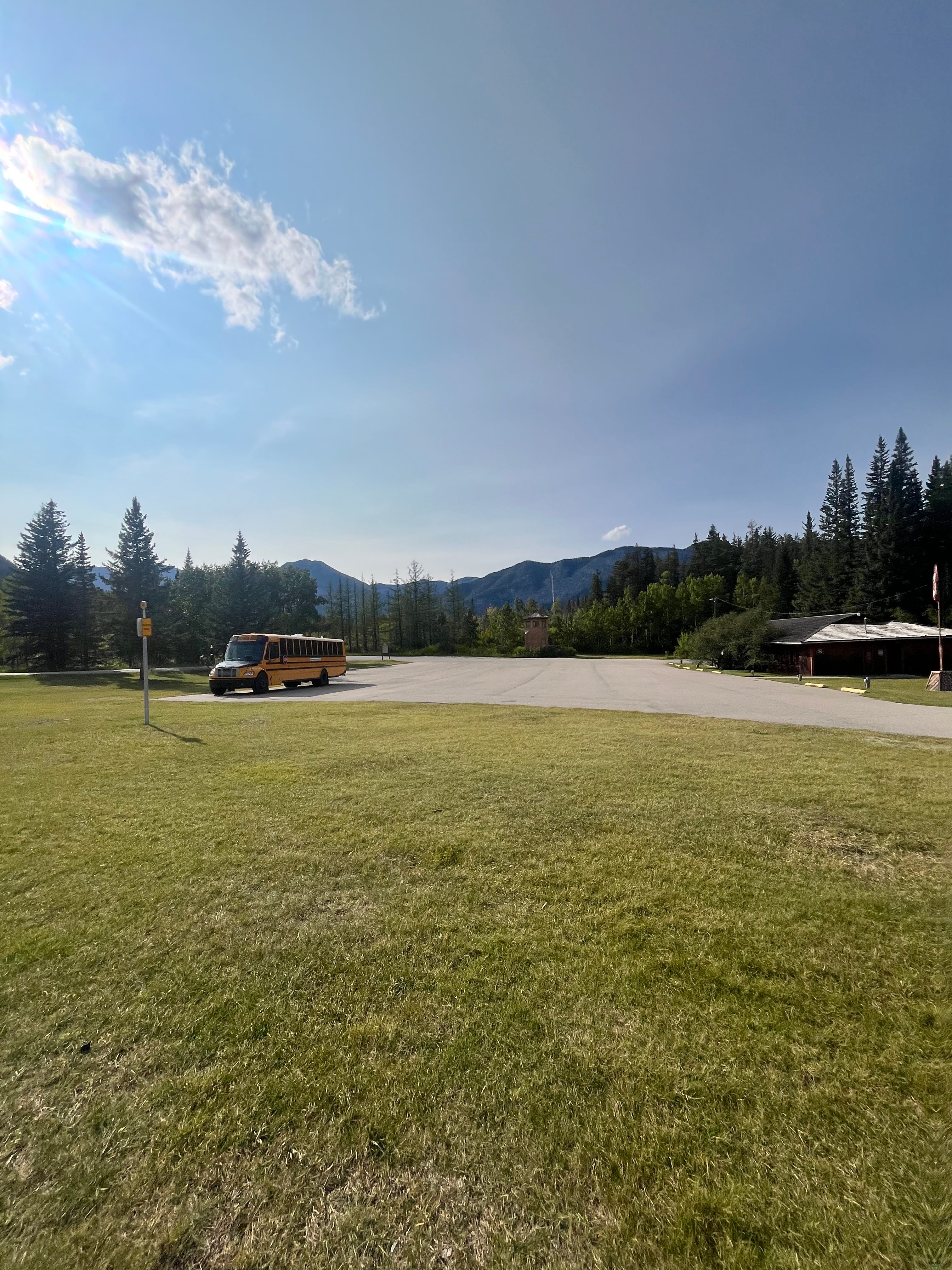
Barrier Lake had that quiet morning stillness that made the pace feel manageable even with so much packed in.
The Artivist Network
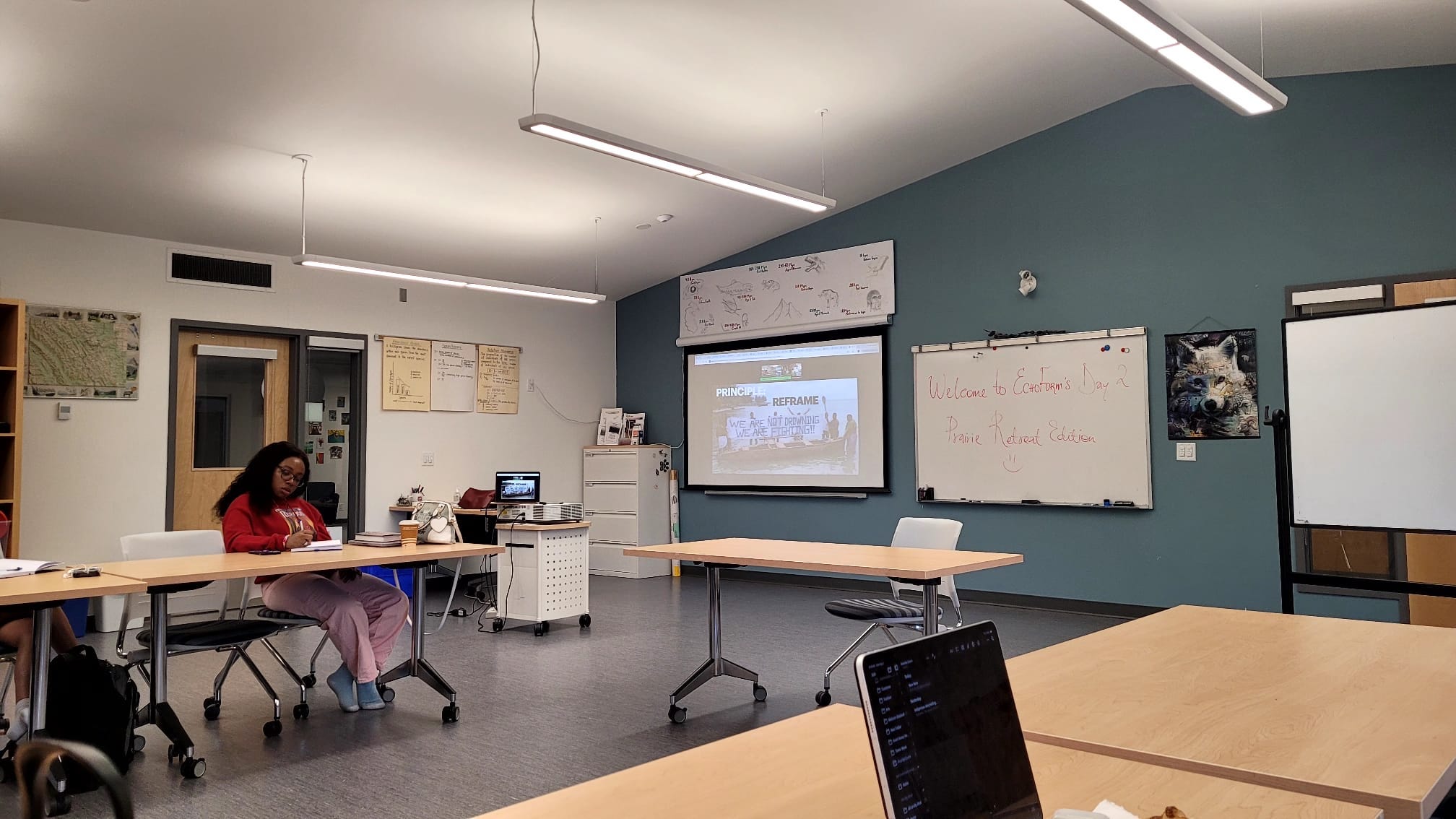
The morning opened with a virtual session with a rep from the Artivist Network, a global collective of arts activists and facilitators who help organizers and social movements engage art, culture and creativity more strategically to build systemic change.
Their central idea was that actions don't just protest something, they shape the story that gets told afterward. The rep walked through the tension every organizer faces between the right tool, the right target and the right tone, warning that it's easy to get swept up in a creative idea that isn't actually strategic. To illustrate, they told the story of an early 1990s UK action where activists organized without cell phones or internet, using mass rave-style gatherings to mobilize people to a highway construction site. In one particularly poetic action, they replanted trees along a highway being built, leaving new growth in the wake of the construction vehicles. The rep noted that by the time they heard the story secondhand, years later, the details had scattered and shifted across retellings, which they said is actually the mark of an action good enough that people want to keep sharing it.
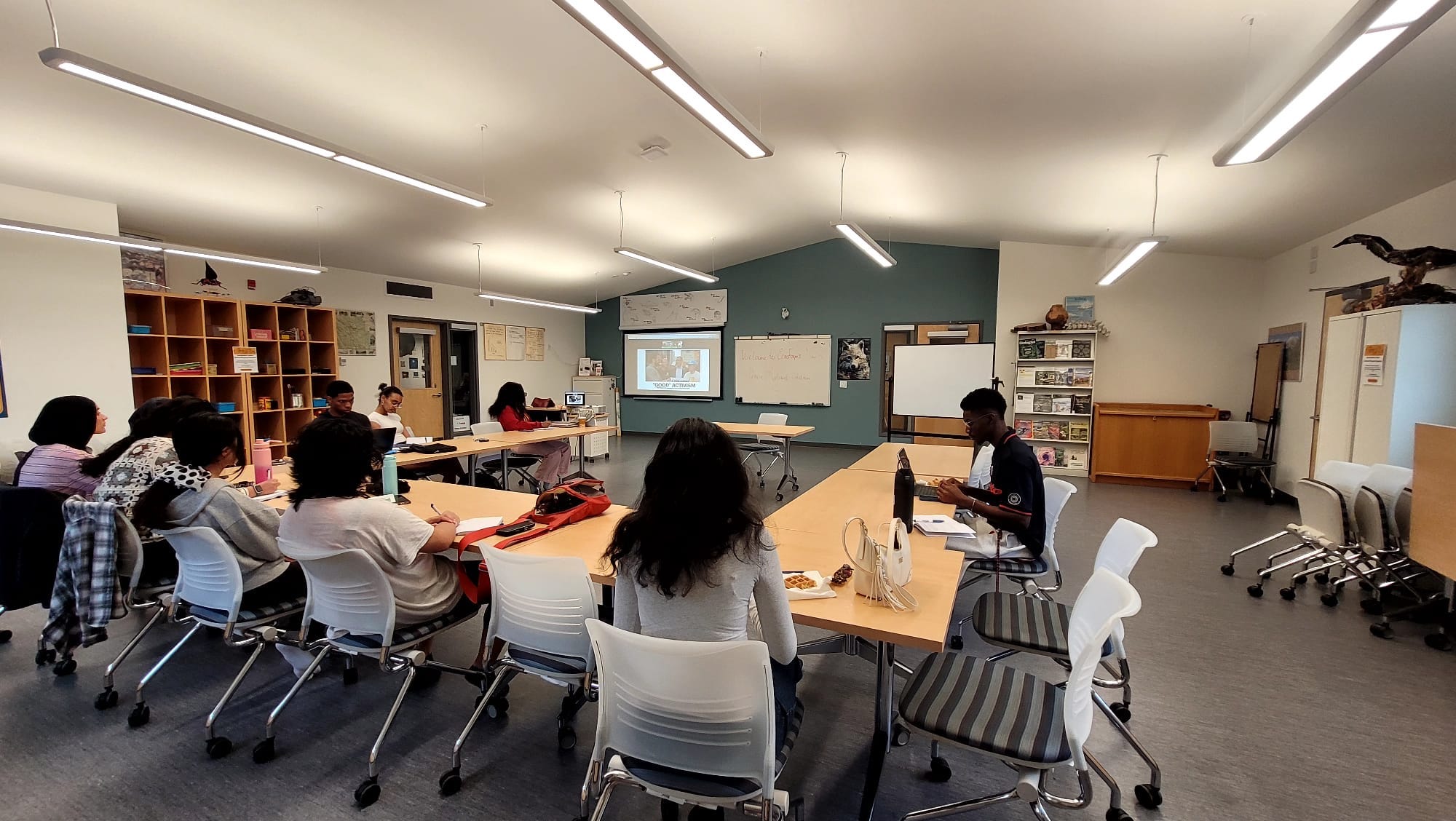
The rep also shared a Barcelona action where their group met riot police preparing to confront them not with defiance, but with a giant inflatable ball, breaking the expected script of confrontation so thoroughly that police eventually deflated it and walked away, both sides quietly acknowledging they'd been playing a kind of game. From there, they introduced the idea of activism as a frame, something that can be zoomed in or zoomed out to shift what the public sees and pays attention to.
A major thread of their talk was about language and who gets cast as the hero of a story. They broke down three ways of saying the same environmental message: "save the planet" (which casts an undefined "we" as saviors), "save the humans" (which flips who needs saving), and "we are nature defending itself" (which removes the hero/victim binary altogether and positions people as part of the natural world, not outside it). They connected this to the Pacific Climate Warriors, a group of Pacific Islander activists who rejected the narrative of being passive victims of climate change and instead framed themselves as descendants of history's greatest navigators, ultimately building traditional canoes and blockading the largest coal port in the world.
The rep ran through a series of tactical principles: using existing cultural symbols that already carry meaning (like the Spanish bull, or recognizable cartoon characters), making the invisible visible (like sending shoes to represent people who couldn't march, or pasting portraits of evicted families onto the banks evicting them), and hacking existing narratives, including fake warning labels on fossil fuel ads and a "worst company of the year" award ceremony. They emphasized dressing and presenting activism in ways that don't read as stereotypically confrontational, citing groups like Fossil Free Culture, who staged vulnerable, artistic protests in white clothing rather than black, making their message land differently with the public and press. They closed by reminding the group that art and message have to be balanced together, since even the most important cause won't spread if it isn't also compelling to watch, and that creating together is itself a powerful way to build relationships within an organizing group.
Optional Smudging and Talking Circle with Eileen Gullion
With about five minutes to transition, the group moved into the lodge for an optional smudging and talking circle, led once again by Eileen Gullion of Flying Lion Cree Consulting. This session continued directly from the previous night's bingo game, where four participants had won rounds and were asked to come prepared with a short story tied to whatever word or date they'd landed on.
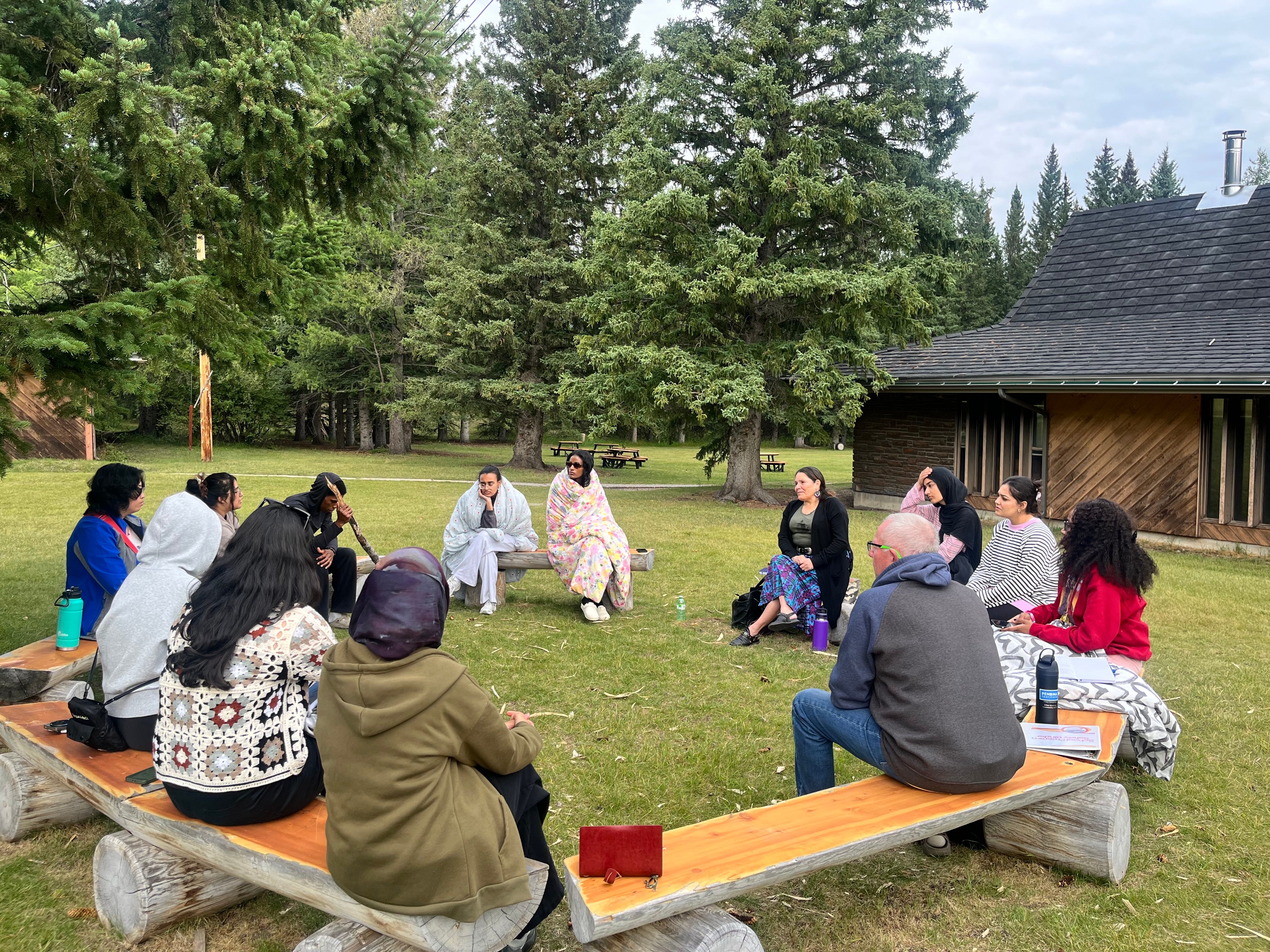
Eileen explained the format: whoever held the talking stick had the floor, and once someone finished, the group could ask questions before passing it on. Jasmine went first, sharing the poem "The Longest Light," with the group, a fitting reference to her winning square, June 21st, National Indigenous Peoples Day and also the summer solstice. Her story followed a grandmother waking her granddaughter Ayana before dawn each year to walk to the river, where families gathered to drum and watch the sunrise, with the day closing 15 hours later as the sun finally set. Jasmine wove in her own connection to the story, noting that as a creative director, she'd previously worked on a tribute project for a wildfire in Little Red River using beadwork, and drew a parallel to how beadwork holds similarly deep meaning within her own Indian heritage.
Marvin, went second with the word UNDRIP, sharing a story connected to Human Rights Day and August 2007's non-binding international resolution, and focused on the human rights legacies of figures like Nelson Mandela and Patrice Lumumba, the DRC's first democratically elected Prime Minister, famous for a 1960 independence speech. He drew a personal connection between Lumumba's fight and his own family's story as Nigerian immigrants, since Nigeria gained independence that same year, reflecting on how every person today is, in some way, the product of someone else's earlier fight.
Lastly, due to time constraint, Armeen closed off the session with “tuberculosis”. As an OG cohort participant, she tied her reflections into her learnings from our Aug 7 Health Equity & Social Determinants of Health Lab.
Placemaking with Madelyn Koff (Ottawa Feminist Council)
Madelyn Koff of the Ottawa Feminist Council led a rich session on storytelling and placemaking. Madelyn opened by asking the group what placemaking meant to them, acknowledging the term originally comes from urban planning, where it refers to designing public spaces around accessibility, comfort and sociability. She explained how she and others have repurposed the concept to think more broadly about how people make any space feel like home, and how they carry that sense of belonging with them.
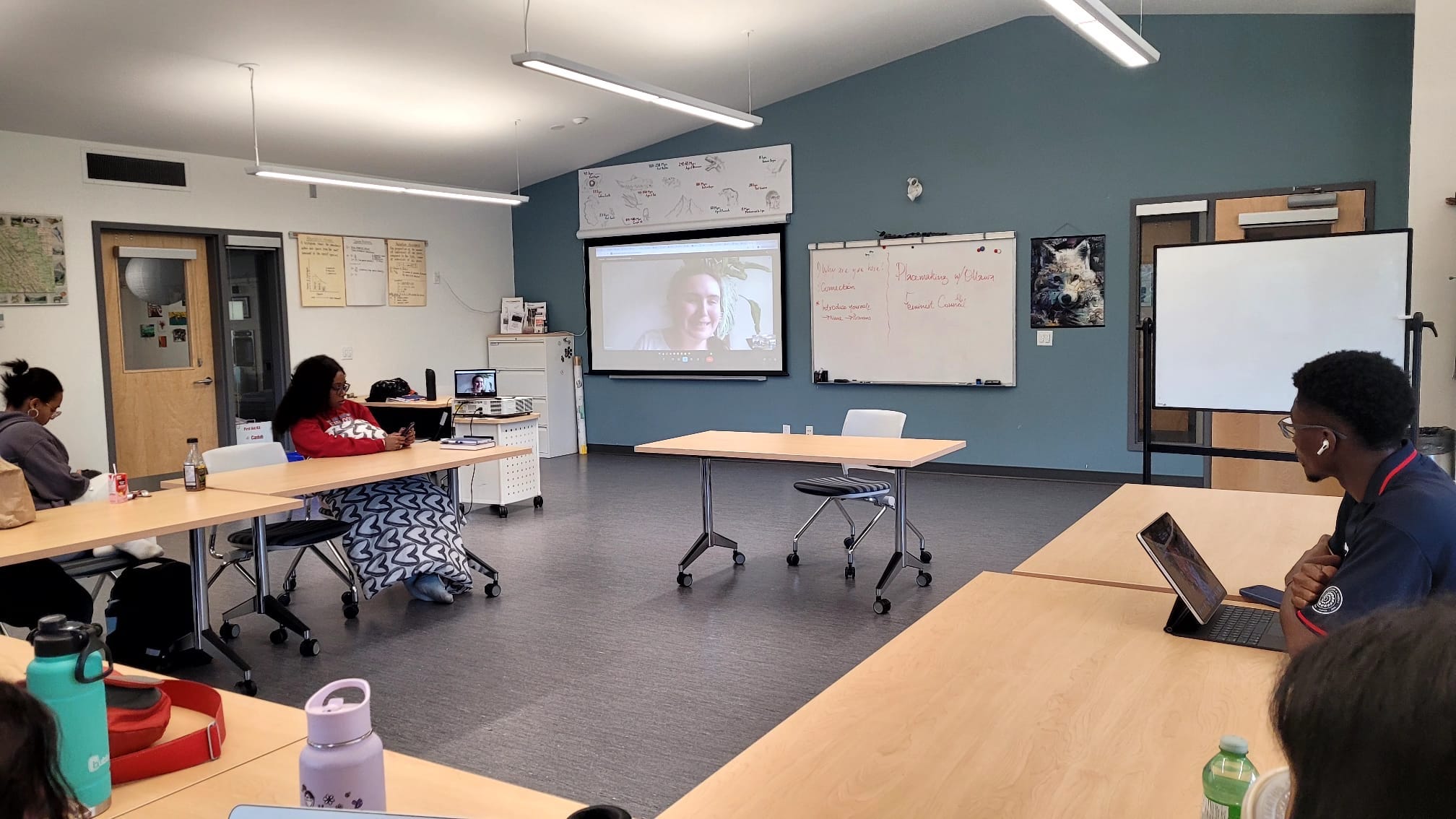
She walked through a summer storytelling and placemaking series the Ottawa Feminist Council ran, focused on land, belonging, and intergenerational connection, where participants learned oral history skills and began building what she called a living, alternative archive, rooted in care and relationship rather than what she called "trauma extraction." The goal, she said, was creating space for joy in documentation, not just hardship.
Madelyn closed with a direct challenge to the group: have a conversation with an elder in their life and document that story in whatever medium feels right, whether that's a sculpture, a written piece, an audio recording, or something else entirely. She left her contact information and an invitation to connect further with the Ottawa Feminist Council's ongoing archive work.
The Power of Art & Healing with Simarpreet Kaur Bhangu (Project Therapeía)
Simarpreet Kaur Bhangu, founder of Project Therapeía, a Calgary-based community organization delivering creative and skill-building workshops within healthcare settings, led an interactive session on the relationship between art and healing. Simarpreet shared that Project Therapeía grew directly out of her time volunteering in hospitals and long-term care sites, where she repeatedly heard from patients that they'd had to pause creative passions like painting, crocheting, theatre, and writing because they no longer felt they had the tools, organization or avenues to continue. She described that realization as heartbreaking, since those passions are often tied to identity, culture, spirituality and language, not just hobbies.
She structured the session around four pillars: art as an avenue for expression, art as a foundation for identity, art as a source of confidence, and art as a catalyst for connection. Throughout, she paused for open discussion, asking participants to share their own favorite creative outlets and how those activities made them feel. Responses ranged from writing (described as a way to process both happiness and difficult emotions), to aerial arts, to digital art and design, to one participant's habit of picking up completely random skills on impulse as a way of building confidence and comfort with unpredictability.
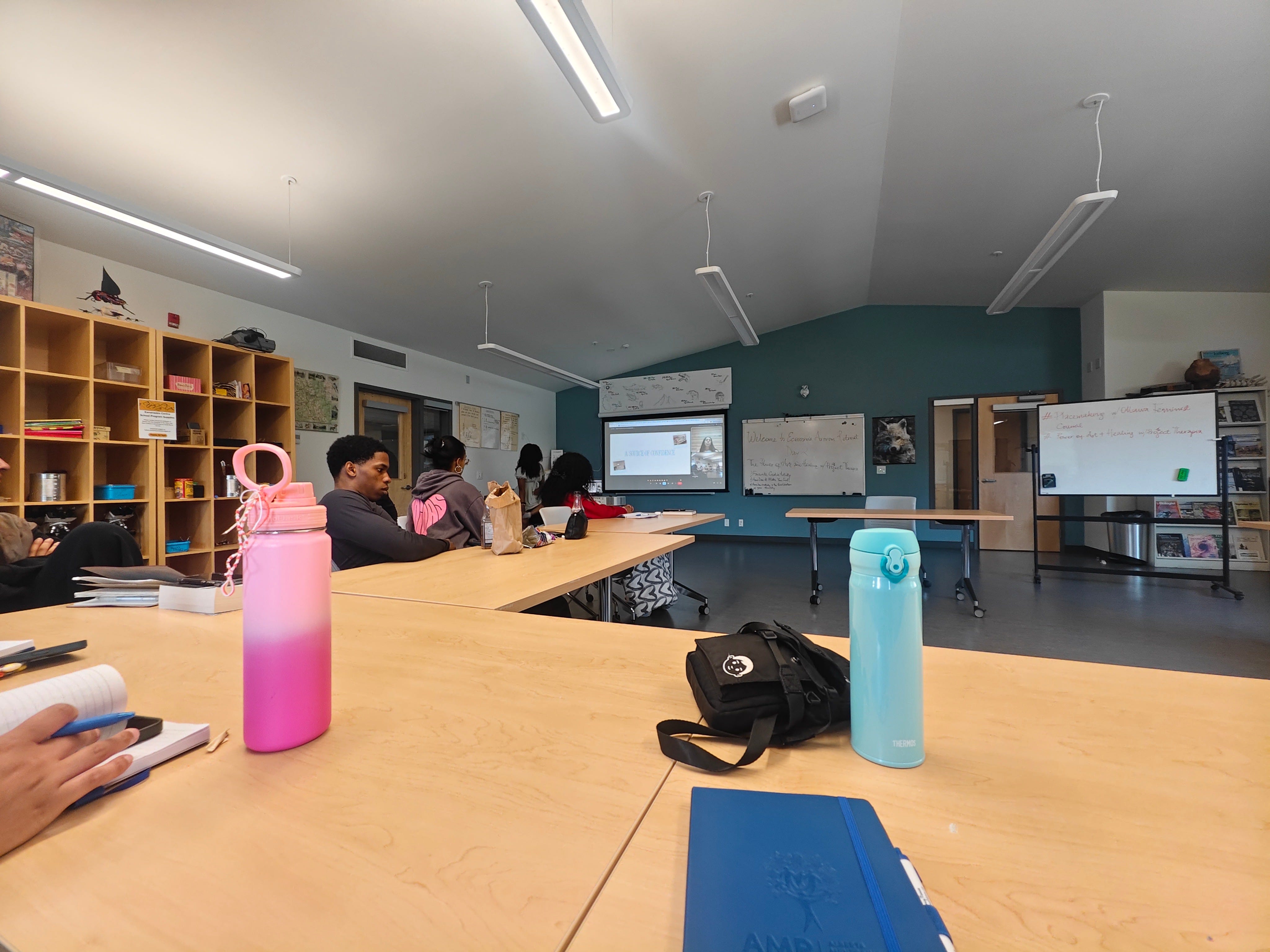
Simarpreet backed up the emotional case for art with research, citing a study showing a statistically significant drop in cortisol levels after just 45 minutes of art-making, and another published in BMC Health finding that 82% of surveyed participants felt arts engagement connected them more strongly to their community. She spoke about how, in her own workshops, participants often arrive doubting their abilities entirely, but that the simple act of creating something, regardless of skill level, builds visible progress and confidence that carries into how people see their capacity to heal more broadly. She closed by reinforcing that healing isn't a checklist, it's a complex, nonlinear process, and creative expression gives people an anchor to return to throughout it.
Storytelling, Creative Confidence and Finding Your Voice with Lebene Mawutor (KELIDZO)
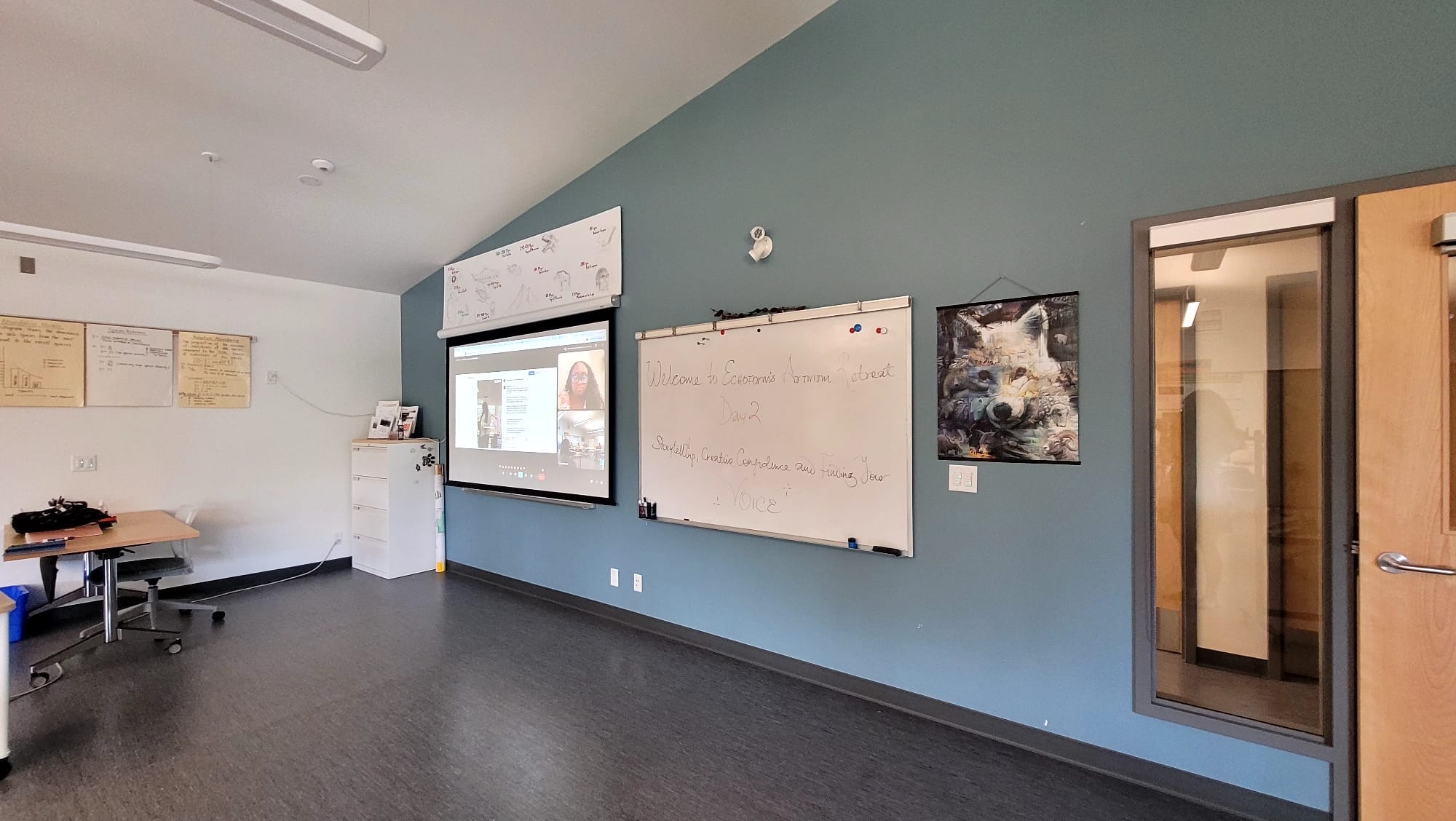
Lebene Mawutor, founder of KELIDZO, a cultural editorial studio and emerging media platform with roots in her journalism background, led an energetic, hands-on session on public speaking, storytelling and creative confidence. She opened by sharing a clip from a past workshop she ran with Black Canadian Women in Action, teaching young girls the fundamentals of confident public speaking and self-expression.
Lebene made the case that polished production values don't replace a genuine story, noting that in today's content landscape, footage can be released within 24 hours of filming, but that doesn't mean the emotional core of a story is being honored. She walked participants through the classic who, what, when, where, why and how framework for building a story, then gave the group roughly seven minutes to write down a story they'd been wanting to tell but hadn't yet found a way to. She prompted the group to think through who is at the center of the story, what's actually happening, why it matters, what feeling they want their audience to walk away with, and finally, what medium, whether photography, short film, spoken word, or something else, would best carry it.
During the Q&A, one participant asked how to find their own voice as a creator. Lebene answered that voice comes from leaning into what you're genuinely passionate about and curious about, since even with the same event or topic, every storyteller brings a different angle shaped by what they personally notice and care about. Another participant asked how to build confidence translating ideas from their head into something others understand. Lebene was candid that she still struggles with this herself, and encouraged the group to focus less on convincing people up front and more on simply starting to execute, since style and clarity develop through the act of creating consistently over time. She closed by reminding the group that nobody needs permission or expensive equipment to start telling stories, and that even a phone is enough to begin.
Lunch Break
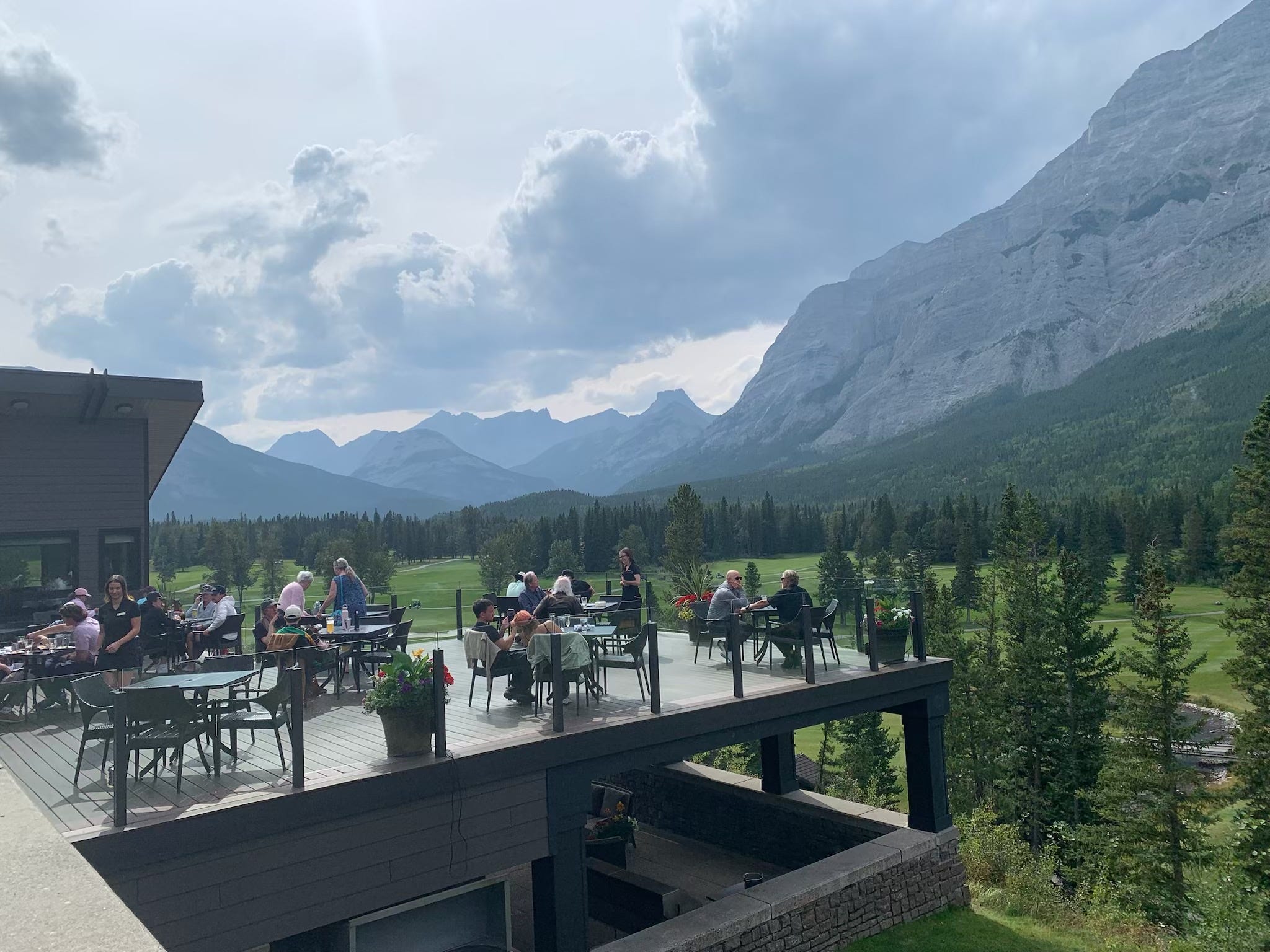
The morning sessions wrapped a bit over schedule, with lunch running until roughly 1:30 PM before the group regrouped for the afternoon.
Global Citizenship: The Intersections of Digital Culture, Media Literacy, Internet Governance & Artivism with Jasmine Cha
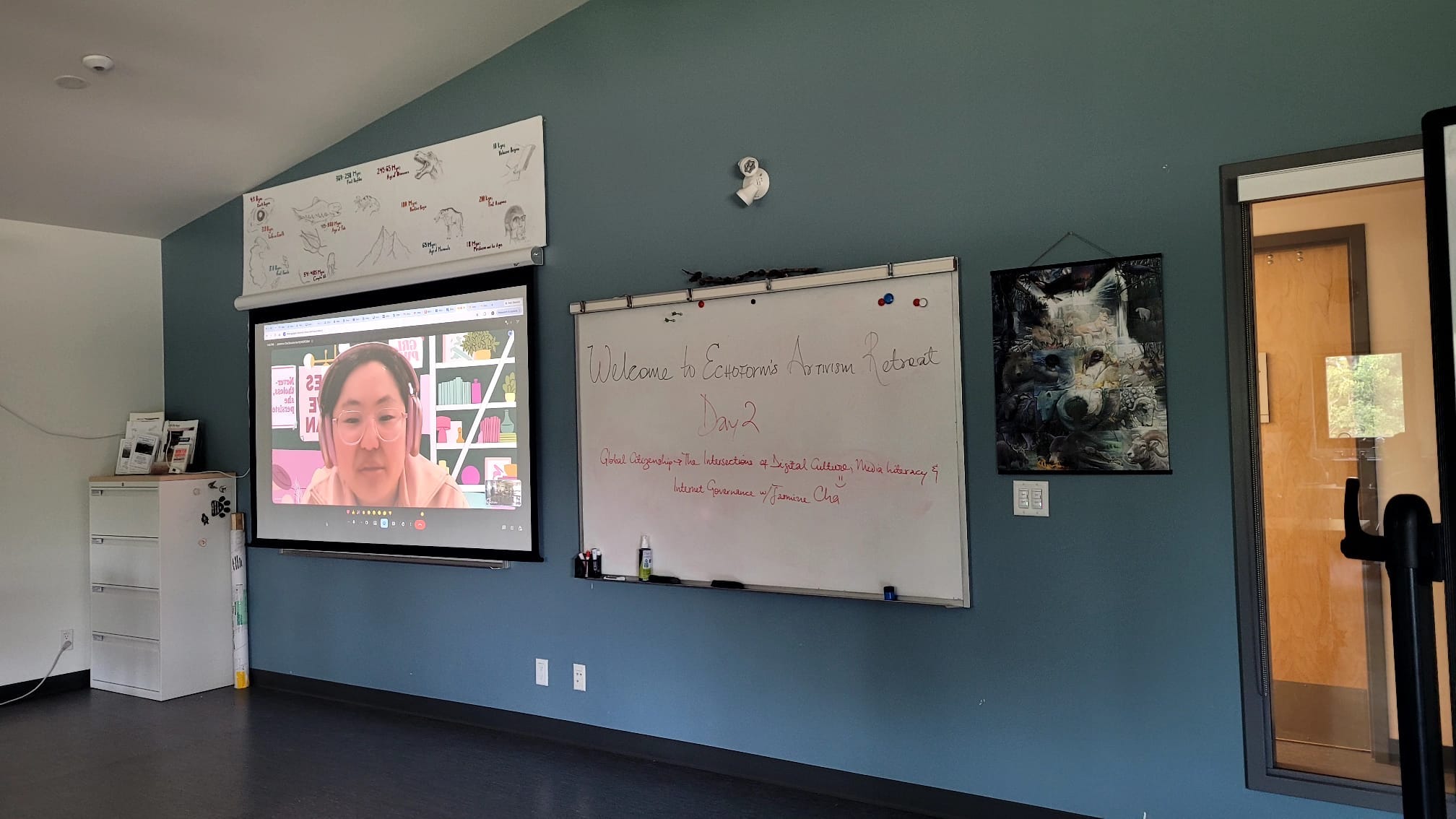
After lunch, the afternoon opened with Jasmine Cha, a community leader and digital policy advocate whose work spans organizations including d.talks, Apathy is Boring, the United Nations Association in Canada, OpenMedia, the Center for AI and Digital Policy, and Stanford University's ethics and technology public policy program. Jasmine traced her own path into this work, starting with an internship with the UN's International Telecommunication Union on a project connecting schools in developing countries to the internet, an experience that showed her clearly how access to technology is inseparable from access to opportunity and voice.
Jasmine opened with a core idea: global citizenship is digital citizenship. The internet connects us to people, communities and movements around the world, letting us learn about issues as they unfold, hear directly from affected communities, organize across borders, and use digital spaces to advocate for change. But she was clear that access to information isn't the same as understanding it, and that being a responsible digital citizen means thinking critically about what we consume, create and amplify.
She pushed the group beyond the usual "spot the fake news" framing of media literacy, encouraging participants to ask where a piece of information came from, why it was created, what context might be missing, and how emotion might be shaping their reaction to it. She flagged generative AI as a growing complication here too, since images, voices and videos can now be convincingly fabricated or altered, meaning simply seeing something is no longer enough to establish that it actually happened.
From there, Jasmine unpacked digital governance as, at its core, a question of power: who makes the rules, who gets heard, who gets protected, and who gets left out. Creators, tech companies, algorithms, governments and users all shape the digital environment together, and none of those systems are neutral. She also stressed that digital inclusion means more than just having internet access, since meaningful participation depends on affordability, accessibility, language, safety, digital literacy, and whether someone actually has a genuine opportunity to be heard once they're online.
She connected all of this directly to artivism, noting that art has long been used to challenge power, preserve memory, express resistance and imagine different futures, and that digital platforms now let that art travel further and faster than ever, through photography, video, music, illustration, memes, storytelling and design. But she was direct about the responsibility that comes with that reach: creative content can make complex issues understandable and move people to act, but it can just as easily strip away context, misrepresent communities, or spread misinformation. In her words, artivism and media literacy need each other. Creating intentionally means thinking about whose story is being told, whether affected communities are actually being heard, whether the content is accurate and accessible, and what you actually want your audience to walk away with.
She gave a personal example from a recent trip to Geneva, where she visited the Red Cross Museum and was moved by an exhibit built around a child's tricycle recovered after the bombing of Hiroshima, and how she used that story to write about the importance of taking a stance rather than defaulting to neutrality in the face of injustice.
Jasmine was also careful to note that nobody needs to be an expert before getting involved in something they care about. Civic engagement, she said, can look like learning, asking questions, joining an organization, attending a consultation, creating something, organizing your community, challenging misinformation, or simply helping someone else participate. She pushed back on the idea that local and global engagement are opposites, pointing out that local experience can shape how you understand global issues just as much as the reverse, and that some of the most interesting work happens where personal interests overlap, art and climate justice, technology and accessibility, gaming and community building, film and storytelling, fashion and sustainability.
She closed with a set of questions she encouraged the group to sit with before creating or sharing anything: who am I trying to reach, what do I want them to understand or feel, why am I the person telling this story, and what responsibility do I have to the people being represented. Her final challenge to the room was to move beyond asking "can I post this" and instead ask "what am I contributing," since we participate in the digital world every time we create, share, amplify, or decide what information to trust.
A lengthy Q&A followed, touching on media bias, the unique risks young people face navigating misinformation and AI-generated content, and the tension between wanting to protect youth from technology versus equipping them with the critical thinking skills to navigate it safely.
Confidence in Civic Spaces with Mathew Katz (Young Politicians of Canada)
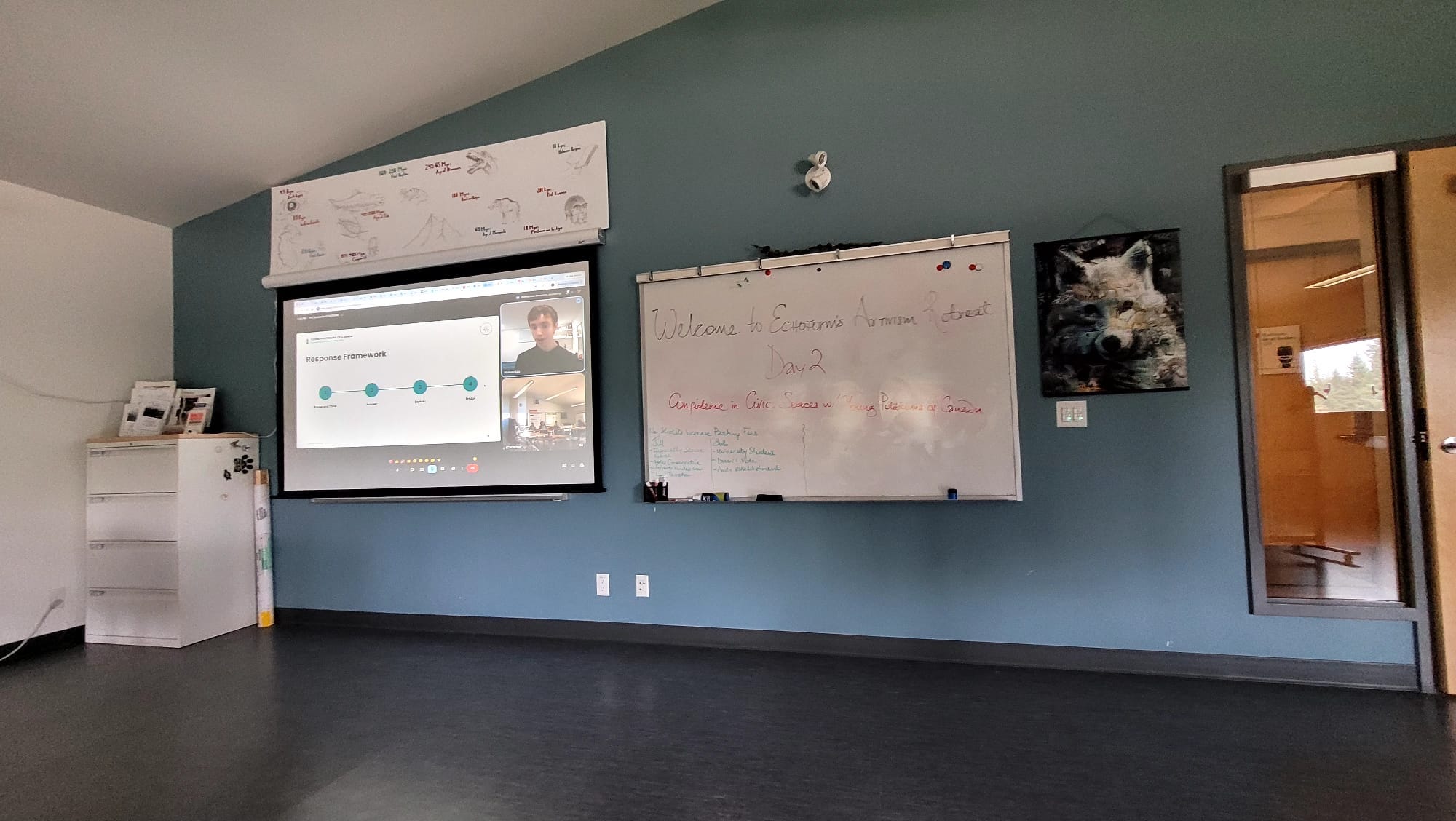
Mathew Katz, National Communications Director with the Young Politicians of Canada (YPC), a national, non-partisan, youth-led nonprofit with over 2,000 members across seven provincial chapters, led a detailed session on public speaking and confidence in civic spaces. Mathew, who also serves as a Student Trustee with the Limestone District School Board and previously served as Policy Co-Chair on the City of Edmonton Youth Council, opened by asking each participant to share one issue they cared about and why, going around the circle for introductions.
He structured the session around four parts: why your voice matters, building a powerful message, confidence and delivery, and handling questions. To make the first point concrete, Mathew shared his own story of helping defeat a harmful municipal bylaw in Edmonton that would have effectively criminalized unhoused people using transit as shelter in extreme cold, describing how he organized a response, wrote an op-ed, and ultimately saw the bylaw defeated unanimously at city council.
He broke down message-building into three components: a clear problem, a hopeful vision for the future, and a personal or societal story that ties the two together and makes the issue resonate emotionally rather than just statistically. Using two hypothetical audience profiles, a financially secure, low-tax-supporting voter and an anti-establishment university student, Mathew walked participants through how the same policy position can be framed differently depending on who you're speaking to, then had the group practice this themselves with a parking fee increase scenario.
On delivery, Mathew's core advice was repetition: practicing a presentation over and over, avoiding written notes so eye contact stays intact, remembering key points rather than memorizing exact wording, and staying authentic rather than copying someone else's presentation style. For handling unexpected questions, he offered a four-part framework: pause before answering, answer the question directly, explain your reasoning, and bridge back to your core message, adding that using concrete examples, conceding valid points when appropriate, and being honest about what you don't know all strengthen a presenter's credibility rather than undermine it.
Nature Walk
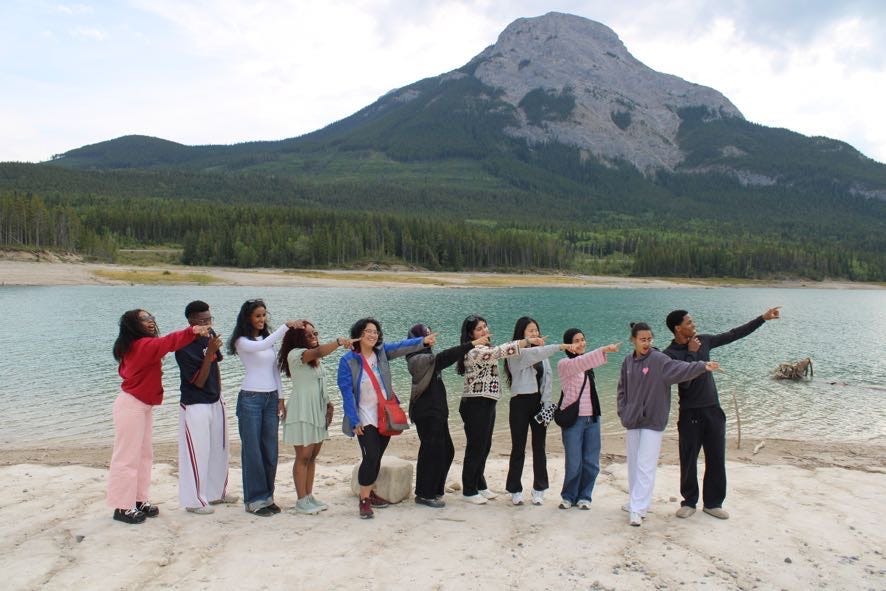
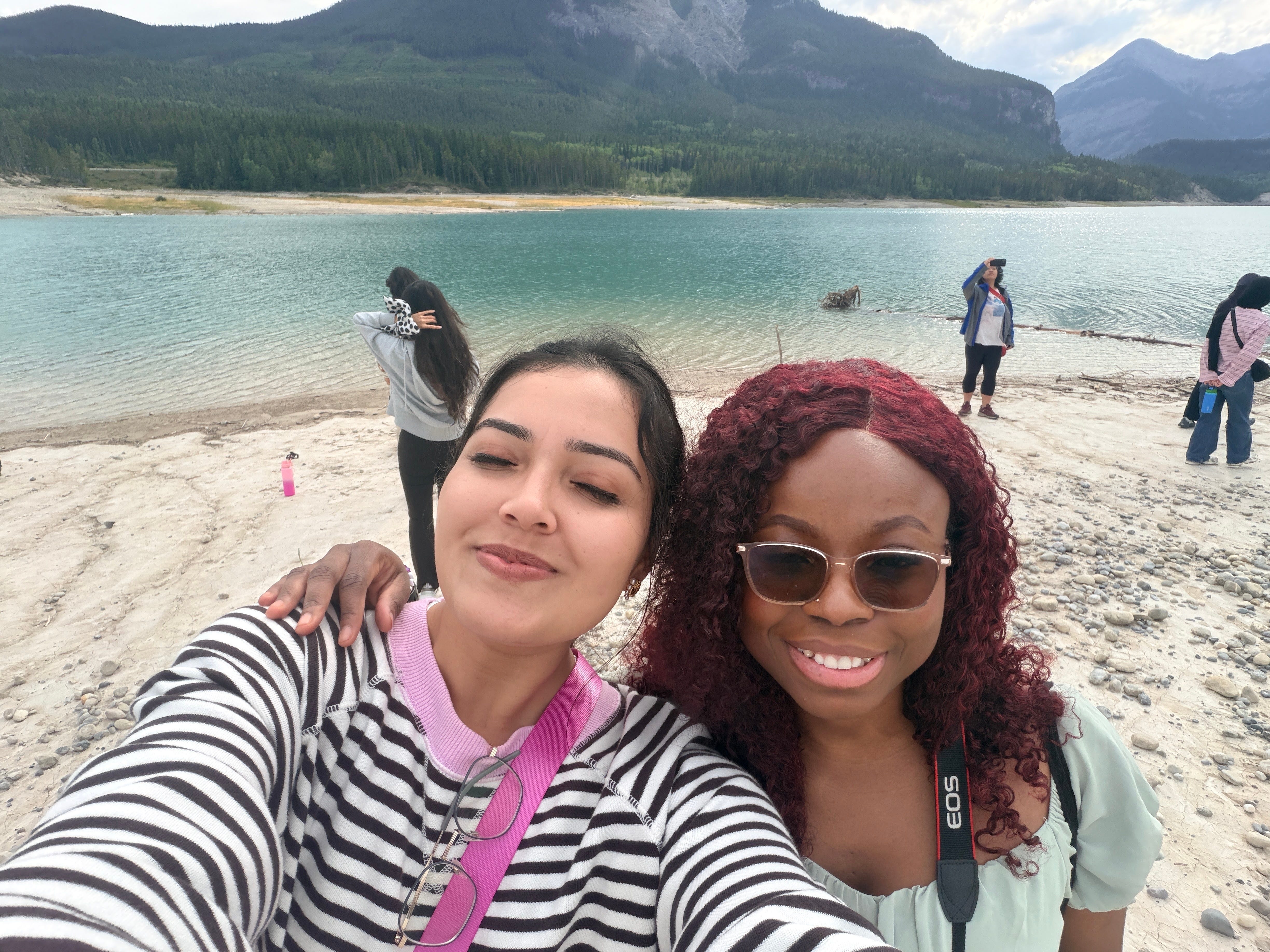
After a full day of presentations, the group stepped outside for a nature walk around Barrier Lake, followed by group photos and break time, a welcome breather after six sessions of dense material.
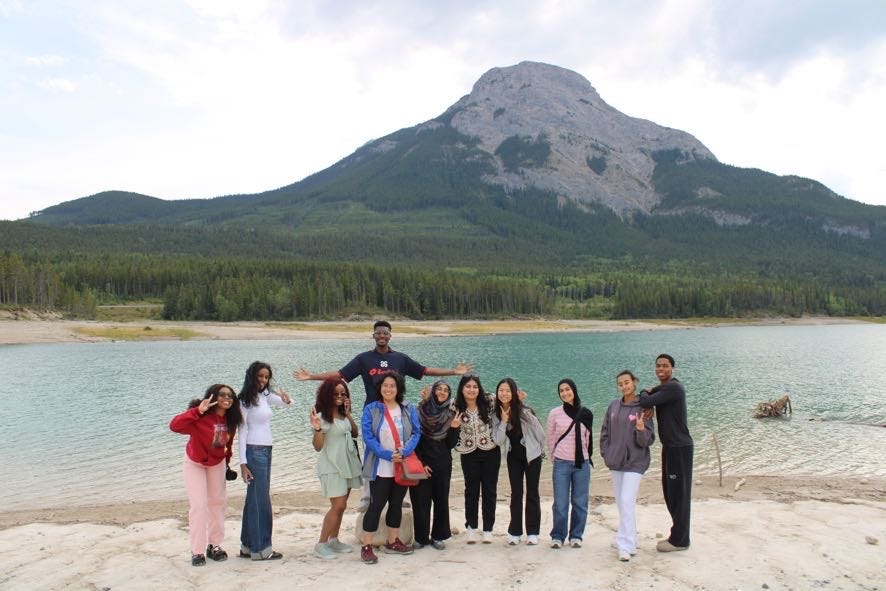
Photo Embroidery Session with Jasmine Kukreja Chadha (Get Offbeat)
A special shout-out for this one: Jasmine Kukreja Chadha, Creative Director and embroidery artist behind Get Offbeat, an inclusive Edmonton-based community for makers, creatives and anyone wanting to learn a new skill, joined the retreat in-person in its entirety ahead of this session, since photo embroidery requires hands-on, in-person guidance that couldn't translate well over video. With over 8 years of experience leading brand identity and content strategy, Jasmine built Get Offbeat out of wanting more real, in-person connection within Edmonton's creative scene, somewhere makers and people with completely different skill sets could find each other and build something together instead of just scrolling past it online.
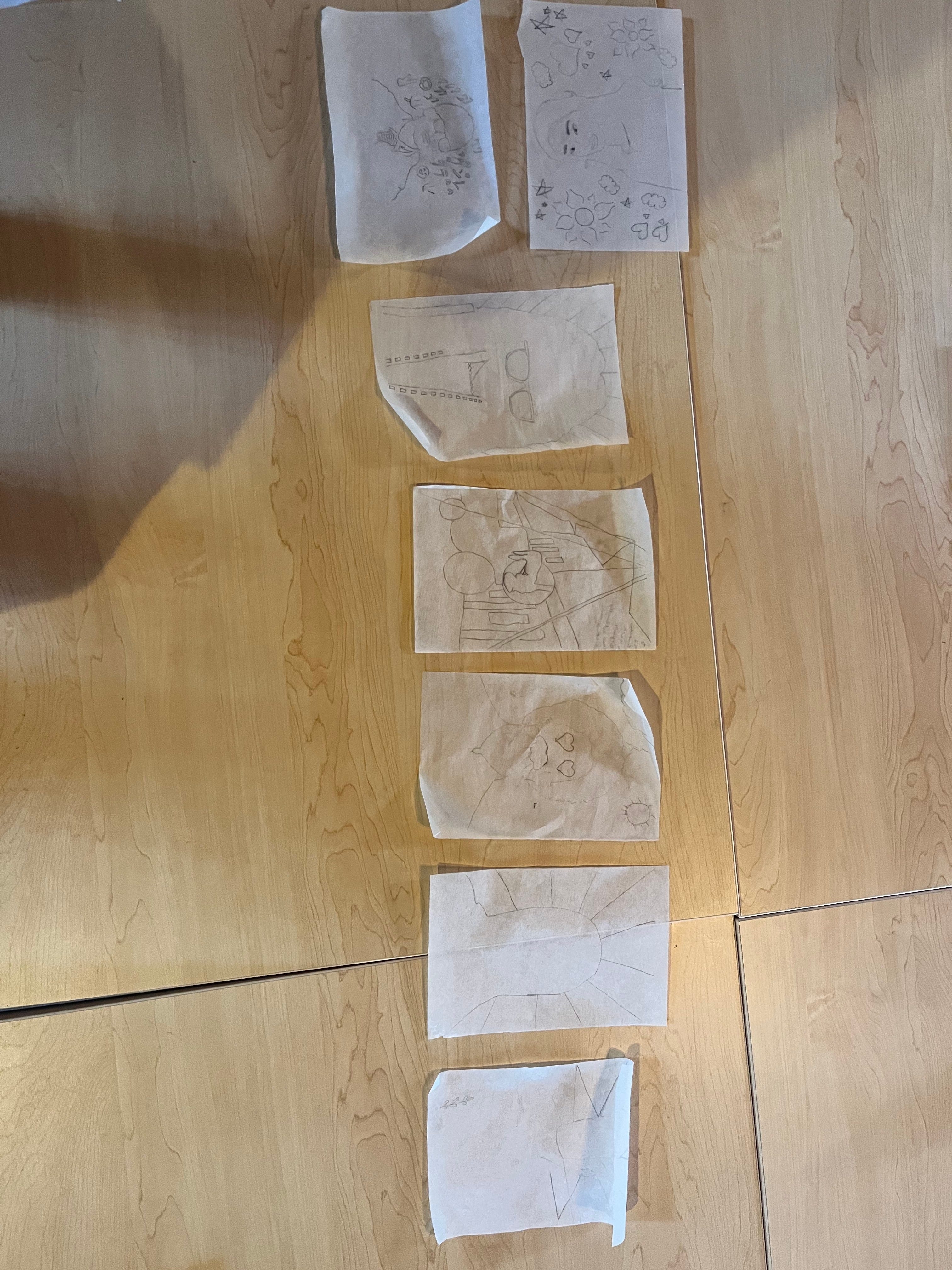
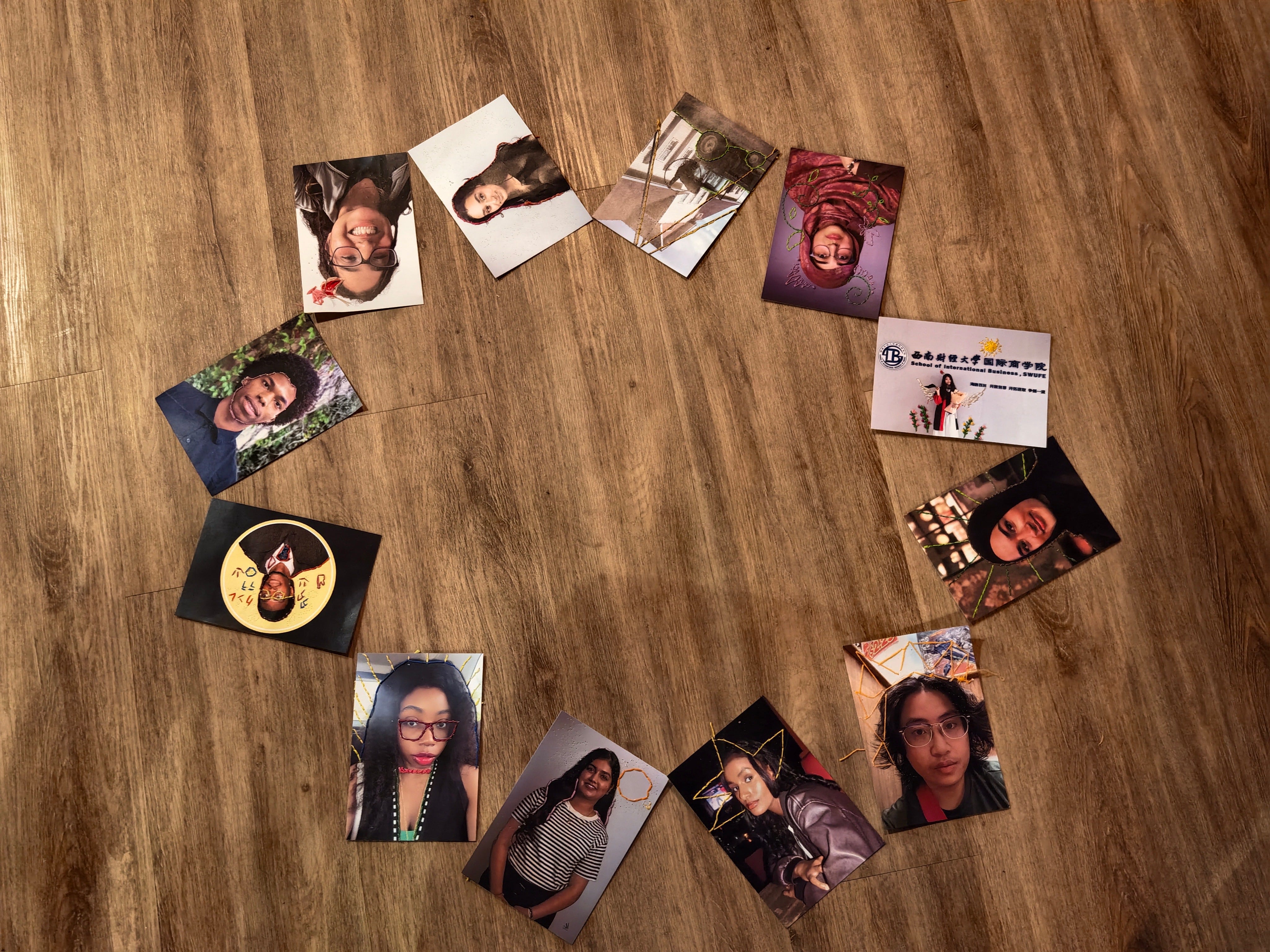
Participants worked from printed photographs, either ones they'd brought themselves or the backup headshots made available for the session, learning embroidery techniques to bring a photo to life in thread. It offered a quieter, tactile close to a day that had otherwise been heavy on discussion and presentation, a chance to sit quietly, work with their hands, and let everything from the day settle.
Closing Circle
After dinner, the day wrapped with a closing circle, giving everyone space to reflect on how the day had felt. Responses ranged widely: some participants spoke about the sessions being genuinely eye-opening, others admitted they hadn't known what to expect coming in but were struck by how much they connected with people. One participant, only half-joking, said they didn't want to leave and that the retreat had started to feel like home.
Housekeeping followed to close out the evening. Anurika reminded the group that leftovers were available in the fridge, walked through checkout logistics for the following morning (breakfast at 8 AM, departure planned for 9 AM), and confirmed the group would make a stop in Canmore on the way out, with roughly an hour built in for people to grab food or walk around, since it added no extra time to the overall trip home. She also reminded everyone to use bear spray if heading outside at night, to strip their bedsheets before checkout the next morning as a courtesy to the site's lone housekeeper, and to make use of the Valentine Wall and feedback jar before the retreat wrapped.
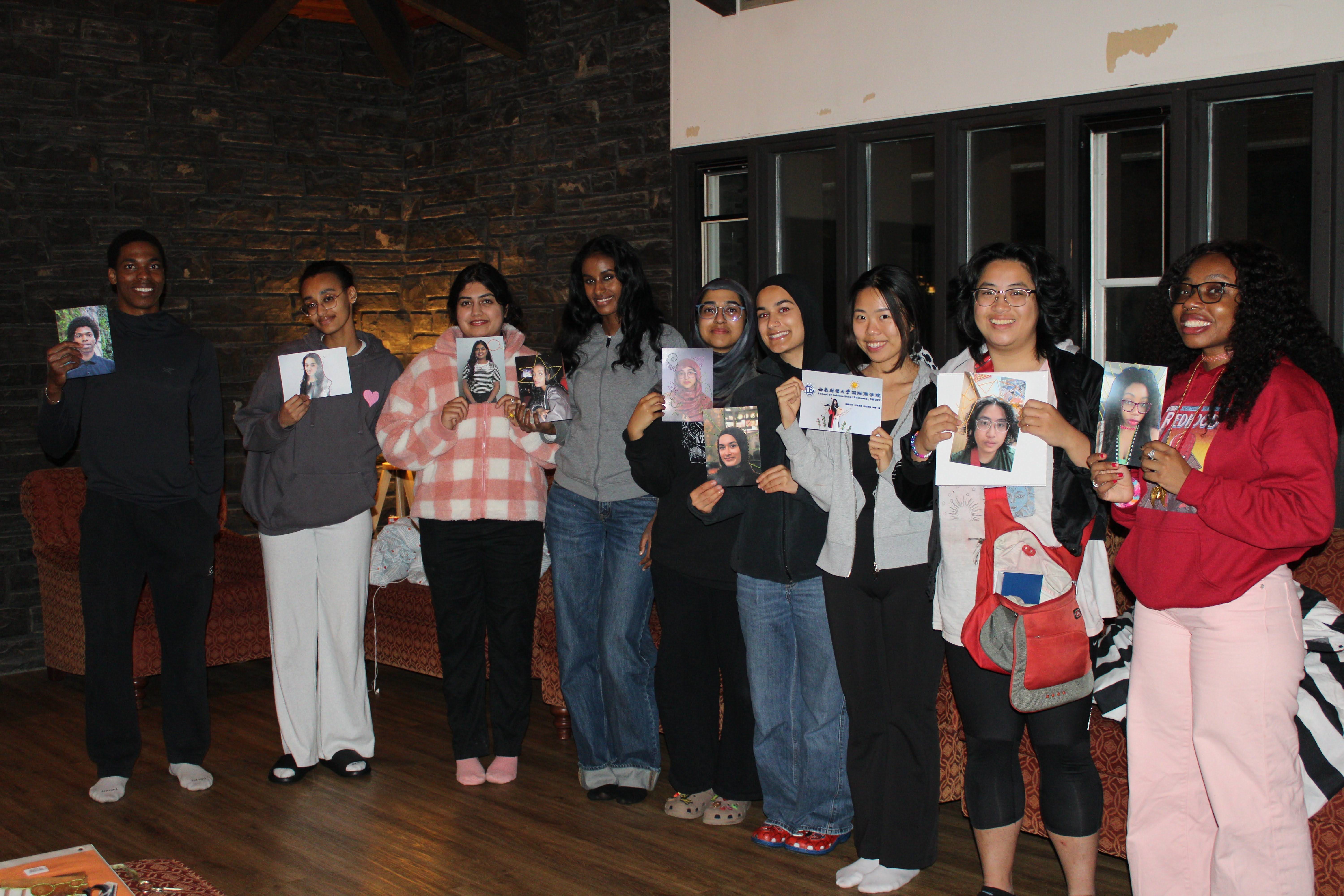
The evening closed out with participants finishing up their friendship bracelets from the opening session and taking a round of group photos, tired but clearly more bonded than they'd been twenty-four hours earlier.
Day two covered enormous ground, activism theory, digital governance, healing through art, public speaking, land-based reflection, and hands-on craft, and by the time the lights went down, it was clear the cohort had shifted from a group of individuals into something closer to a community.
Resources
OpenMedia Digital Safety Survey Findings: Canadians Want Platforms to Change, Not Our Privacy Rights by Jasmine Cha: https://openmedia.org/article/item/openmedia-digital-safety-survey-findings-canadians-want-platforms-to-change-not-our-privacy-rights