

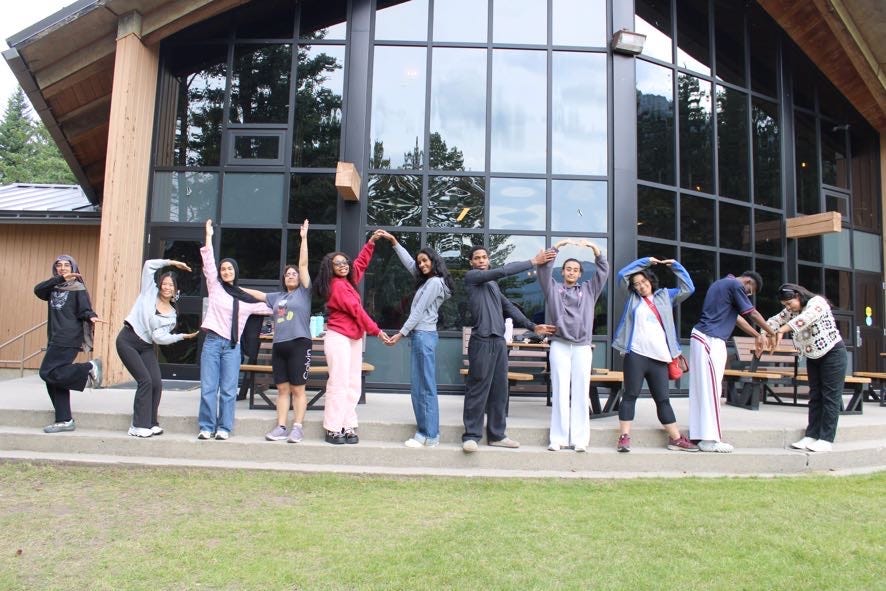
Our 2026 Artivism Cohort kicked off the Prairie Retreat bright and early, meeting at 9:30 AM at the Stanley A. Milner Library in downtown Edmonton. Our transportation was a rented school bus, and with the timing landing right on the first day of school, traffic and scheduling overlap meant our bus arrived a little later than planned. It ended up being a blessing in disguise. The wait gave everyone a chance to settle in, chat, and start getting to know each other before we even left the city.
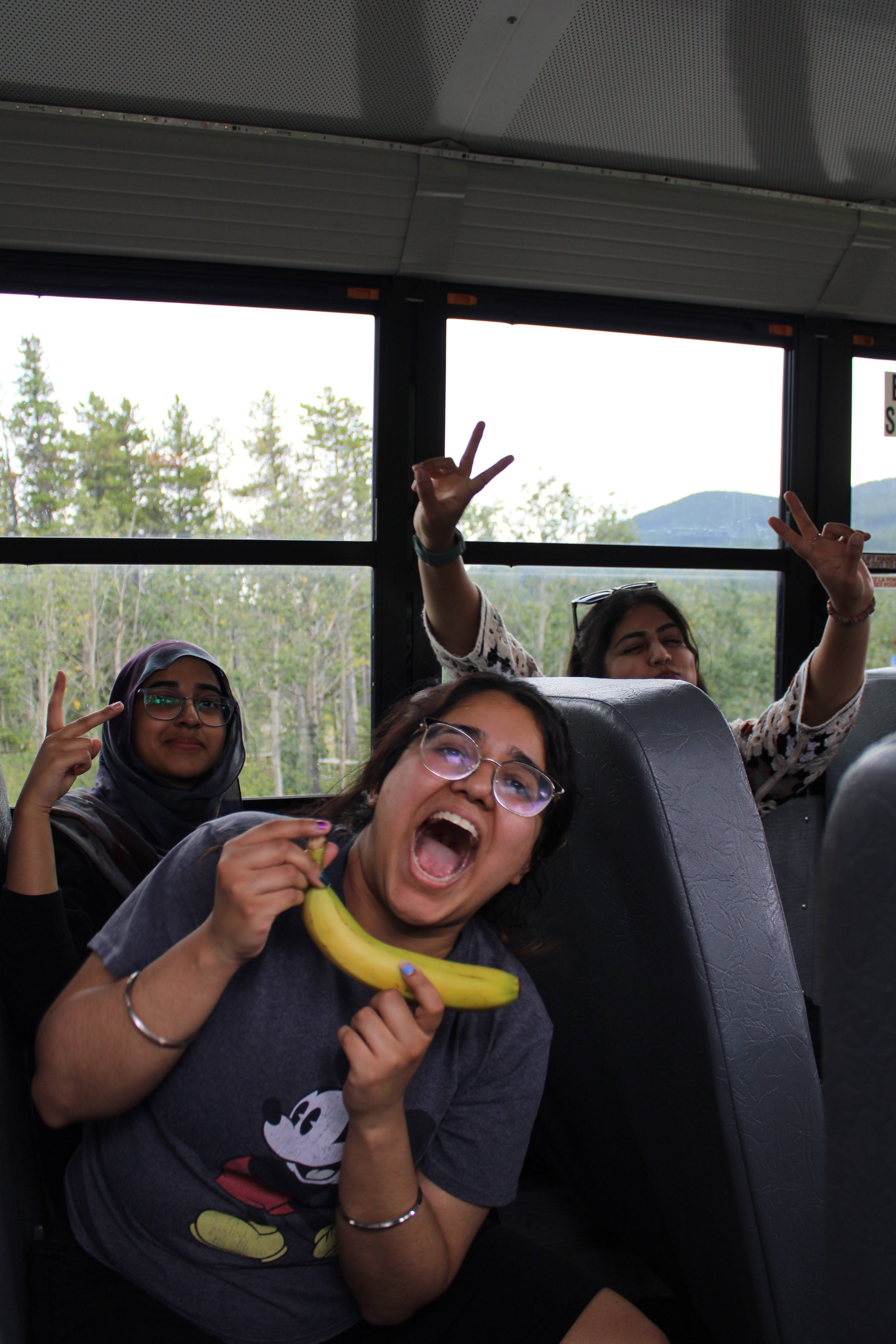
From there, it was a scenic drive out to Barrier Lake in Kananaskis, with a stop in Calgary to pick up folks joining from that side of the province.
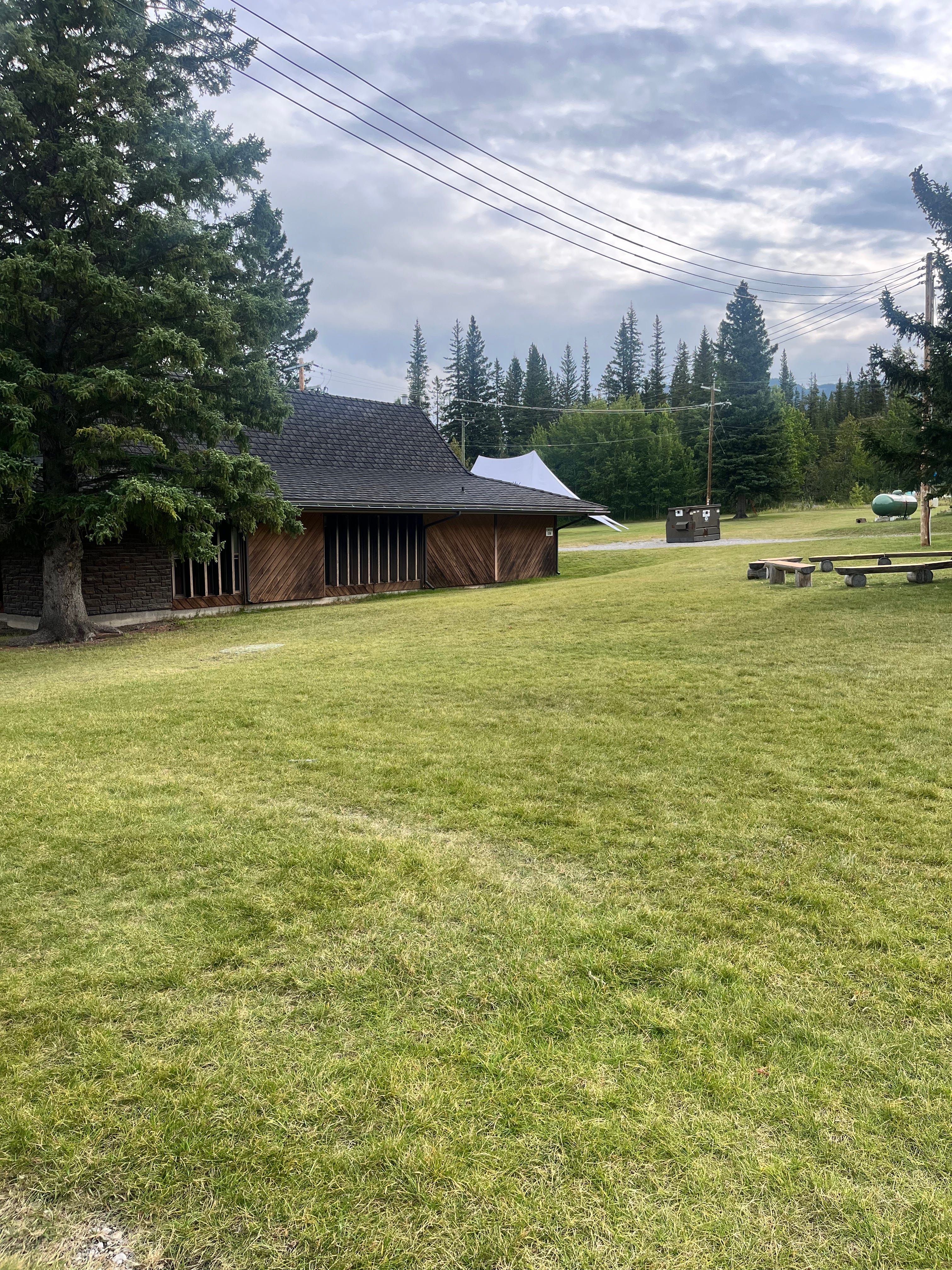
The Facility
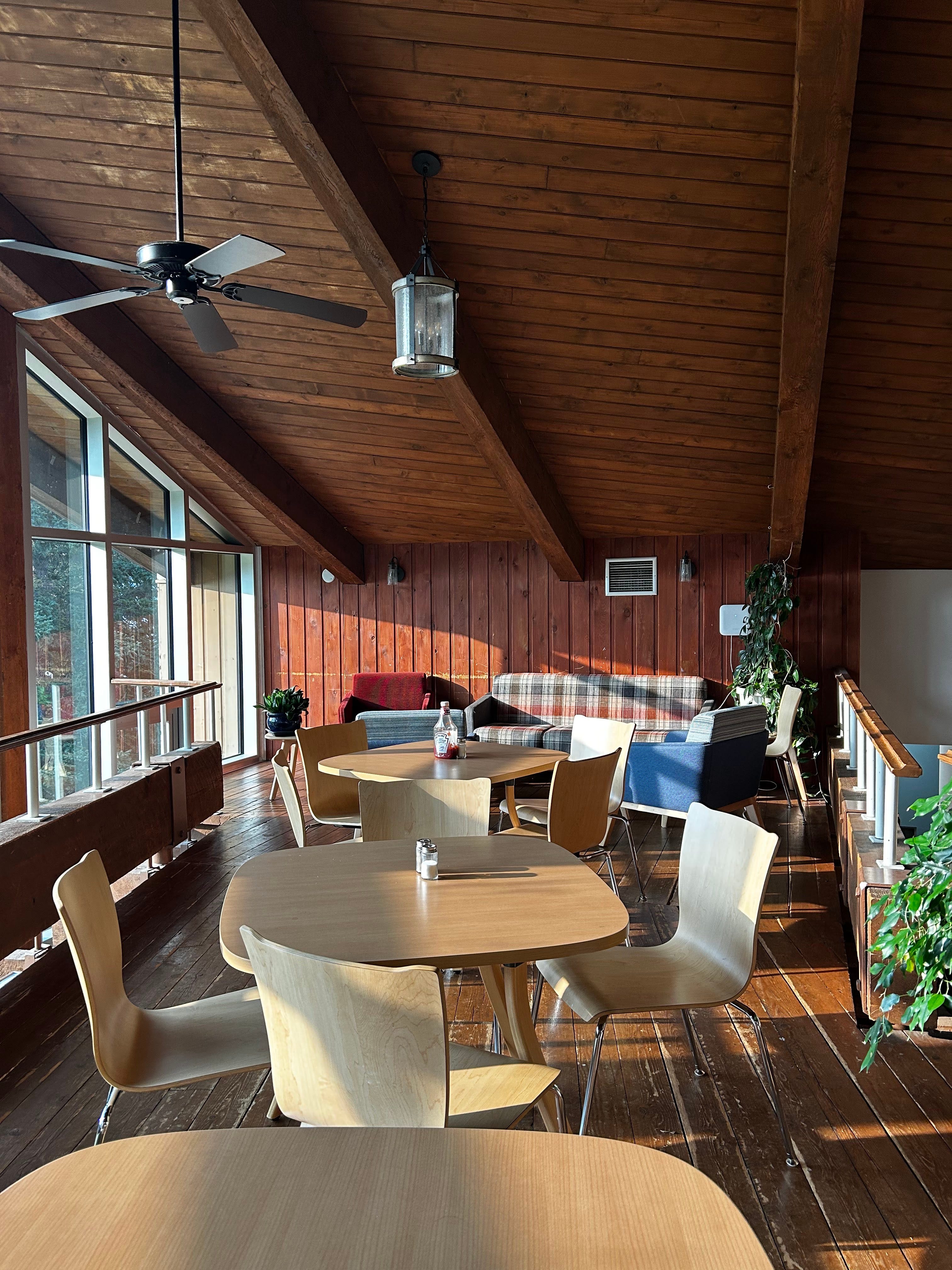
We settled into the hostel-style site with shared rooms, a self-catered kitchen and dining space, and a lounge for group time. Surrounded by mountains and forest, it gave us the kind of quiet, out-of-the-city setting that made space for reflection without the pressure of a packed agenda.
Meet the Folks Who Joined Our Prairie Retreat
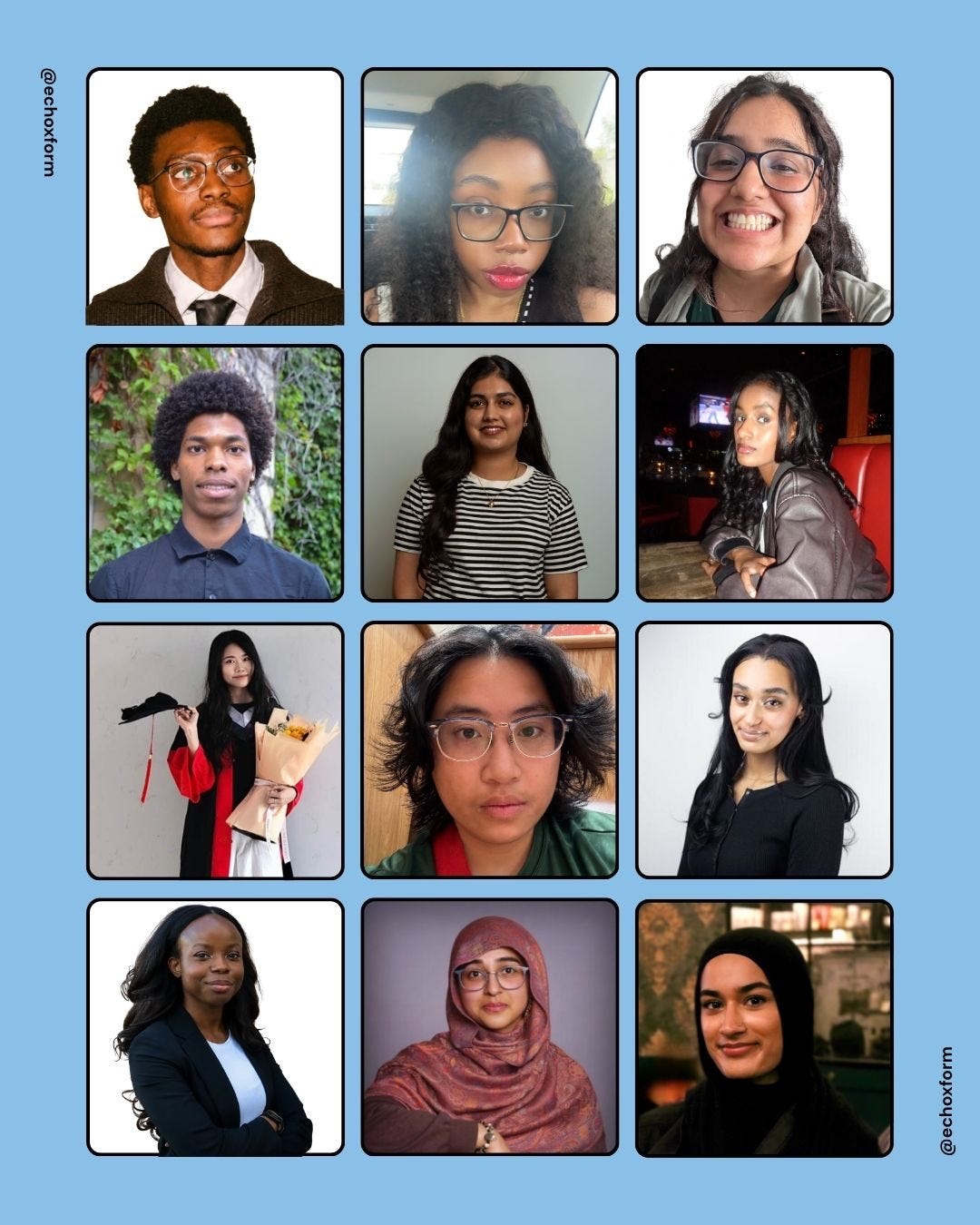
Kunle Oluwaniyi (he/him)
Kunle likes meeting new people, hearing their stories, and connecting them to their finances. He joined ECHOFORM as a way to learn more, sharpen his skills, meet new people, and take a break from the city.
Gurleen Kaur (she/her)
From crisis work to student mental health advocacy throughout her psychology studies, Gurleen has grown to love engaging in and promoting sustainable health practices. She hopes to create avenues for expression and artistry for love, care and community across generations, drawing on roots carried from Kashmiri kawa, turmeric remedies, and meditations immersed in the divine nature. She's looking forward to connecting and supporting lifelong wellbeing and connection within.
Feven Worede (she/her)
Feven is from Edmonton and is interested in civic engagement, communications, art, storytelling and law. She joined the retreat to meet people from different backgrounds, learn from their experiences, and take part in conversations she might not otherwise have.
Tooba Mahmood (she/her)
Tooba is a 20-year-old environmental engineering student at the University of Alberta who explores her interests through different art forms, engaging in community initiatives primarily through volunteering, photography, and writing. She believes that fostering community requires empathy, and empathy requires listening and learning from the stories of others.
Armeen Khalid (she/her)
Armeen is a 17-year-old university student in Edmonton, passionate about being curious, learning, and advocating for the dreams of all people.
Deep Braich (she/her)
Deep is a youth advocate passionate about community, creativity, and creating spaces where young people feel heard and supported. Through her work with nonprofits and community-based initiatives, she's connected with different communities and contributed to projects that bring people together. She's especially interested in how art and storytelling can create meaningful conversations, build connections, and encourage young people to share their perspectives.
Hartley Lou (any/all)
Hartley is 25, turning 26, and loves to draw, paint and write. They hope to combine their artistic skills to make a comic someday.
Nola Awte (she/her)
Nola is interested in civic engagement and advocating for women's rights. She joined ECHOFORM to build her confidence, strengthen her voice, and learn how to advocate more effectively in her community.
Ye (Kate) Qi (she/her)
Kate is currently living in Edmonton and recently completed her PhD in Economics. She's volunteering with ECHOFORM and was very excited to participate in the Prairie Retreat, hoping to connect with others, learn from different perspectives, and contribute thoughtful ideas to the group's collective work.
Marvin Uwalaka (he/him)
Marvin is a computer science student and researcher based in Edmonton, with a passion for technology, community building, and creating opportunities for young people. His work spans research in assistive technology and robotics, as well as youth leadership and community engagement. He's especially interested in exploring how technology, creativity and storytelling can help build more inclusive communities.
Lulu Paradise (she/her)
Lulu is a Canadian poet, editor and author, and the editor and author of Hood Up and A Song of Essays and Deadlines on Medium, as well as the author of the novel Dark Wolfe. She's currently completing her debut poetry collection, I Want to Be Free. A first-generation Nigerian immigrant to Canada and fluent French speaker, her work explores identity, belonging, faith, mental health, mythology and resilience.
Meet the Facilitator: Anurika (Rika) Onyenso
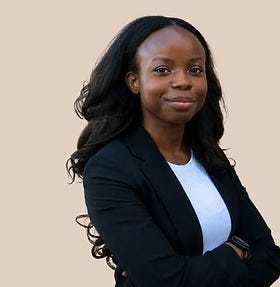
Leading the retreat was Anurika (Rika) Onyenso, Founder of ECHOFORM. Anurika is a community builder, youth advocate and emerging social impact leader committed to advancing equity, civic participation and systems change. She has held leadership roles across nonprofit, public and grassroots spaces, working at the intersection of youth engagement, digital rights, financial literacy, climate justice and community wellbeing.
She is the founder of ECHOFORM, a civic learning and storytelling ecosystem that bridges lived experience, data and public dialogue to strengthen social justice outcomes. Anurika has contributed to youth-led policy and advocacy initiatives at local and national levels, supporting research, consultation and knowledge mobilization through spaces such as the John Humphrey Centre for Peace and Human Rights.
Her community collaborations span organizations including the I3 Alliance, Righting Relations, InterVivos, People's Advocacy Voice of Amiskwacîwâskahikan, Canada Confesses, and United Nations Canada, among many other youth-driven and equity-seeking initiatives. Anurika is a recipient of the 2025 Daughters Day Award and the 2026 UBORA Leadership Award. Grounded in lived experience and a deep belief in collective care, her leadership centres storytelling, inclusive decision-making, and building pathways for young people to meaningfully shape the futures they deserve.
Welcome & Opening Session
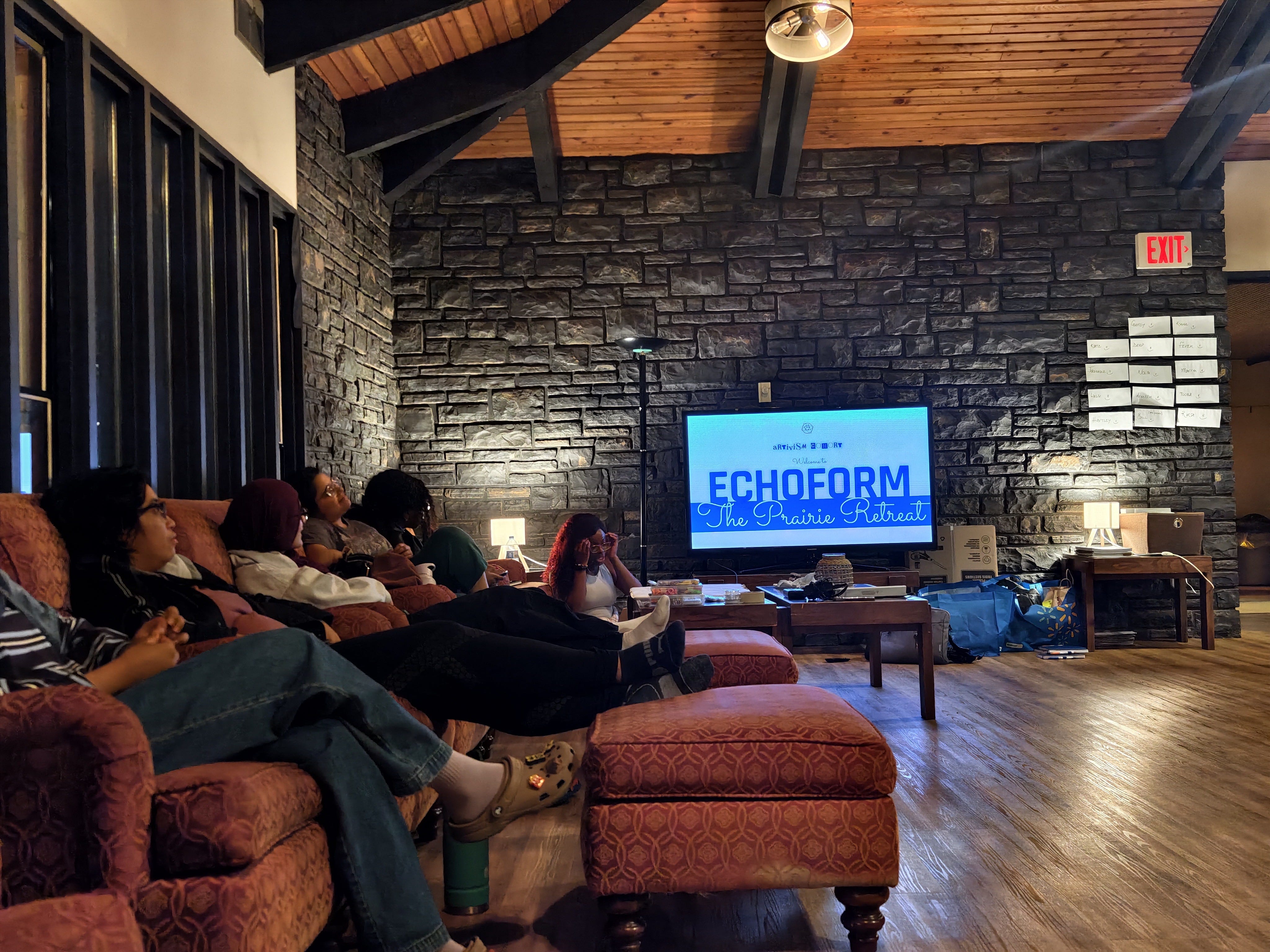
Anurika opened the retreat with a welcome and framing for the days ahead, followed by a land acknowledgment. She offered two: one that ECHOFORM carries into all of its programming, and a second tailored specifically to Barrier Lake, honouring our time within the traditional territory of the Îyârhe Nakoda (Stoney Nakoda) Nations, Treaty 7 territory, and the Tsuut'ina Nation, Blackfoot Confederacy and Métis Nation of Alberta.
From there, the session moved into housekeeping. The group learned where to find games for downtime throughout the retreat, reviewed the facility's house rules together, and were shown where to grab any supplies they'd need over the three days. A post-retreat survey was flagged as something to expect at the very end. Anurika also gave a preview of the upcoming Public Showcase at Edmonton City Hall on October 17, walking through accepted submission formats and how those unable to attend in person could still submit remotely.
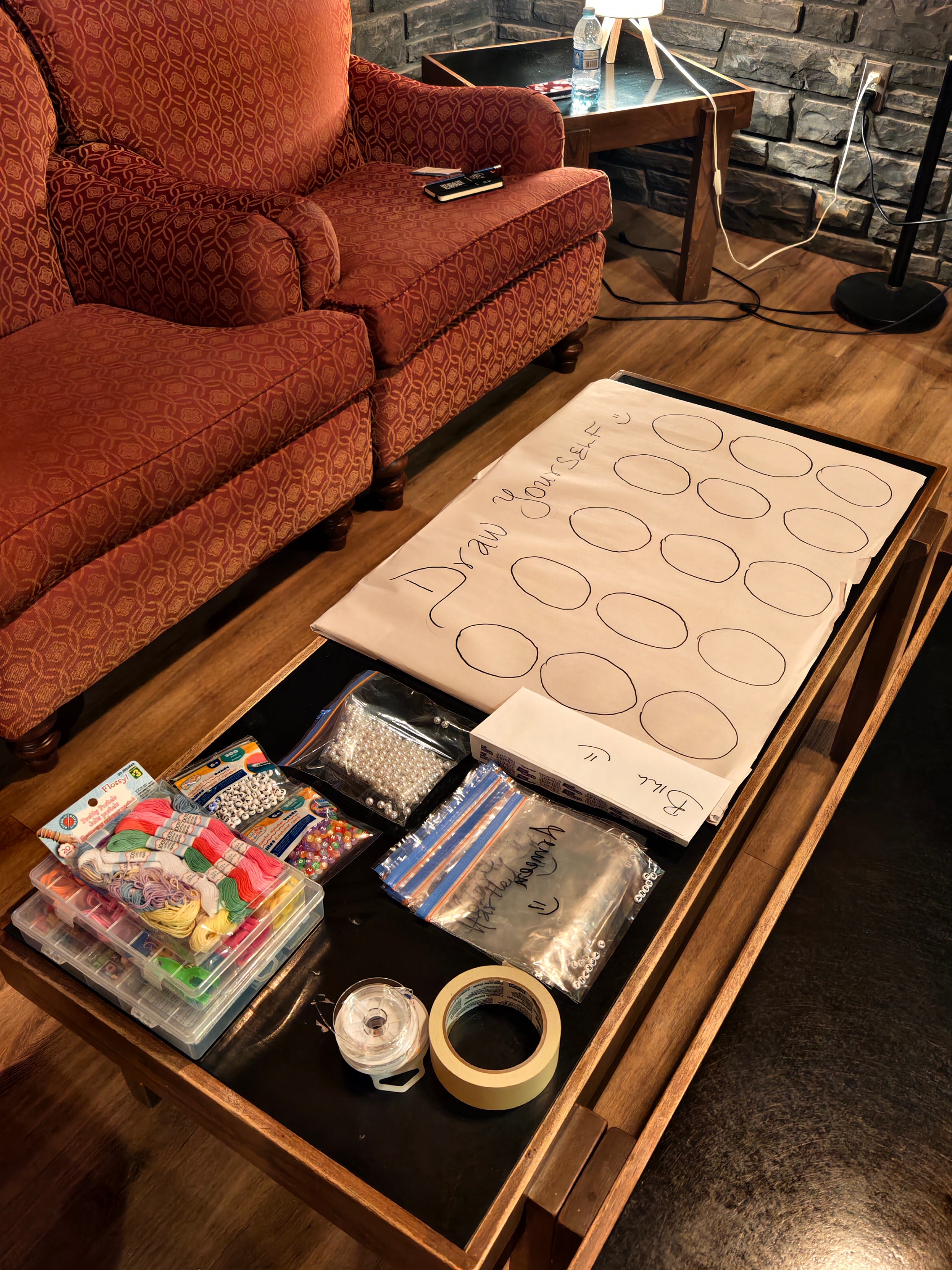
Two ongoing installations were introduced for the retreat: a feedback jar, open for use before, during or after any session, and a Valentine Wall, where participants were encouraged to write something kind to a fellow cohort member throughout their time together.
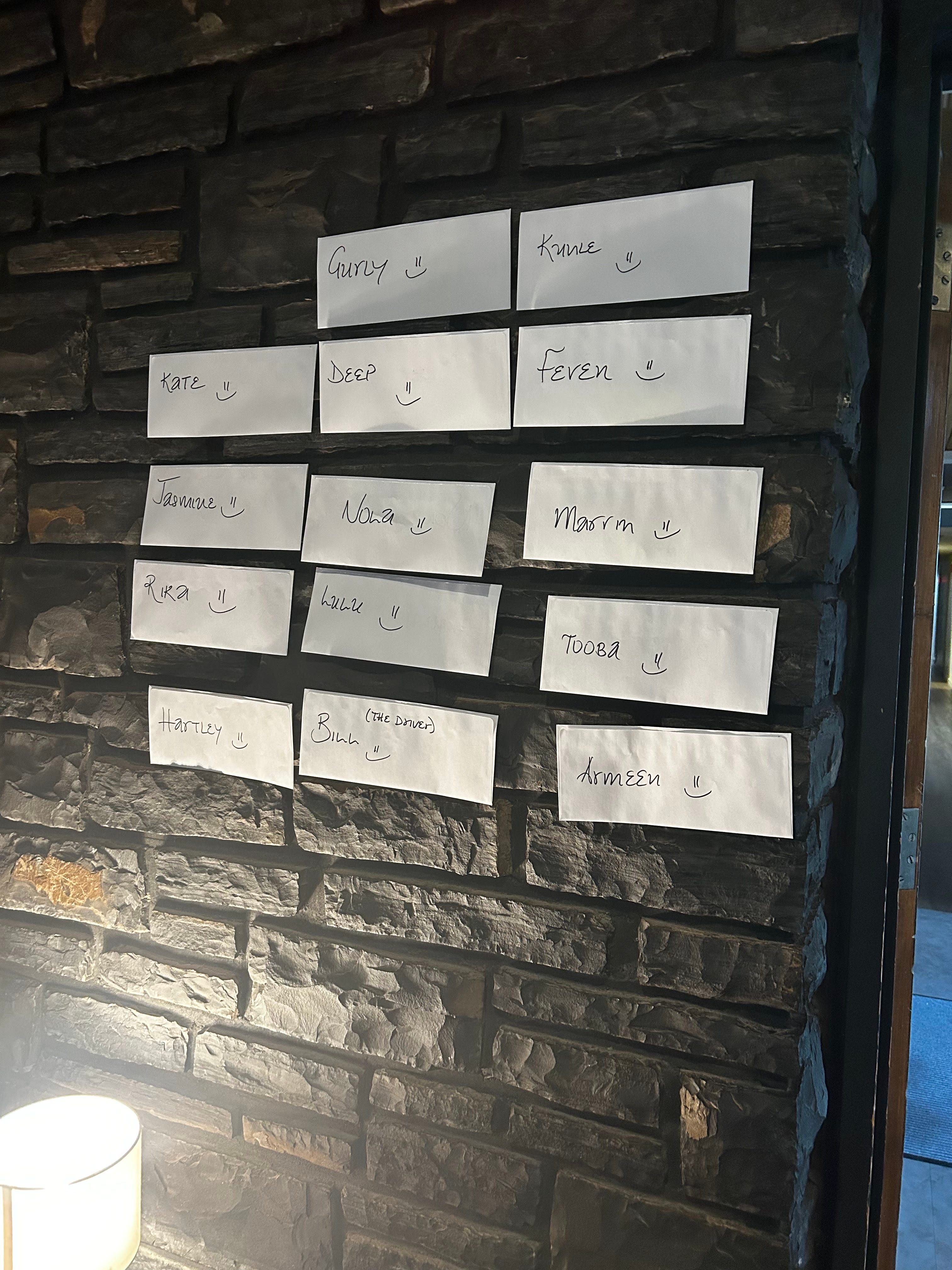
Envelopes would be collected on the final day as everyone checked out.
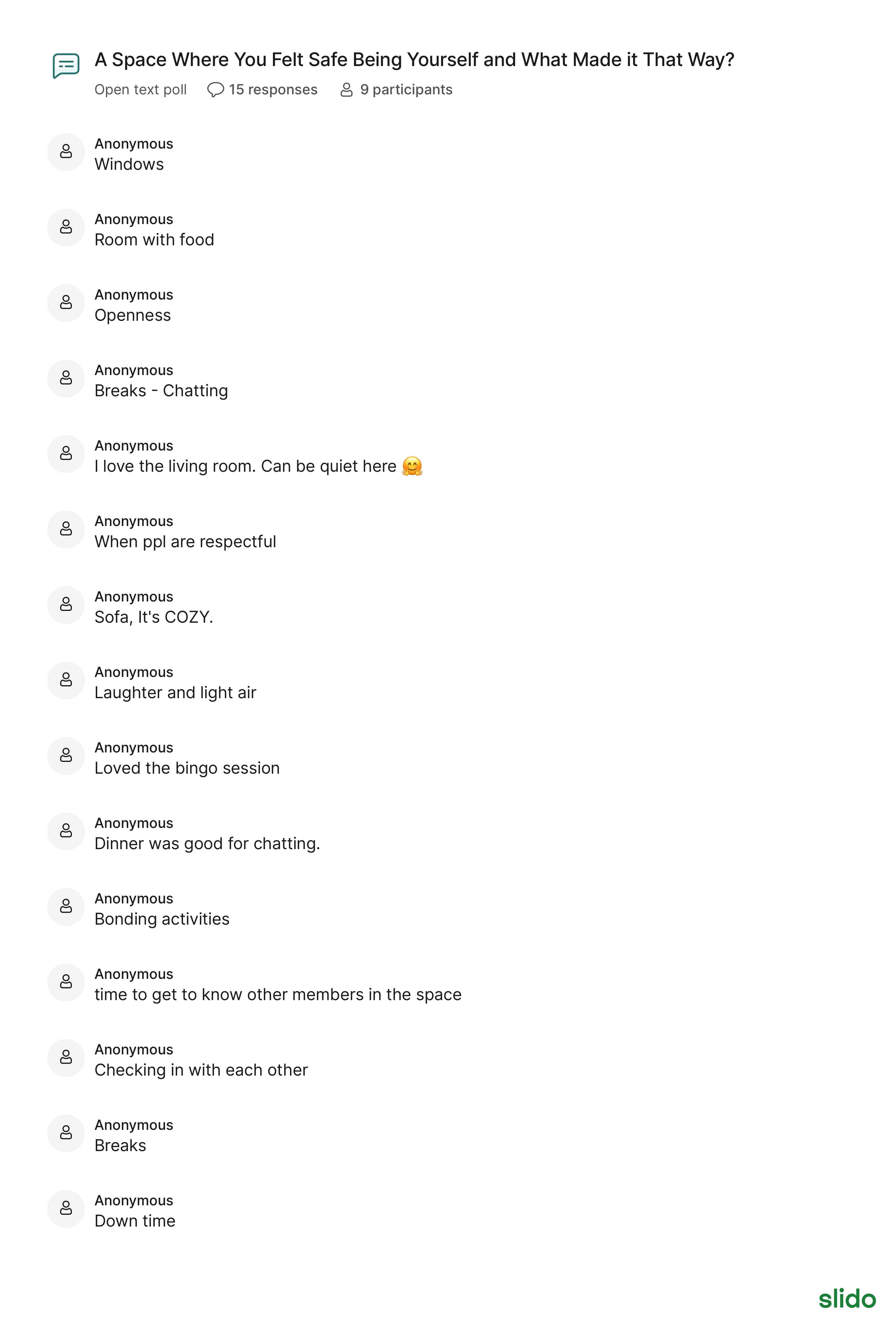
The group then used Slido to gather everyone's input and co-create a community learning agreement together, setting the tone for how everyone would show up for each other over the next three days.
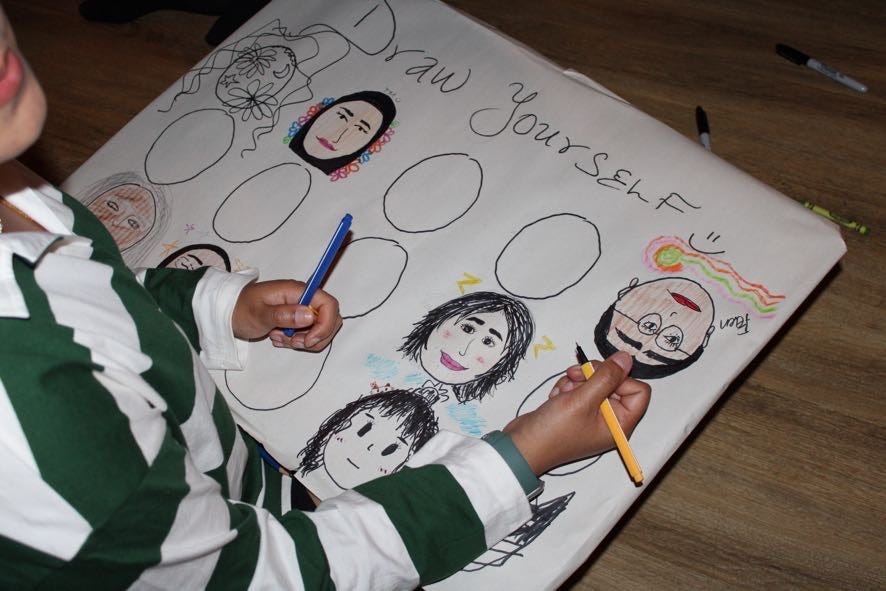
To close the welcome session, participants gathered in a circle to draw self-portraits, followed by a friendship bracelet activity. Rather than the typical name tags, each person made one to keep for themselves - a fun, small, creative way to set the mood of the retreat.
Indigenous Cultural Awareness & Sensitivity Training with Jamie Harmon
The evening continued with a training led by Jamie Harmon, a Hungarian-Métis facilitator and pastor whose blended European and Indigenous ancestry gives her a dual-lensed perspective on culture, identity and relationship. A citizen of the Métis Nation, Jamie draws on generations of family history and lived experience through her ancestry in the McKay "Little Bearskin" family line, whose contributions span the fur trade, treaty interpretation, community leadership and the preservation of Métis culture and language. As a facilitator, public speaker and community leader, Jamie has spent years delivering sessions on Indigenous histories, worldviews, identity, belonging, cultural safety and reconciliation across Canada.
Jamie grounded the session in the idea that reconciliation is less about legislation and more about relationship, something built through honesty, trust, accountability and respect over time. She spoke about the role of truth as the foundation reconciliation depends on, noting the intentional ordering of the words in Truth and Reconciliation. Understanding what happened has to come before genuine repair can begin. Storytelling, she explained, became central to that process. When residential school survivors began sharing their experiences, many Canadians were hearing this history directly for the first time, and story became one of the clearest paths toward truth.
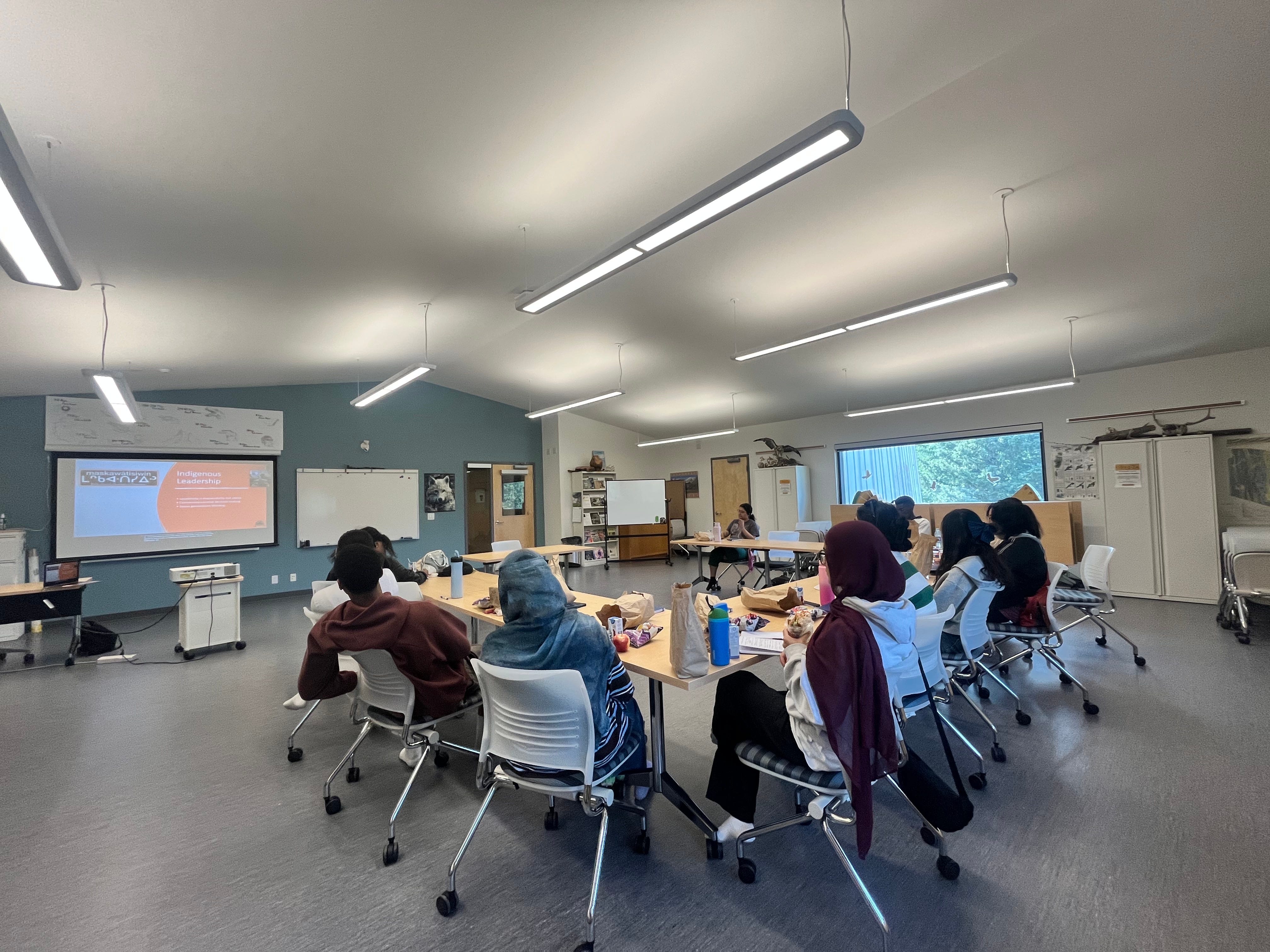
Jamie also spoke candidly about her own story, including hardship she faced growing up, and how the resilience she witnessed in her family gave her the strength to become an advocate. She was careful to note that not every story needs to be shared, and that healing looks different for everyone.
From there, the session opened into reflection, with participants responding to three guiding questions: what story shaped you, who has been a leader in your life without ever holding an official title, and what responsibility will you carry forward. Cohort members shared reflections ranging from the influence of parents and grandparents, to lessons learned through education and mentorship, to the responsibility of passing knowledge forward once you've received it. Jamie closed by reminding the group that the stories we carry shape who we become, and that each of us will one day be someone else's ancestor.
Fun with Facts through Bingo and Storytelling with Eileen Gullion
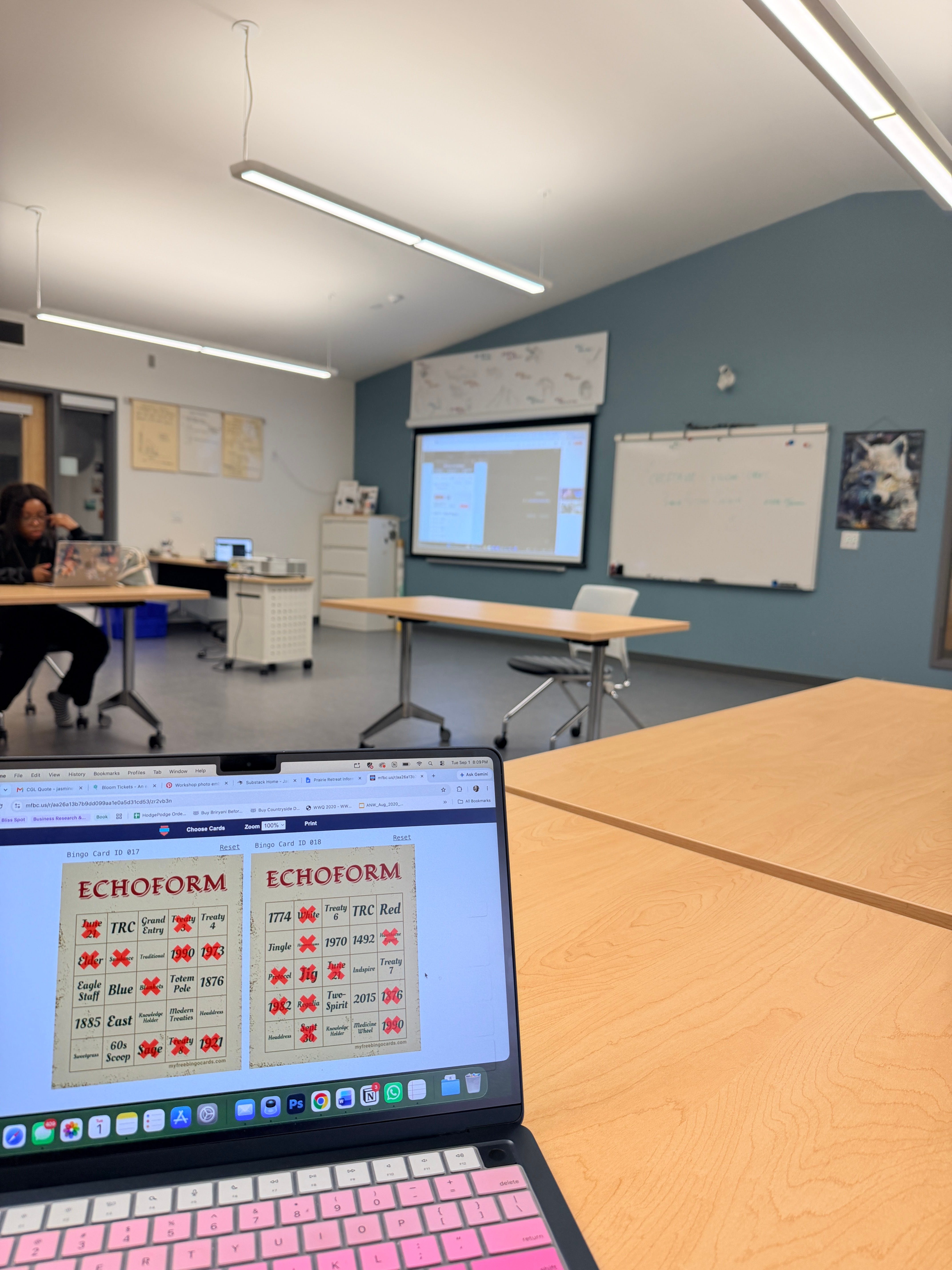
The evening wrapped up with something lighter, but just as rich in content. Eileen Gullion of Flying Lion Cree Consulting led an interactive bingo game built entirely around Indigenous history, culture and terminology. Eileen is Woodland Cree, originally from Swan River First Nation in Treaty 8 territory, and a survivor of the 60s Scoop. With over 400 facilitated workshops and sessions to her name, she brings deep experience in strategic planning, organizational development, conflict management and facilitating the KAIROS Blanket Exercise, both in-person and virtually.
Each called word or date came with context: the meaning of the medicine wheel's four colours, the difference between regalia and costume, the story behind the orange shirt and September 30th, the history of the 60s Scoop, treaty numbers and what they cover across the prairies, and the origins of terms like Michif, road allowance people, and two-spirit.
Eileen wove teaching into every call, covering everything from the 1876 Indian Act to the 1990 Oka crisis, the Sixties Scoop, and the more recent 94 Calls to Action. Four participants won rounds throughout the night, and as part of the game, they were asked to come back the next day ready to share a short story connected to whatever word or date they had won on, a fitting bridge into the talking circle planned for day two.
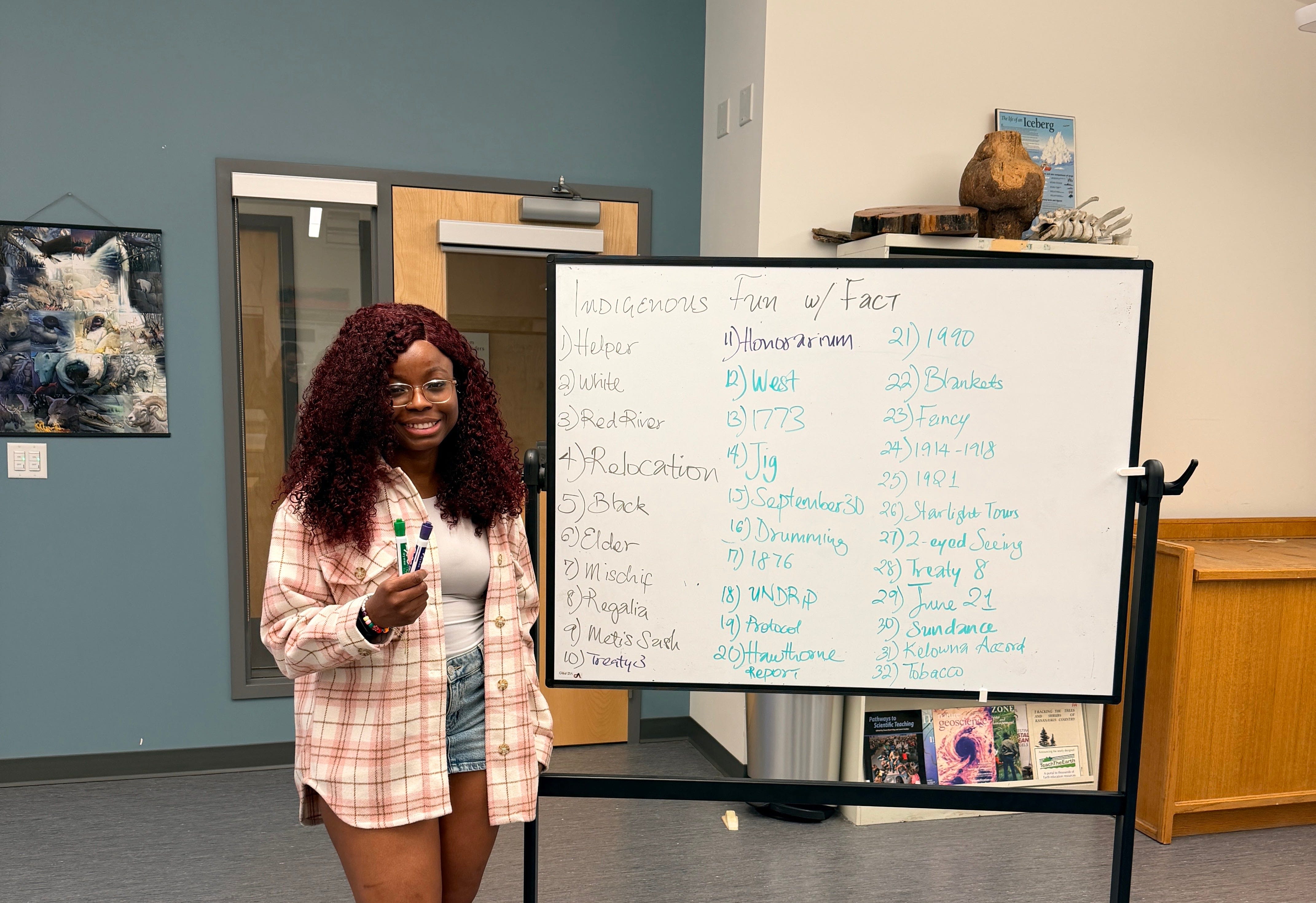
Day one closed with the cohort settling in for the night, oriented in both the land and the histories they'd be sitting with over the next two days.
Resources
Coming Soon!